How to Hang Blackout Curtains: Measuring, Installing Over Blinds & Layering With Sheers
If the morning sun still finds its way to enter your room after hanging blackout curtains, then the culprit is likely not the blackout fabric but improper hanging. By taking accurate window measurements, including width and height, choosing the right curtain rods, brackets, and curtain hanging techniques, you can significantly cover the gaps that allow sunlight, street light or glare to leak from the edges.
If you are willing to layer blackout curtains with sheer and need to install over blinds, keep reading this guide to understand how to hang them like a pro to create a dark and conducive environment for peaceful indoors in every season.
Reason for Light Leakage Around Blackout Curtains
The Top Gap: Light can pass over the curtain rod and travel behind the fabric. Standard curtain rods often leave this area exposed, allowing sunlight to create a noticeable strip of brightness across the ceiling.
The Side Gaps: When curtains hang flat against the window, sunlight can enter around their outer edges. This problem is more common with inside-mounted rods that leave little room for wider curtain coverage.
The Centre Gap: Two curtain panels meeting at the centre may leave a narrow opening that allows sunlight to pass through. Improper panel positioning or insufficient fabric width can make this problem more noticeable.
The Floor Gap: Curtains that end above the floor leave an opening beneath the fabric, allowing light to enter and reflect across the flooring. This can be particularly noticeable in Dubai homes with light-coloured tiles.
How To Measure Blackout Curtains?
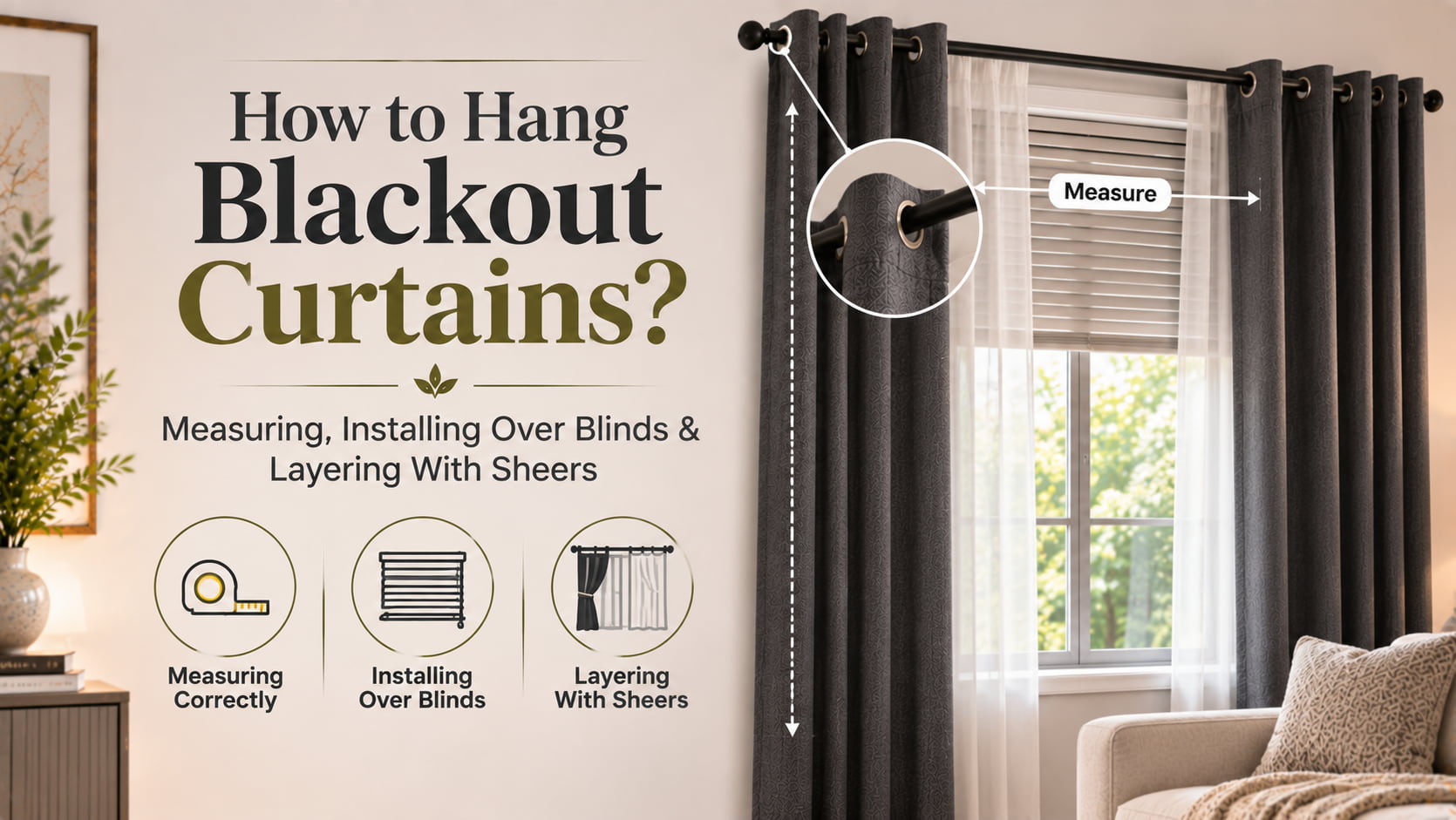
Accurate blackout curtain measurements are based on two essential calculations: width for adequate fullness and coverage, and height for achieving the desired drop. Here’s how to take both measurements using a measuring tape in minutes:
Width: Measure the window width horizontally from one side of the frame to the other. Add 8–12 inches to the total window width (4–6 inches on each side) to allow the curtains to extend beyond the frame to minimize light gaps.
Height: Now, measure the window height by positioning your measuring tape 6–12 inches above the window frame and extending it vertically down to your desired curtain length, whether just above the floor or at the windowsill.
How Wide Should Blackout Curtains Be?
Blackout curtains should generally be 20% to 30% wider than the window frame to provide adequate coverage, create a fuller appearance, and minimise light leakage. If you’re using two panels to cover a single window, ensure they overlap by 2–4 inches at the centre when fully closed.
How To Hang Blackout Curtains In 3 Simple Steps
Hanging blackout curtains properly matters just as much as choosing the right fabric. Once you record the measurements, follow a few smart placement choices that can prevent any external light from penetrating through the curtain edges:
-
Choose The Right Curtain Rod
Blackout curtains are generally heavier than standard curtains, so they require sturdy, durable curtain rods made up of metal or heavy-duty steel. These materials provide reliable support and help prevent the rod from bending or sagging under the fabric’s weight.
Since you have already measured the window width and added extra inches on both sides for adequate coverage, choose a curtain rod that matches these extended measurements. You can also opt for wraparound curtain rods, which allow the curtain panels to extend closer to the wall.
-
Mark The Bracket Placement
Before drilling, mark the position of brackets. A standard placement is 4–6 inches above the window frame, but positioning them 8–12 inches above the frame can create the illusion of floor-to-ceiling windows.
After deciding the ideal placement, hold each bracket against the wall and use a pencil to mark the screw-hole positions through its openings. Use a spirit level to check the alignment of your markings, as a wrong one can lead to a curtain unevenly.
-
Attach The Blackout Curtains
Attachment of blackout curtains to the rod depends on header style. Eyelet curtains feature built-in metal rings that allow the rod to slide through smoothly, while the pleated curtains require curtain hooks or rings to secure the fabric to the rod and create neat, evenly spaced folds.
Keep the decorative side of the curtains towards the room while the coated side is toward the window. Carefully lift the rod after attaching the curtains and position it onto the installed brackets. Spread the panels, and adjust the folds evenly for adequate coverage.
Should Blackout Curtains Touch The Floor?
Blackout curtains are made up of thick, woven fabric, which can easily collect dust if dragged on the floor. Therefore, interior designers suggest blackout curtains that stop about 1/4 inch above the ground, which gives a custom, high-end appearance.
Additional Tips
For the closest possible room-darkening effect, consider ceiling-mounted tracks, wraparound curtain rods, or side-channel systems to reduce light leakage around the window’s edges.
How To Hang Blackout Curtains Without Drilling?
No-drill options such as tension rods, adhesive brackets, and magnetic curtain rods are highly preferred by tenants and homeowners who want to hang curtains without damaging walls.
Here’s how to hang curtains without drilling:
-
Tension Rod
Measure the inside width of your window recess, and choose a rod with an appropriate weight capacity. Position the rod inside the recess and ensure it sits firmly against both sides.
-
Adhesive Brackets
Clean and dry the mounting surface, and mark the bracket positions evenly. Attach the adhesive brackets and allow them to cure for the recommended period before hanging curtains.
-
Magnetic Rod
Attach the magnetic brackets to the metal frame. Hang your blackout curtains and check that the magnets hold the combined weight securely.
Note: These no-drill options can typically bear 5 to 20 pounds (2 to 9 kg). It’s ideal to choose the light to medium weight for hanging with no-drill choices.
How To Install Blackout Curtains Over Blinds?
Premium residences across the UAE often feature layered window treatments, with blackout curtains serving as a popular choice. Some homeowners pair them with blinds for greater light control, while others layer them with sheer curtains to create a softer, more elegant appearance.
If you want to create a dark environment in your room, then install blackout curtains over blinds by following the steps:
- Measure the window frame and existing blinds, adding 8–16 inches to the width for better side coverage.
- Select a sturdy curtain rod with sufficient weight capacity to support blackout panels without bending or sagging.
- Position extended brackets approximately 3–4 inches beyond the blinds to provide adequate clearance and prevent fabric interference.
- Attach the curtain panels to the rod, lift it onto the brackets, and secure everything firmly.
- Close the curtains and operate the blinds to ensure smooth movement, complete coverage, and minimal light gaps.
How To Layer Sheer And Blackout Curtains?
Layering blackout curtains with sheers is one of the most sophisticated combinations that lets you enjoy softly filtered daylight during the day and a darker, more comfortable environment at night without changing your curtain panels every 12 hours.
- Choose lightweight materials such as voile, chiffon, or linen sheers and densely woven or lined blackout curtains.
- Choose a double curtain rod to hang the sheers on the back rod and blackout on the front rod for smooth functionality of each.
- Mount your double rods or track system above the window frame based on your recorded measurements.
- Install both curtain layers and adjust their folds evenly. Use tiebacks, holdbacks, or curtain weights to maintain their shape and create a neat, polished appearance.
You can also put sheer and blackout curtains on one rod by attaching both curtain types using clip rings, alternating sheer and blackout panels to create a fuller, layered appearance. Make sure to select a durable curtain rod with sufficient length and weight capacity to accommodate both types of panels.
Also Read:
What Are Blackout Curtains? How They Work, What They’re Made Of & Are They Safe?
Best Blackout Curtains: How to Choose, What They Cost & Where to Buy
Conclusion
Your bedroom should be a place where you control the light, not one where sunlight decides when your day begins. The right blackout curtains can transform your sleeping environment, but achieving effective room darkening requires accurate measurements, quality curtain hardware, adequate fabric coverage, and professional installation.
Browse Aura Curtain’s blackout curtain collection or schedule a free consultation to find the perfect window treatment for your space.
FAQs
Which curtain rod do you need to hang blackout curtains?
Choose a sturdy metal or heavy-duty steel curtain rod that supports blackout fabric without sagging. Wraparound rods or ceiling-mounted tracks provide better window coverage.
How to hang blackout curtains without drilling?
Use tension rods, adhesive curtain brackets, or magnetic curtain rods to hang blackout curtains without drilling holes or making permanent wall modifications.
What is the biggest cause of light leak in blackout curtains?
Improper installation is a common cause of light leakage, particularly gaps above the rod, along the sides, between panels, and beneath curtains.
What to consider while hanging blackout curtains?
Consider accurate window measurements, curtain width and length, sturdy rods, proper bracket placement, fabric orientation, and sufficient coverage to minimize unwanted light gaps.
Our Latest Blogs & Articles



Best Blackout Curtains: How to Choose, What They Cost & Where to Buy
Read More

Do Blackout Curtains Keep Heat Out? Heat, Cold, Noise & Energy Savings Explained
Read More

What Are Blackout Curtains? How They Work, What They’re Made Of & Are They Safe?
Read More

Book Your Free In-Home Measure & Quote
Let us help you find the perfect fit. Our specialists will measure your windows and provide a custom quote tailored to your style and budget.