

What Is The Difference Between Blinds And Shades?
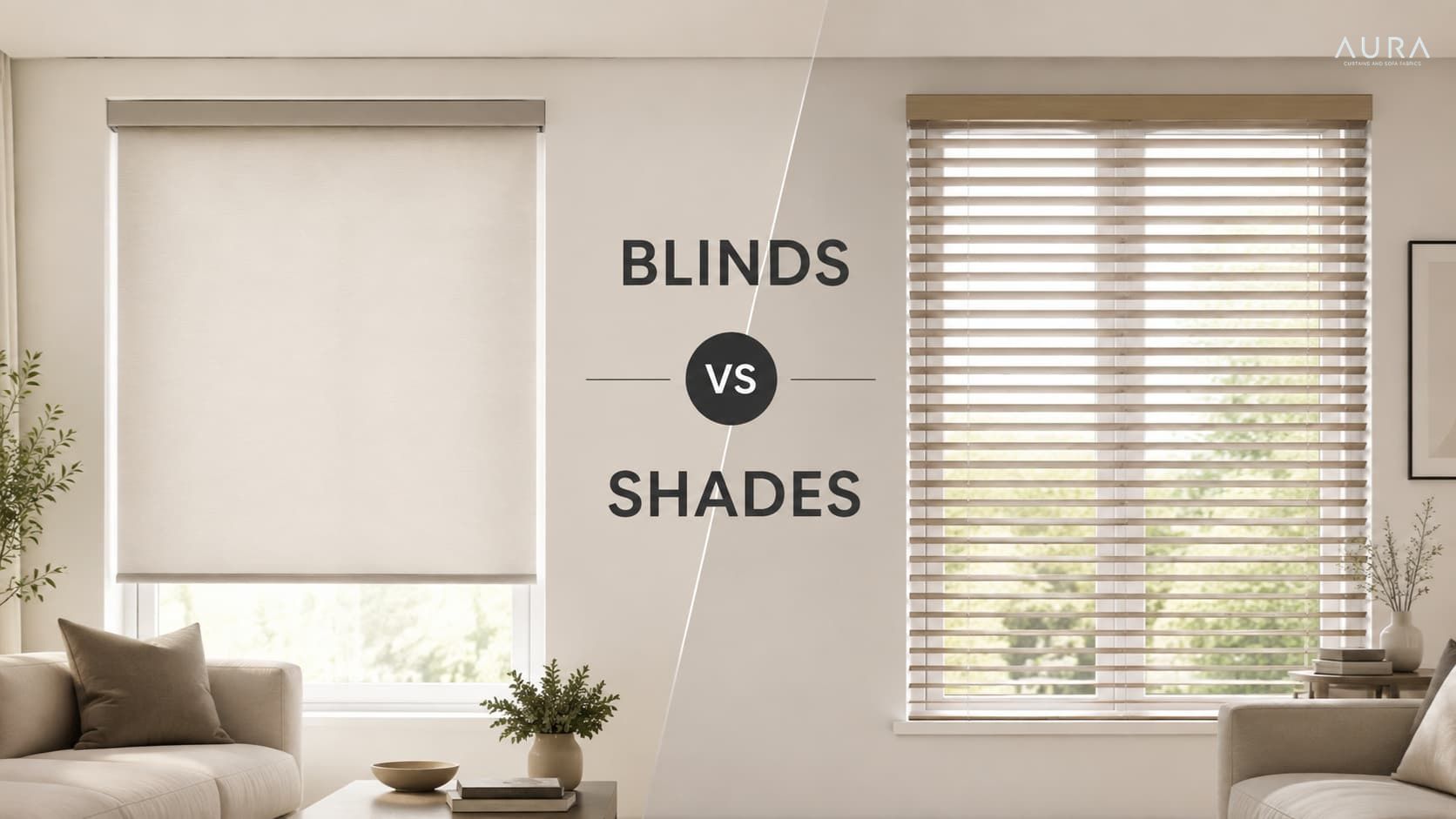
Blinds and shades are both window coverings, but they’re built differently. Blinds use adjustable horizontal or vertical slats that tilt open and closed, so you control light and privacy without raising the whole covering. Shades are made from a single continuous piece of fabric that rolls, folds, or stacks up as one panel. That construction difference drives every other difference between them — durability, coverage, cost, insulation, and noise reduction.
This guide from Aura Curtains breaks down exactly how blinds and shades compare, so you can choose the right window treatment for your home.
Blinds vs Shades: Quick Comparison Table
| Feature | Blinds | Shades |
|---|---|---|
| Construction | Horizontal or vertical hard slats | One continuous fabric panel |
| Popular types | Wood, vertical, aluminum | Honeycomb, roller, Roman |
| Typical lifespan | Longer — hard materials like wood and aluminum generally outlast fabric | Shorter — fabric wears, fades, and stains faster than hard slats |
| Coverage | Partial — small gaps remain between slats even when closed | Complete — no gaps, since it’s one solid fabric panel |
| Cost | Lower upfront, especially aluminum and PVC | Higher, especially custom fabrics and blackout linings |
| Noise reduction | Limited — hard slats don’t absorb sound | Better — fabric absorbs sound more than hard materials |
| Best for | Humid spaces, rental properties, modern/minimalist interiors, commercial settings | Bedrooms, media rooms, energy-efficient homes, soft/traditional interiors |
What Are Blinds?
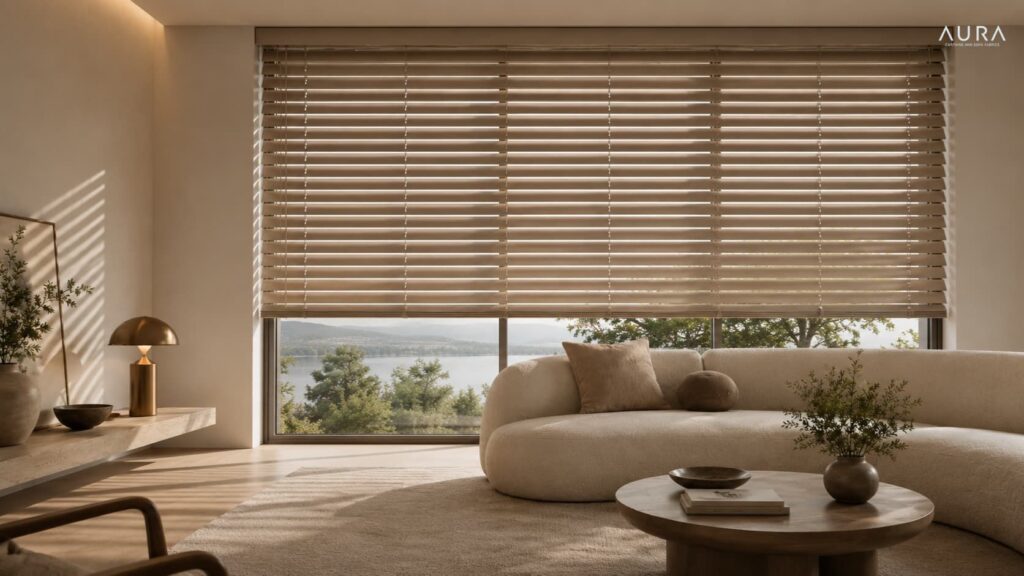
Blinds are a window covering made of hard horizontal or vertical slats — usually wood, faux wood, aluminum, or vinyl — that tilt open and closed to control light, airflow, and privacy. Unlike shades, blinds don’t need to be fully raised or lowered to adjust how much light enters a room.
Types of Window Blinds
Wood blinds have horizontal slats made from real hardwood or faux wood composite. Real wood works best in dry, well-ventilated rooms; faux wood costs less and resists warping in humidity. Best for: living rooms, home offices, bedrooms, well-ventilated kitchens.
Vertical blinds use long slats — made from vinyl, PVC, or fabric — that run top to bottom and slide open horizontally, making them the standard choice for wide windows and sliding glass doors. Best for: wide windows and tall sliding doors in homes and offices.
Aluminum blinds have thin horizontal metal slats that resist rust, warping, and cracking, making them a practical choice for bathrooms, kitchens, and other high-moisture rooms where wood and fabric treatments perform poorly. Best for: kitchens, offices, living rooms, bathrooms, laundry rooms.
Benefits of Blinds
- Insulation: Blinds reduce heat transfer through the window by acting as a thermal barrier, helping keep indoor temperatures more stable year-round.
- Ventilation with privacy: Because the slats tilt instead of fully opening, blinds let air circulate without exposing the interior the way an open curtain or shade would.
- Light and privacy control: Tilting the slats reduces glare and blocks direct UV rays while still letting in daylight, without closing the blinds completely.
- Low maintenance: Blinds need only occasional dusting or a wipe with a damp cloth to stay clean.
- Style variety: Blinds come in a range of colors, materials, textures, and slat sizes, adaptable to Scandinavian, minimalist, and biophilic interiors.
Drawbacks of Blinds
- Provide poor insulation against outside noise since hard slats don’t absorb sound.
- Leave small gaps between slats that let some light through even when closed.
- Offer less noise reduction than fabric shades.
- Can bend, warp, or crack if handled roughly.
- Corded blinds pose a safety risk around young children and pets — cordless or motorized versions avoid this.
What Are Shades?
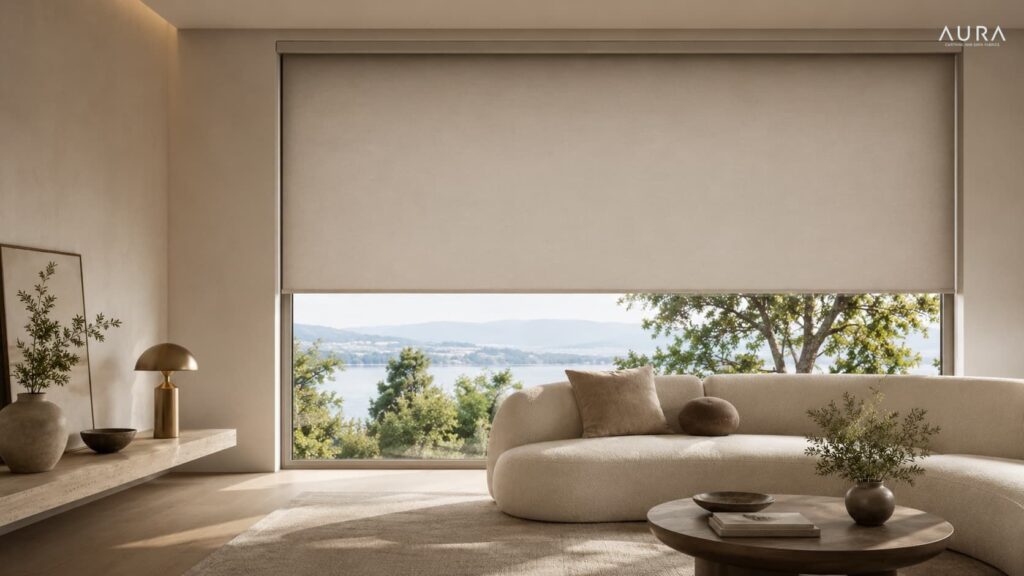
Shades are a window covering made from one continuous piece of fabric — mounted on a roller or headrail — that rolls, folds, or stacks up as a single panel when raised. Unlike blinds, shades have no individual slats and no gaps when fully closed.
Types of Window Shades
Honeycomb shades are made from pleated fabric that forms enclosed, honeycomb-shaped air pockets. Those air pockets trap air between the window and the room, which is why honeycomb shades are considered one of the most energy-efficient window treatments available. Best for: bedrooms, home offices, living rooms, dining rooms.
Roller shades are a single fabric panel that rolls onto a tube at the top of the window, giving a clean, minimalist look with no folds or pleats when raised. Best for: living rooms, kitchens, bathrooms, dining rooms, bedrooms, offices.
Roman shades fold into neat horizontal pleats as they’re raised and hang flat when lowered, giving a softer, tailored look than roller shades. Best for: living rooms, bedrooms, kitchens, commercial spaces.
Benefits of Shades
- Noise reduction: Fabric absorbs sound better than hard blind slats, making shades a better choice for bedrooms, home offices, and rooms near busy streets.
- Temperature control: Shades with insulating fabric reduce heat transfer, keeping rooms cooler in summer and warmer in winter.
- Light and privacy control: Sheer fabrics let in filtered daylight; blackout fabrics block UV rays and glare and give complete privacy.
- Fabric variety: Shades come in blackout, sheer, linen, and woven fabrics, so you can match function — light-blocking versus filtering — to the room.
- Aesthetic warmth: The soft, seamless fabric panel adds a warmer look than hard slats, suiting traditional and luxury interiors.
Drawbacks of Shades
- Custom, high-quality shades cost more than most blinds.
- Not well suited to high-moisture rooms like bathrooms — fabric absorbs moisture that hard materials shed.
- Collect dust and stains faster than blinds.
- Fabric fades over time with prolonged UV exposure.
- Wear and tear happens faster than with wood, aluminum, or PVC blinds.
How to Choose Between Blinds and Shades
- If durability and personalized light control matter most → choose blinds. If soft aesthetics and full window coverage matter most → choose shades.
- If you need zero-gap coverage (a media room, nursery, or bedroom needing full blackout) → choose shades. Blinds always leave small gaps between slats.
- If your interior is modern, industrial, Scandinavian, or minimalist → blinds tend to match better. If it’s traditional, contemporary, or luxury-styled → shades tend to match better.
- If budget is the main constraint → aluminum or PVC blinds are the cheaper option. Custom fabric shades cost more due to premium materials and made-to-measure production.
Conclusion
In short: blinds offer more durability, easier light control, and a lower price point; shades offer complete coverage, better noise reduction, and a softer look — at a higher cost. The right choice depends on the room, your climate, and your budget.
If you’re looking for blinds or shades in Dubai, Aura Curtains supplies and installs a full range of window treatments across the UAE, tailored to your space and style.
FAQs
Which is more budget-friendly: blinds or shades?
Blinds are usually cheaper than shades because they use simpler materials like aluminum and PVC, while shades — especially custom fabric ones — cost more.
What do blinds and shades have in common?
Both blinds and shades are window coverings that control sunlight, improve privacy, help regulate indoor temperature, and enhance interior style.
Do I need a professional to install blinds and shades?
For accurate measurements, secure mounting, and smooth operation, professional installation is recommended over DIY.
Which lasts longer, blinds or shades?
Blinds generally last longer because materials like wood, aluminum, and PVC hold up better over time than the fabric shades are made from.
Why are custom shades more expensive than standard blinds?
Custom shades cost more because they require precise measurements, premium fabrics, and specialized manufacturing and installation for an exact fit.
Can I use blinds and shades together in the same room?
Yes. Layering a shade behind a blind, or vice versa, is common when a room needs both flexible daytime light control and complete blackout or privacy at night.
Are blinds or shades better for a bathroom?
Blinds — specifically aluminum or PVC — are better for bathrooms because they resist moisture, while fabric shades can absorb humidity and are more prone to mold and staining.
Our Latest Blogs & Articles



Book Your Free In-Home Measure & Quote
Let us help you find the perfect fit. Our specialists will measure your windows and provide a custom quote tailored to your style and budget.