Blog

  • What is the Best Fabric for Roman Blinds?

    What is the Best Fabric for Roman Blinds?

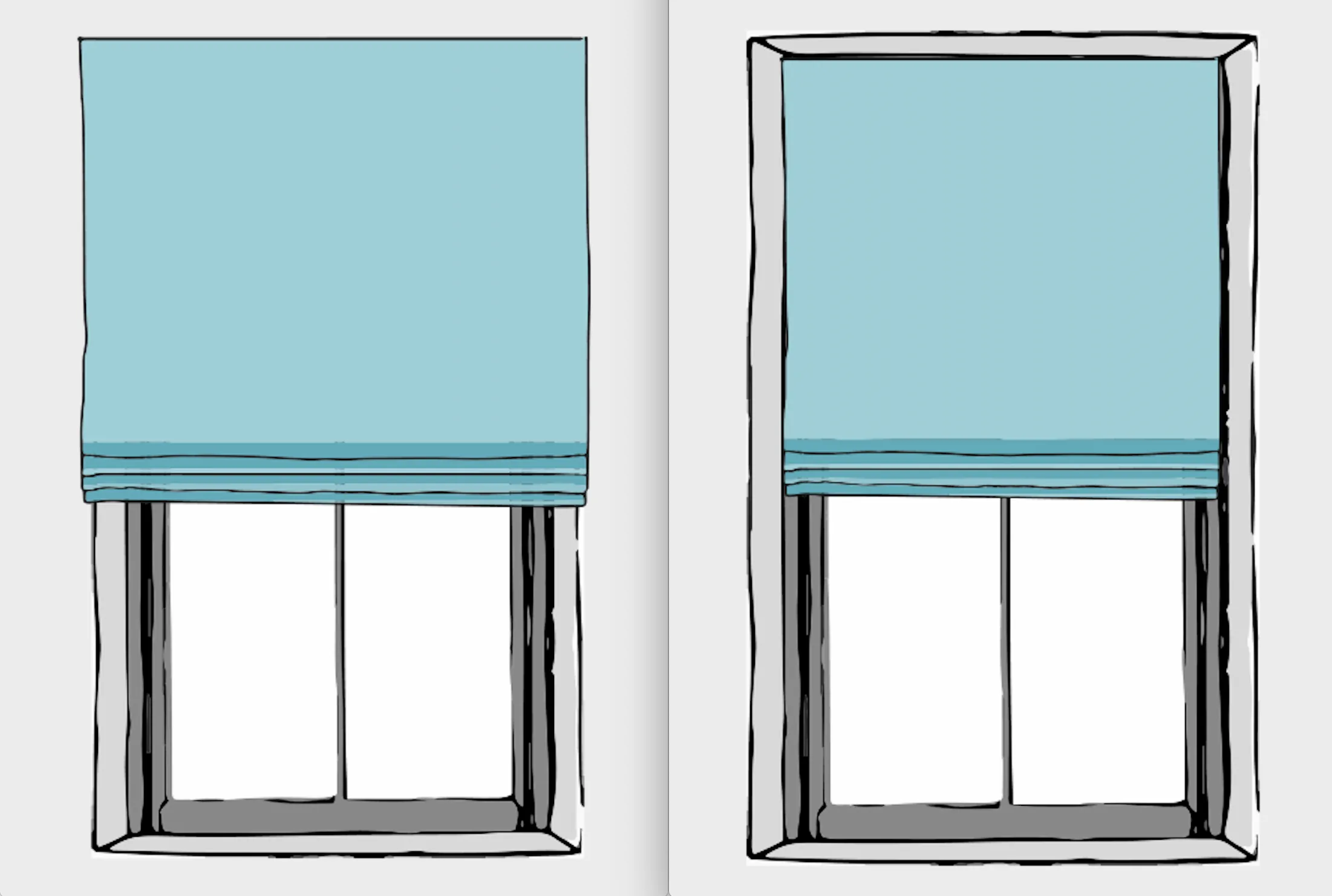
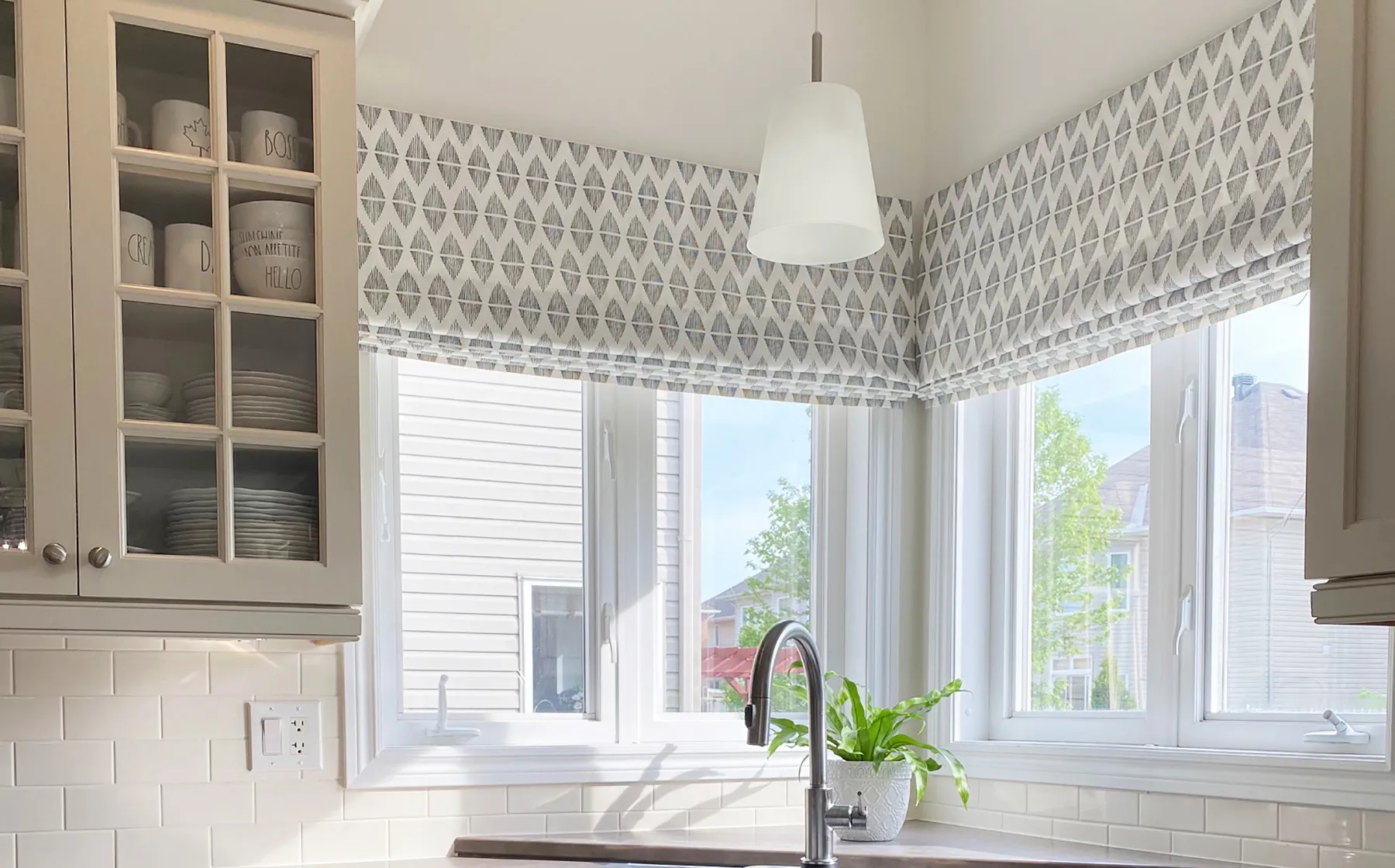
    When choosing window coverings, think about durability and function. Some fabrics resist sun, water, and heat damage better than others, helping them last longer. Common choices for Roman blind fabric include cotton, linen, and polyester. These blinds work well for small windows or tight spaces because they don’t overwhelm the room. They are easy to open and close to control sunlight. Roman blinds also style your room without taking up extra space or distracting from your other decor. With that said, let’s find out the best fabric for Roman blinds. 

    Is There Only One Best Fabric for Roman Blinds?

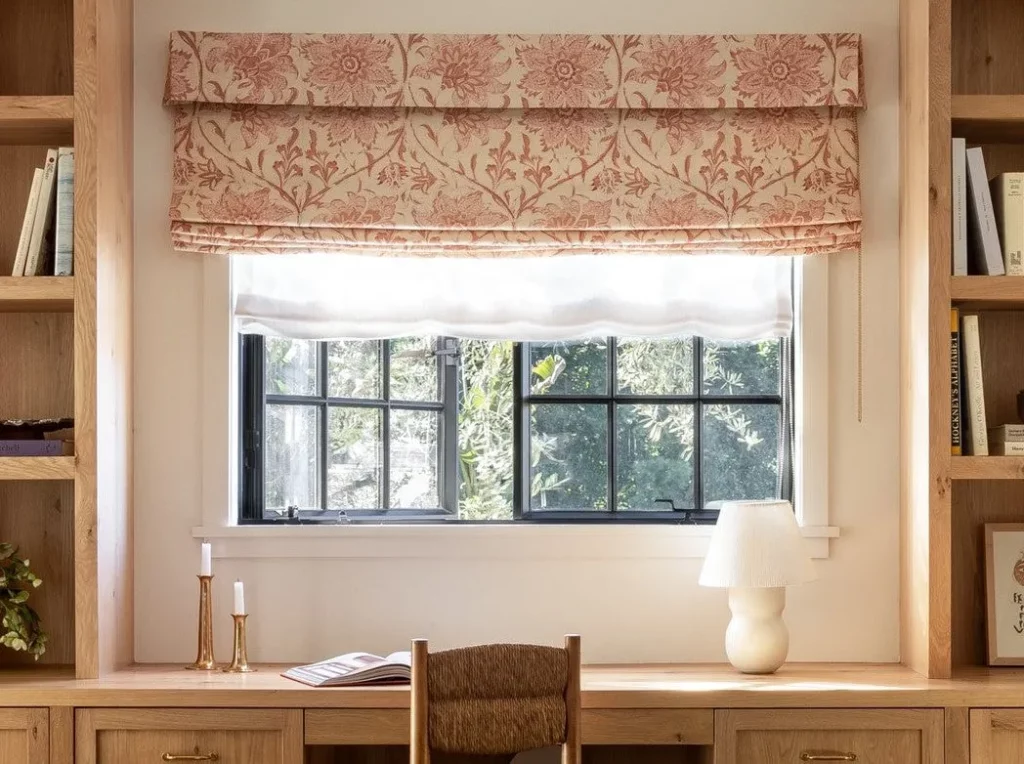
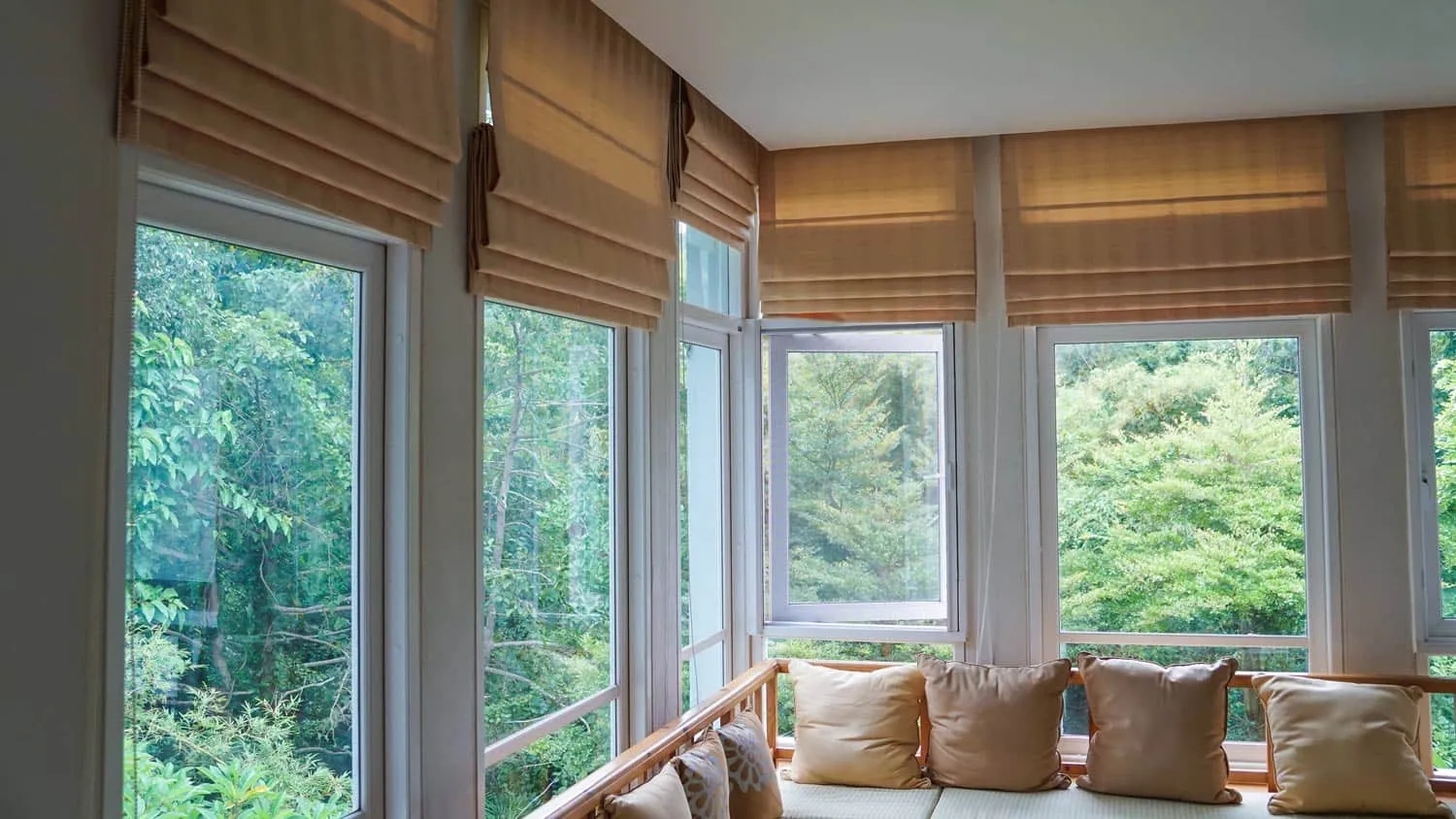
    It’s not like that. Cotton, linen, and voile fabrics are the top choices for practical Roman blinds. These Roman blind fabrics give a good balance of style, ease of handling, and lightweight layering. These Roman shades fabric or blinds fabric work well for creating smooth pleats and are ideal for rooms that don’t require heavy-duty blinds. Blackout lining can be added to thinner fabrics for increased privacy and light control. Less common choices like upholstery fabrics or faux leather are thicker and heavier. These Roman shades fabric make it harder to manage the blinds and shades, especially when they require easy folding.

    Selecting the best fabric for Roman blinds depends on your needs. For low maintenance and durability, choose hardy materials. If style is your priority, expect to spend extra time cleaning delicate fabrics. Not only that, thicker or lined options can help with privacy, light blocking, or temperature control, depending on your room’s requirements.

    Choosing the Best Roman Blind

    When picking fabrics for Roman blinds, choose ones that are thick enough to look nice but not too stiff to move. The fabric should be just right. They shouldn’t be too heavy and not too light. You can use a lining for lighter fabrics to help them keep their shape. Make sure the fabric doesn’t stretch so it fits well and doesn’t sag. Most roman blinds need lining to help them last longer and look better, except for sheer fabrics, which are see-through and don’t need it.

    Pure Linen

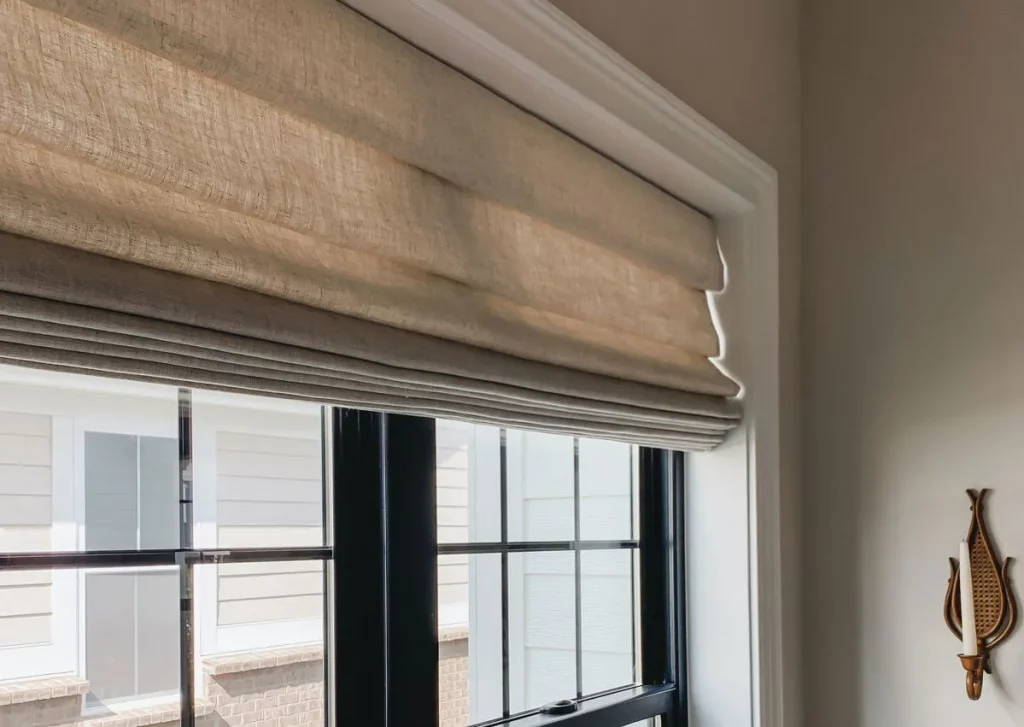
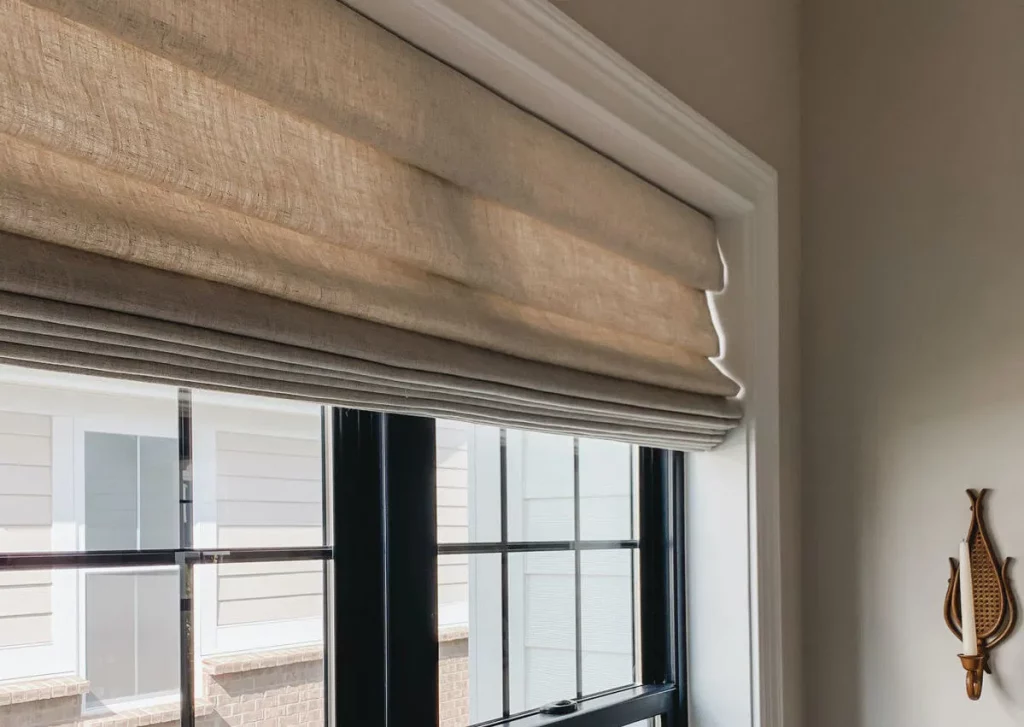
    Pure Linen is a strong, natural fiber ideal for Roman blinds due to its perfect blend of weight and structure, holding shape beautifully without sagging. Its slight stiffness allows easy adjustment without the bulk of heavier fabrics like velvet. Available in various colors and textures, linen fits any style, from casual to sophisticated, while giving a breathable, organic feel that helps regulate light when paired with a lining, making it both functional and stylish.

    Linen Blends

    Linen blends, usually combined with cotton or synthetic fibers, offer the perfect mix of durability, structure, and softness for Roman blinds. This balanced weight makes them easy to handle while still holding their shape for a better look and function. Linen blends are also highly customizable in color, texture, and pattern, making them versatile enough to look good on any home decor. Their sturdy yet soft composition offers long-lasting wear.

    Cotton 

    Cotton is a natural fabric that is soft, breathable, and durable. When used for roman blinds, cotton combines practical benefits with attractive looks. Its medium weight gives strength and helps the blinds last longer while keeping their shape. Unlike delicate materials like silk, cotton is easy to take care of. You can wash it or vacuum it, making it a convenient choice for homeowners. Its natural texture creates a cozy and inviting atmosphere in a room, making it a cool combination for many home decor styles.

    Cotton Blends

    Cotton blends are made by mixing cotton with synthetic materials like polyester or nylon. These blends provide better performance and have several benefits, such as being water-resistant and fire-safe. They also resist fading from sunlight. This makes cotton blend roman blinds great for damp areas like bathrooms and kitchens. Their durability helps them withstand environmental factors. Not only that, cotton blends keep the natural look of cotton, making them perfect for cozy styles like boho-chic, cabin, or coastal interiors. The blend improves functionality without losing the warm feel of cotton.

    Voile 

    Voile fabrics are light and airy. They let in a lot of light and air while still providing some privacy. Voile roman blinds work well in rooms that don’t face the street or where privacy isn’t very important. Because they’re lightweight, they won’t make smaller rooms feel heavy. However, this thin fabric can tear easily compared to cotton and linen. For this reason, these blinds are better for adult spaces and places where the blinds won’t get caught on sharp edges. Choose voile blinds if you want to let in plenty of light.

    Wool

    Wool is a natural fabric known for being soft, warm, and durable. It helps keep your home cozy. Like linen, 100% wool has special features that make it appealing, such as its ability to stretch slightly over time, giving it a relaxed yet tailored look. You can find wool fabrics for Roman blinds in both pure wool and blends. Wool blends often include materials like polyester or viscose, which help resist wrinkles and improve durability. This makes them versatile and easy to care for in different room styles.

    Chenille

    Chenille fabric, named after the French word for caterpillar, has a soft and shiny finish. It is made from twisted fibers of cotton, rayon, or olefin, which makes it strong and good at keeping heat. This makes chenille a great choice for thermal or blackout blinds. However, it needs extra care. You often have to get it professionally cleaned or wash it by hand to prevent stretching. This makes it more high-maintenance than other types of roman blinds.

    Silk

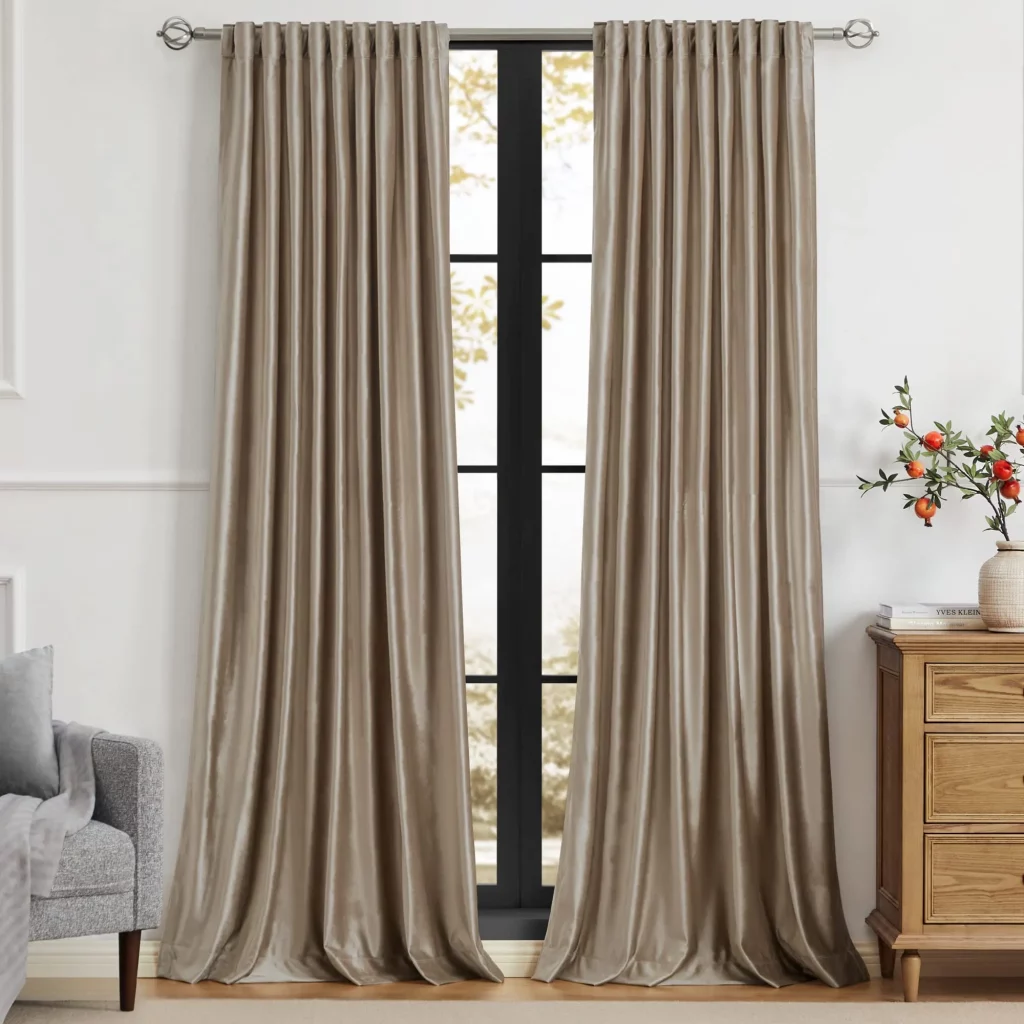
    silk is a good choice if you want a nice fabric for both fancy and formal rooms. It looks shiny and pretty for living rooms, dining rooms, and bedrooms. But silk doesn’t like bright light, heat, or water. Make sure to cover it so the sun doesn’t damage it, and don’t put it in places like bathrooms or kitchens where it can get wet. If you like silk but think it’s too hard to take care of, you can choose fake silk instead.

    Faux Silk

    Silk is famous for its elegance and is a popular choice for roman blinds. You can choose between real silk, made from silkworm cocoons, and faux silk, which is usually made from polyester. Real silk has a shiny feel, while faux silk is more durable and resists fading. Both types can improve the luxury of formal areas like living rooms and dining rooms. All silk blinds are delicate and costly. It is best to use them in dry places and handle them gently to prevent damage.

    Velvet

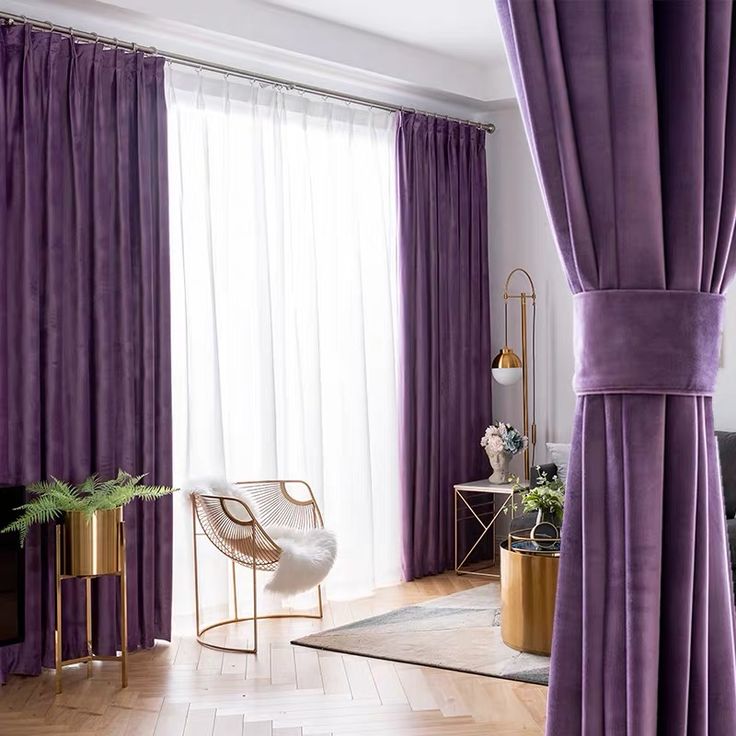
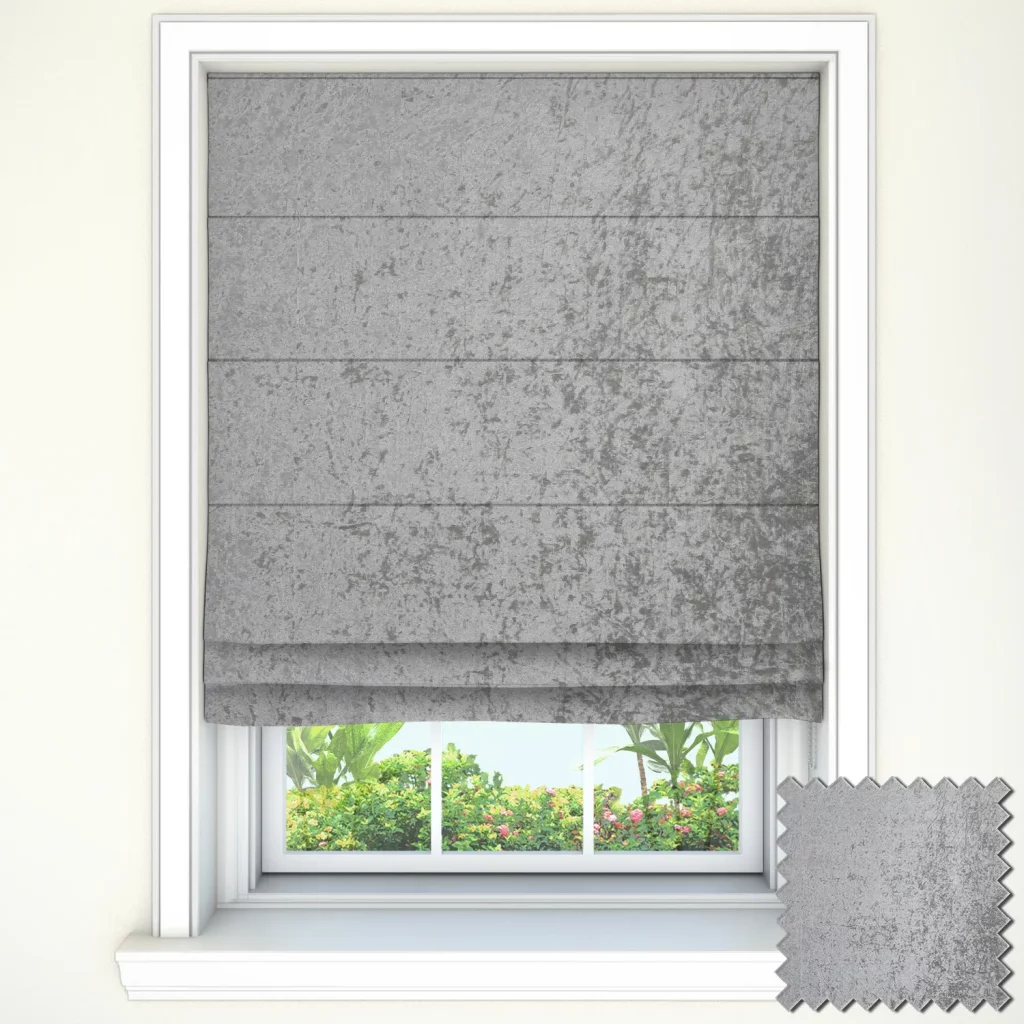
    Velvet Roman blinds give a luxurious touch to the formal decor. They have a rich and soft texture and a subtle shine. While they bring warmth and sophistication to a room, velvet can pill, but regular vacuuming helps keep them looking good. Their heavy fabric makes them perfect for smaller windows or as accent pieces, but they can be hard to open and close on larger windows and may block more light than lighter fabrics. Still, their rich style and cozy feel make them a good investment for anyone wanting a high-end, timeless look in their home.

    Woven Woods

    Woven wood fabrics, made from natural materials like grasses, reeds, bamboo, and jute, provide an eco-friendly look that gives warmth and beauty to any room. These durable fabrics allow light to filter in while maintaining privacy. They mainly come in Flat Roman blinds, which have a modern style, but you can also find some that work with Cascade Roman blinds. These have a flowing design that looks sophisticated. Woven wood window treatments are perfect for those who want both style and practicality. It allows insulation and control over light.

    Polyester 

    Polyester is a good choice for roman blinds. It is strong, cheap, and doesn’t wrinkle. These blinds dry fast and are easy to clean. They work well in bathrooms because they can handle moisture. However, they can hold onto smells, so they aren’t the best for kitchens. When picking polyester blinds, choose ones that feel nice and not too thin.

    Conclusion

    Now you know about the best fabric for roman blinds. We talked about fabric for Roman shades and blinds. When choosing fabric for Roman blinds, think about your style and what you want. Keep in mind how much light you want in the room and if you need privacy. Stiff fabrics like cotton and linen are good for a neat look. Soft fabrics like wool are great for a more laid-back style. Heavier fabrics help keep your space private and control the light better. 

    And lighter fabric for Roman shades and blinds, like sheers, let in more natural light and give a fresh feel. For rooms with moisture, like kitchens and bathrooms, pick fabrics that are strong and easy to clean. Living rooms and bedrooms can look beautiful with rich materials like velvet. Lastly, for the best Roman blinds, contact Aura Curtains or visit us today.

  • A Comprehensive Guide to Plantation Shutters VS Blinds

    A Comprehensive Guide to Plantation Shutters VS Blinds

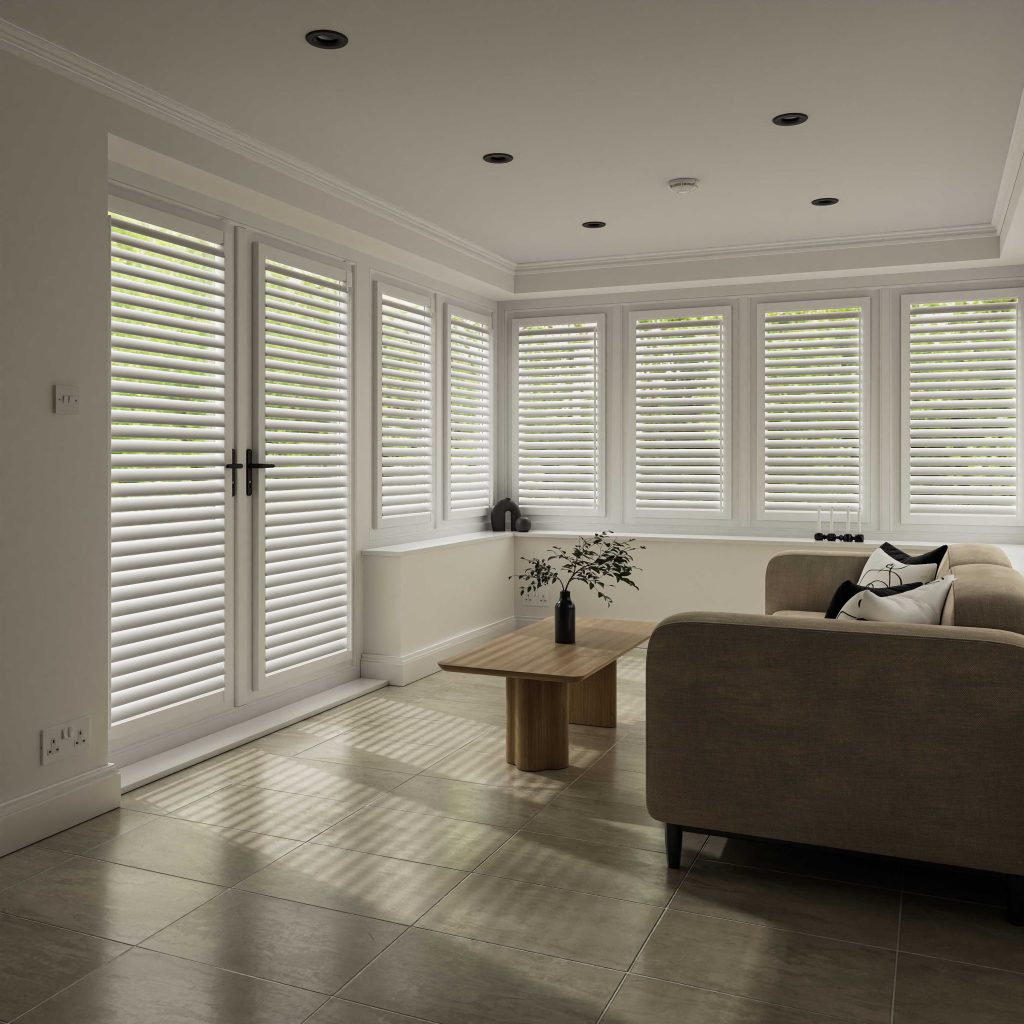
    The decision to choose between plantation shutters and blinds is critical especially when selecting the window treatment for your home since their features vary greatly in terms of appearance and utility. Though plantation shutters vs blinds are useful in dealing with light control and privacy they are unique in their offering. Classic plantation shutters look more traditional they give less clear barriers to light and are more insulating. In contrast, wood blinds have a larger set of styles and can cost less than cellular ones. At last, the decision must be subjective and take into account the personal requirements and needs, as well as the architectural characteristics of the living environment. 

    Standing in front of your windows what you see is the perfect window treatment – attractive, practical, and durable. Still, with so many decisions available in the market, choosing between plantation shutters and blinds may be a real challenge. Fear not! This article explores plantation shutters vs blinds as an option so that you can choose the most suitable window dressing for your home.

    What is a plantation shutter?

    Plantation shutters are immovable panels that span across your window. It has louvers that can be adjusted up or down to let in light or provide privacy. Primarily, the best plantation shutters are made of wood, and timber but can similarly be produced using vinyl or composite materials.

    Benefits of plantation shutters:

    Plantation shutters play a great role in the texturing of homes, they bring so much texture and design to homes. Plantation shutters are an effective type of shutter that can be installed inside the window frame or outside of the frame. An inside mount is usually taken for a small room which offers more space as compared to an outside mount, for a big room.

    Shades and Colours:

    For the traditional style with plantation shutters, homeowners have the option to choose plain colors, wooden shades, or even white or neutral colors.  Another advantage of plantation shutters is the flexibility of use since they can be painted. Painting plantation shutters with bright colors, contribute to opening up the room and bringing your spirit into the space. 

    Unique designing:

    Yet another flexible feature of the best plantation shutters is that they can essentially be put on your windows full or on only half of the window. If you install plantation shutters only at the lower part of your window, you can add the top part with a customized valance which provides even more texture and makes your room even warmer and cozier.

    Maintenance and caring:

    One common oversite is the work that goes into maintaining and caring for the window treatments when making the purchase. The best plantation shutters are those that have big louvers as they take less time to clean, mostly because of the ease of accessing them and in addition, the spaces between each louver are wider.

    Customized shutters:

    The most unique attribute of plantation shutters that set this particular window treatment as a favorite among homeowners is that it finishes as a part of the room rather than withdrawing in the backdrop. Regardless of whether you use the traditional white, or have chosen a bright color for your wall, Plantation shutters are a stunning feature in your interior. Also, because shutters can also be customized for any window, regardless of their dimensions, shutters assist in decorating your area, providing depth and personality to the room.

    What are Plantation Blinds?

    Blinds are made of thin strips – they are called slats. They can be of two categories horizontal and vertical. The slats can be operated to allow light in and for screening and can open and close fully. Blinds can be of wooden, aluminum, or fabric material.

    Benefits of Plantation blinds:

    The advantages of using blinds are as follows:

    Versatility: It comes in many designs and types of materials from marble or granite to expensive hardwood.

    Cost: In most cases, plantation blinds cost less than plantation shutters.

    Ideal Use-Cases for Blinds 

    Blinds are suitable for a variety of settings, including:

    Offices: Where light control is necessary to minimize glare on displays.

    Bathrooms: Blinds also come in materials that are resistant to water including vinyl or fake wood.

    Bedrooms: Blackout blinds can create total blackout which ensures that one has a good night’s sleep.

    Maintenance and Care for blinds

    Keeping blinds in top condition is relatively simple:

    Regular Dusting: Clean slats should be done using a microfiber cloth or a duster.

    Spot Cleaning: For stains or spillage, that area must be wiped with a damp cloth.

    Professional Cleaning: When it comes to fabric blinds, then it can be advised to turn to professional services for deep cleaning.

    Blinds provide a functional as well as a decorative solution to window coverings for people who want options and cost control.

    What to choose: Plantation shutters vs blinds

    Not only do shutters and blinds make an important aspect of the entire home design interior. Choosing which option to go with depends on a few key factors such as personal preference, budget, and location. From this article, you will learn about the Plantation shutter’s price, the advantages of both Plantation shutters and blinds, and when to use Plantation shutters or blinds in your house. Here are some simple guidelines to keep in mind when comparing products:

    Budget: When choosing between blinds and plantation shutters, it is important to assess the cost; the strength and how long they will last, and the width of the frame. Plantation shutters are comparatively costly and require extra space when installed but they are long-term solutions to window treatments.

    Durability: Though blinds have a durability of 4–5 years, shutters can last about 25 years at most if well-maintained. Privacy and plantation shutters also afford incredible convenience, making your home a closed environment due to lack of air penetration hence reducing the costs of heating and air conditioning.

    Preference: Both types of window treatments are available in a cordless version and can be made child-safe. All things considered, plantation shutters look significantly better than blinds. 

    For those who are in a constant state of confusion with both products and are still pondering over What are Plantation Blinds, as well as What is a plantation shutter, consult a professional for them. One doesn’t have to spend a lot of time researching and stressing over which window treatments to get. With professional help, they can choose for you according to all your requirements as well as preferences. Window coverings come in a wide variety of textures, styles, materials, and variations, and the experts do not mind discussing your choices with you and assisting you in deciding between plantation shutters vs blinds. Having a transparent discussion with your consultants about what you require and need will allow them to provide you with options accordingly. Keeping your requirements and needs in mind a professional can guide you through every aspect and will differentiate the difference between blinds and shutters so you can experience what you truly want for your windows.

    Similarities between plantation shutters vs blinds:

    • Primary Function: Shutters and blinds are utilized as window décor as they have the function of controlling light and offering privacy.
    • Customization Options: Each of them comes with a range of customization types, which means you can always make them fit your tastes. For instance, one can select from the varying colors, and materials ranging from wood, plastic, and alloys for both shutters and blinds.
    • Installation Methods: Shutters and blinds can be installed in different ways: inside, outside, or between the glass which depends on how your windows are located.
    • Maintenance Requirements: Both types of window treatments need some maintenance like dusting and washing very often for a better appearance and longer life.
    • Energy Efficiency: In this respect, shutters are generally more effective insulators than blinds; nevertheless, both of them return significant values to energy saving by either preventing heat from getting to your rooms or by insulating your rooms from all that cold that tries to enter through the windows.
    • Style: Plantation shutters are known to bring the timeless dignified look that makes homes more valuable and attractive. Blinds are more varied in their type and you can easily find what fits your design tastes most.
    • Light Control: Plantation shutters and blinds give equally good control of light. Shutters on the other hand their louvers offer much better control because they can be adjusted. With them, you can position to get the least amount of light as possible, or you could position to get a fair amount of light as possible or anything close to what is required. This means that blinds, based on their kind, may have some drawbacks. But Venetian blinds give reasonably efficient control over the amount of light getting through while roller blinds give less control – they either let all the light in or none of it.

    Difference between blinds and shutters:

    Contrary to what many people may think, there is a small difference between blinds and shutters. However, it is too important to consider these dissimilarities at the time of selection. For instance, plantation shutters are generally pricier than real wood and synthetic wood blinds, but these window treatments are much more durable and are good-looking with an antique appearance. Wood blinds are a bit more expensive than the former ones but are also insulating and give a more stylish look and feel.

    Here are some of the major differences between blinds and shutters:

    Construction:

    Window wood blinds have steady slats, which are horizontal and hung on cords. On the other hand, Plantation shutters consist of solid panels hinged to the window frame and are fitted to the window frame with brackets.

    Light control:

    The shutters have more light control as compared to wood blinds because the panels of plantation shutters can be opened, closed, or moved with separate panels at a time.

    Long-Lasting:

    In terms of durability, plantation shutters are better than wood blinds since plantation shutters are constructed out of solid materials.

    Insulation Potential:

    Though both wood blinds and plantation shutters can afford insulation, in general, plantation shutters are believed to be more successful in resisting heat and cold because of their sturdy structure.

    Cost:

    Plantation shutters are more costly than wood blinds due to the quality and construction of their materials.

    Elegance and Sophistication:

    Although both these window coverings can look great in your chosen room, plantation shutters are more elegant and classy. On the other hand, wood blinds give a boost of tradition and contemporaneousness to the interior design of the room.

    In Conclusion:

    Both Plantation shutters and blinds are good products, and when they are fitted in your home, they provide different operations. In general, blinds are made more efficient in small-sized rooms, and shutters are showcased better in larger-sized rooms. 

    Plantation shutters as well as blinds come with individual advantageous features and could add value to your home as far as comfort and outlook are concerned. Some of the factors that should be considered are; preference, the style of the house, the installation process, and the cost involved. Please bear in mind that getting professional help does offer advice that is unique to the circumstances of the client.

    Both Blinds and Plantation shutters are good for several reasons. In case you are facing any issues deciding which of the two to select, contacting a design consultant can guide you and provide style, color, and texture tips on how to come up with the final choice between Plantation shutters and blinds. By consulting and speaking to a window treatment specialist before making your final decision you can seek recommendations from them, as well as get a detailed explanation of how the installations are done, and how to balance your budget while selecting one that will serve its intended function as well as add beauty to your house.

    Lastly, the two come down to the preferred style, the room requirements, and the amount of money that is available. Although the plantation shutters have a classical look and high moisture resistance, blinds are more diverse and chic.

  • The Best Blinds for Small Windows: A Comprehensive Guide

    The Best Blinds for Small Windows: A Comprehensive Guide

    When interior designing or even redesigning a particular room, there is always the somewhat tricky issue of small windows. These windows can be installed in many rooms, such as bathrooms, kitchen stairs, or hallways.

    Regardless of the area, the right blinds will make a considerable difference not only in the aesthetic point of view of a room but also in its usability. Selecting the best blinds for small windows depends on the size, type of material, and available options for light regulation.

    In this guide, we are going to establish several types of small window blinds that can change your ambiance. In terms of style, there are many possibilities here, whether your goal is privacy or an influx of light.

    Why it is important to get the Right Blinds for Small Windows?

    Small windows are not the main attraction of a living space most of the time but their treatment matters. Deciding on the correct blinds for small windows is crucial to avoid putting pressure on the area yet providing effectiveness in functionality. Small windows are typically in need of blinds that are properly fitted, in correct proportion to the window, for the desired light control and which are appropriately colored and textured to the context of the room they are in.

    Some of the key considerations when choosing small window blinds include:

    – Size and Fit: Blinds should ideally measure the size of the window to avoid having unnecessary gaps or were the blinds too large, they would overpower the window completely.

    – Light Control: Think about how much of the natural light you intend to let into your home. The best blinds for small windows will enable you to manually control the level of light that is allowed into the room.

    – Style and Aesthetic: The blinds should complement the furnishings by making the room look good without overemphasizing an already small window. Modern designs that are elegant, simple, and elegant are always suited for small areas.

    Types of blinds that suit Small Windows:

    Some of these blinds cannot be fitted for small windows. Here are some of the best options to consider:

    1. Venetian Blinds:

    Venetian Blinds

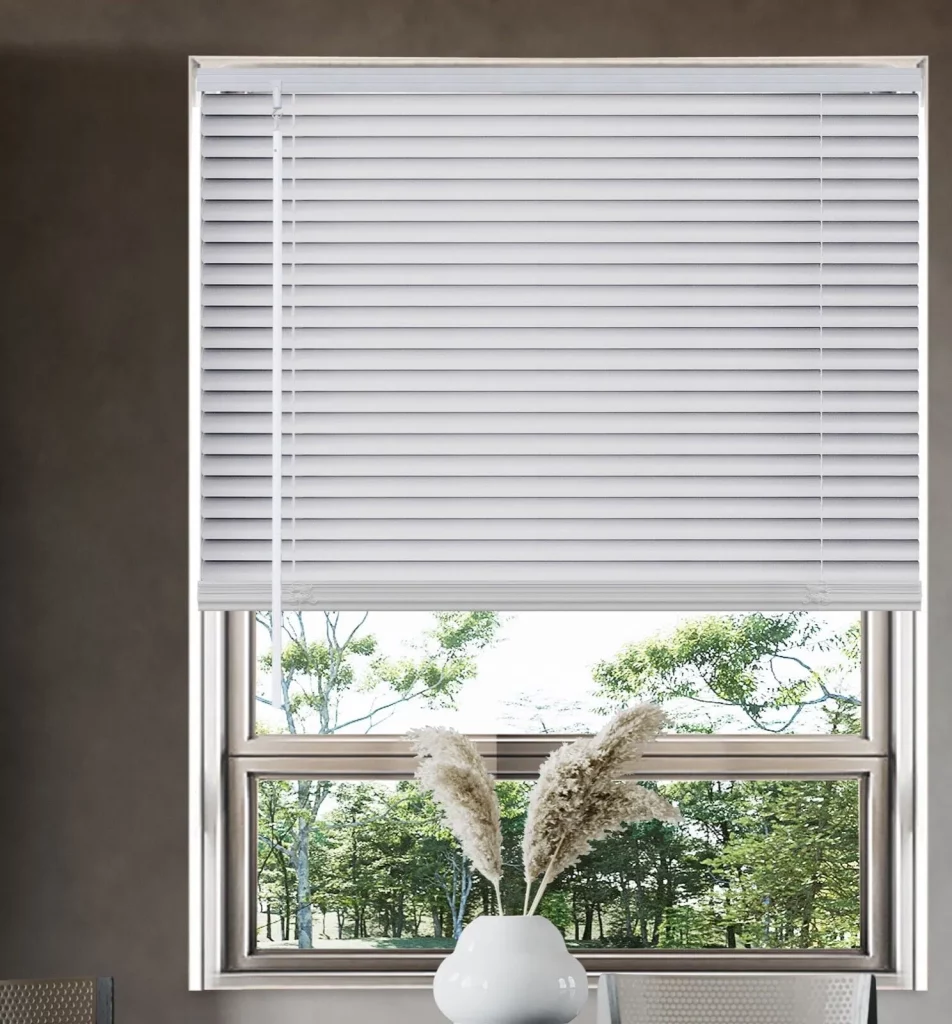
    Venetian blinds are arguably one of the most suitable types of window blinds for small window treatments. These small blinds will comprise a panel of horizontal bars, which can be rotated to allow light or privacy into the room. They are distinct, uncluttered designs and are available in a range of materials such as wood, aluminum, and PVC to fit different rooms.

    Advantages: Easy to control the amount of light let in; they come in assorted materials and colors and can be installed nearly anywhere in the house, including the kitchen or bathroom.

    Best for Residents seeking a simple and elegant design of blinds for small windows for the house.

    2. Roman Shades:

    Roman shades are significantly more popular than the standard blinds for many people. They are of fabric that can be folded neatly when pulled up and are ideal for areas where an uplifting but not as crisp look is preferred. It is known that Roman shades provide great light control; there are numerous choices regarding fabric, color, and pattern.

    Advantages: Smooth texture gives an esthetic look to the room, has a variety of fabrics to choose from, and regulates the amount of light as well as privacy level.

    Best for: Kitchenettes and corridors, entrance halls, cloakrooms, corridors, and short windows where a relative emphasis is still placed on the decorative element.

    3. Roller Blinds:  

    Roller blinds are uncomplicated yet very reliable. It is a one-piece blind, and if you are not using it, you simply need to roll it up. Roller blinds are the best for short windows, as they can be completely rolled up to allow maximum light onto the full window.

    Advantages: Streamlined, modern design; easy to operate; compact footprint; available with blackout or light-filtering fabric.  

    Ideal for: Bathrooms, kitchen areas, or other rooms where you want to allow as much natural light in during the day.

    4. Cellular (Honeycomb) Blinds: 

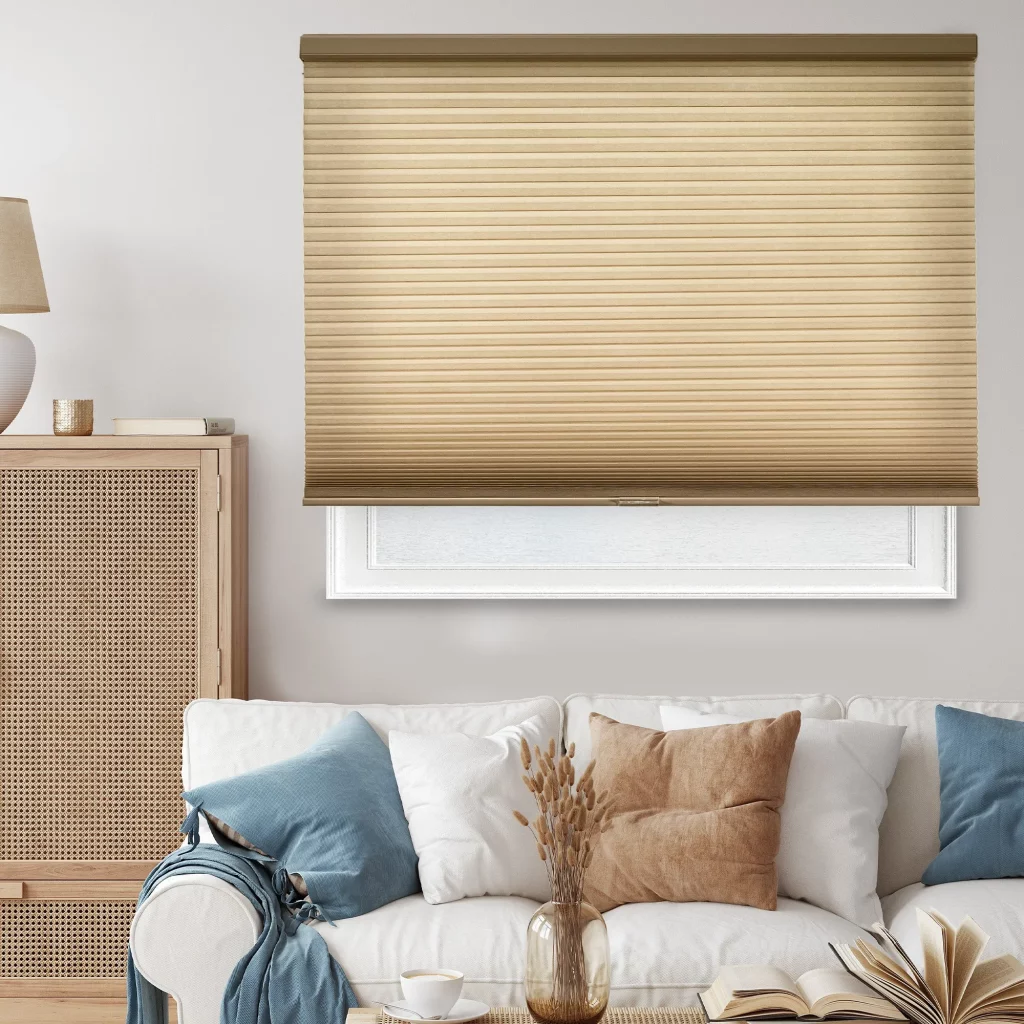
    Made for light and energy efficiency, cellular blinds, also known as honeycomb shades, offer the room some insulation, making it warmer in winter and cooler during summer. Many types of cellular blinds are available for various cell sizes, making them a convenient option for small window blinds.

    Advantages: Insulates the window, has very good light control options, and comes in single, double, or triple layers for extra energy efficiency.  

    Good for: Homes in cold climates or anyone wanting a very energy-efficient window treatment.

    5. Café Blinds:  

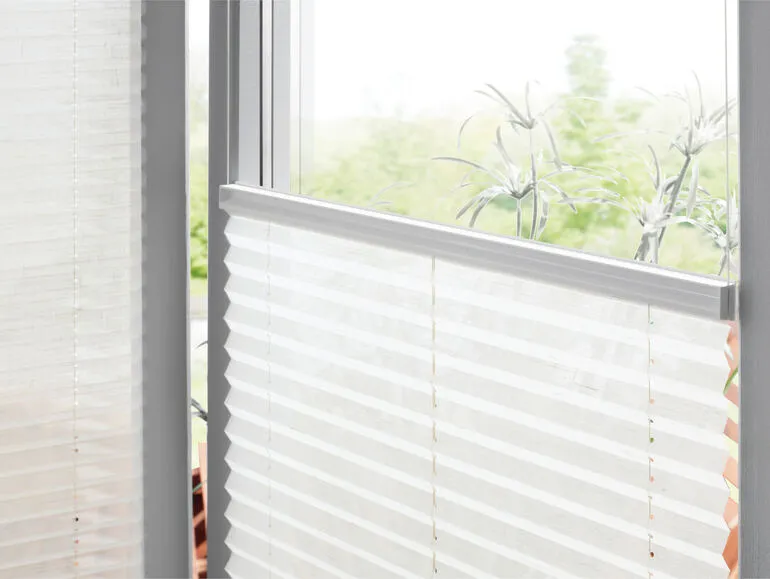
    Café blinds, sometimes called half-height blinds, are fitted only to the bottom part of a window, leaving the upper part free for daylight. These are great examples of short window blinds, especially in kitchens or bathrooms where privacy is needed at the lower portion of the window.

    Pros: Provides privacy on the bottom while allowing sunlight at the top; works well in kitchens, and bathrooms, and gives a relaxed country look.  

    Ideal for: Tiny kitchens, bathrooms, and small dining spaces with shorter windows.

    Materials for small window blinds:

    Blind material is also significant for functionality and appearance. Here are some of the popular materials to consider for small blinds:

    – Wood: Gives a traditional, organic appearance but is not appropriate to use in areas with lots of steam such as the shower.

    – Aluminum: It is light in weight, hard-wearing as well as moisture-resistant, giving it applicability in the circulation areas such as kitchens and bathrooms.

    – Fabric: Similar to Roman shades fabric blinds give the room warmth and coziness but can be more difficult to clean.

    PVC: Appropriate for the area where humidity levels are high, PVC blinds are resistant to wear, simple to wash, and not expensive.

    Styling Tips for Small Windows:

    When dressing the best blinds for small windows special attention should be paid not only to the windows themselves but to the room’s interior as well. Here are some styling tips to enhance your space:

    – Choose Light Colors: Blinds with lighter colorations will cause the windows to look larger and contribute to the illumination of the room.

    – Minimalist Designs: This means that you should select stylish and elegant doors that do not overlap with the windows or the whole room.

    Match Blinds to Walls: Speaking of blinds, when the blinds are the same color as the wall, the window will blend in more easily with the rest of the interior.

    Conclusion:

    It is essential that when looking for the best blinds for small windows we are not only looking for size but functionality, style, and how they fit with the rest of your decor. From the classic Roman window shades to the simplified roller blinds or the energy smart cellular blinds, you will always find a match for your small window.

    As much as the size, the type of material used, and the organization of your blinds, you can make your home more beautiful and functional. But with reliable sources such as Aura Curtains, you be certain that the small blinds you buy fit the windows appropriately and beautify the house.

  • How Much Do Blinds Cost? Breakdown of Each Type – The Ultimate Cost Guide

    How Much Do Blinds Cost? Breakdown of Each Type – The Ultimate Cost Guide

    Blinds are an integral part of home décor because they play a significant role of acting as a curtain that not only defines the beauty of a house but also serves as a barrier to outsiders, a controller of light, and assists in cutting down the cost of electricity bills. 

    If you are starting a new home, or if you are planning to redecorate the home you’ve been living in for years, the issue of how much do blinds cost? Eventually, it comes up. Since one can find a range of cheap to costly blinds starting from simple blinds to advanced motorized ones, a point of understanding the cost will be important.

    Here, you will find average costs for blinds for a house, different costs per window, and comprehensive answers to the most frequent questions such as how much does it cost to have blinds installed? And why are blinds so expensive? And also how much do blinds cost?

    2 Factors that Influence the cost of Blinds:

    The cost of blinds can also differ considerably considering different aspects. And when you know all of them, you will get a better picture of how much blinds cost per window? In your situation.

    1. Material: The price of blinds is also partly defined by the material of which it is made. For instance, blinds produced from finer materials such as wood, bamboo, or custom material cost more than blinds produced from standard materials like PVC, vinyl, or aluminum.

    2. Window Size: Thus, the cost issue will be automatically higher when bigger windows are installed since more material is needed. Then, custom-sized blinds for non-standard sizes of the windows are manufactured and they cost more because of this reason.

    3. Type of Blind: The price of the blind also depends on the type of blinds you want to use. Even though standard roller or Venetian blinds are cheaper, Roman blinds or motorized blinds are much more expensive.

    4. Customization: If you want blinds that will blend with a specific interior décor or fit some specific windows, then expect to pay more. Some of the blinds are manufactured to customers’ specifications and as such, they cost more than the standard blinds, which is an answer to how much do blinds cost per window?

    5. Installation: If you hire some professionals to install your blind, the cost of installation will also be included in the total cost. You will find out how much does it cost to have blinds installed? In another subtopic of this guide.

    How Much Do Blinds Cost? Classification of Various Blind Kinds:

    Let us discuss the average cost of blinds for a house by considering the most preferable blinds in the current world. Both types of blinds are different in construction, design, and level of price offered to the customers.

    1. Venetian Blinds:

    Venetian blinds are among the widely used and most flexible blinder types that comprise horizontal slats that enable tilting to control the entering light supply in the room. These blinds are in different types of materials such as wooden, faux wooden, aluminum, and PVC.

    • Cost: The average price of Venetian blinds is between $30 and $100 per window, depending on the material used.
    • Material: Venetian blinds made of wood are relatively expensive and cost between $50 and $100 for windows and those in faux wood or aluminum are cheaper and cost between $30 and $50 per window.
    • Installation: In the case of professional installation, the cost of labor would be around $50 to $75 per window.

    Venetian Blinds for Large Spaces:

    If you are going to install Venetian blinds in wider areas such as living areas or the master bedrooms, you should go for the wooden or the faux ones due to their superior quality. But all the same, you should know that this will boost your general cost.

    2. Roller Blinds:

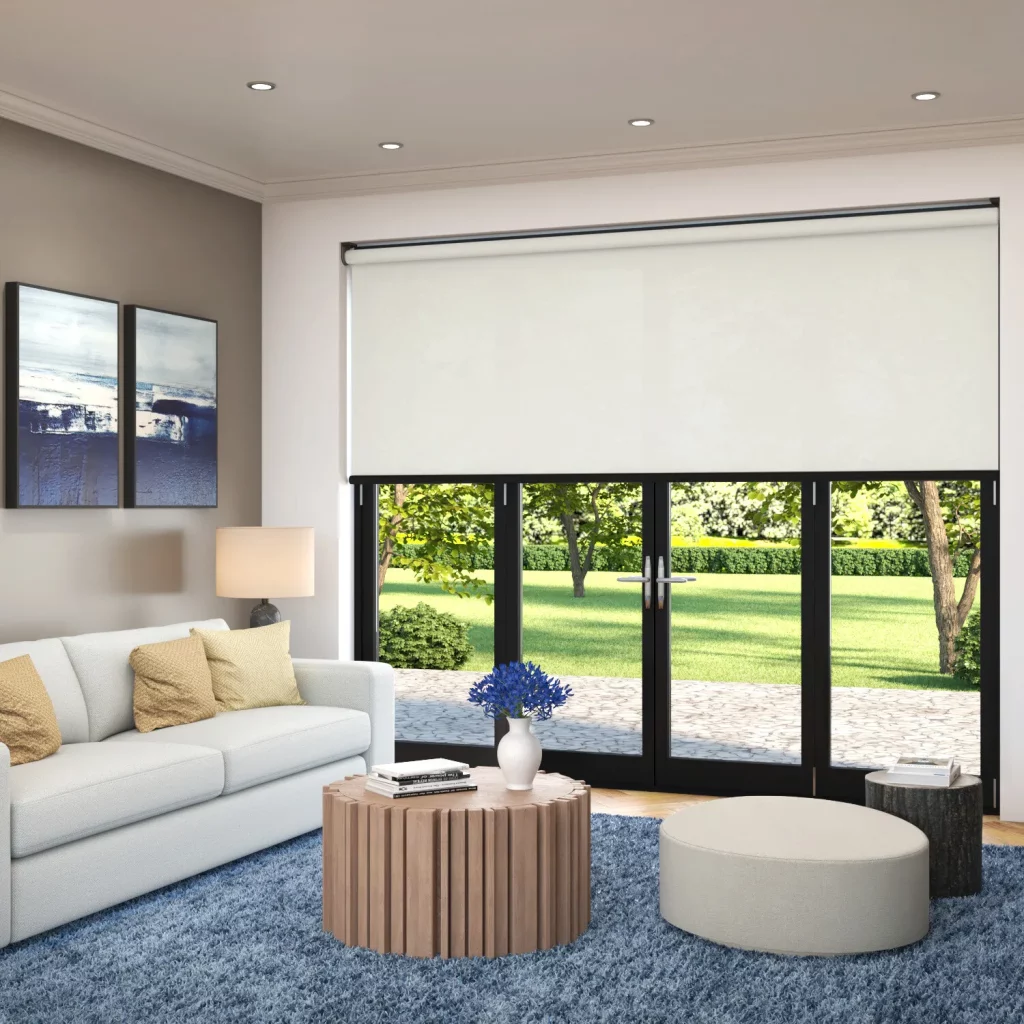
    The blind roller is the most economical and simple method of having no hindrance on the window. These include a single piece of fabric that is rolled up and down to achieve full or partial coverage. They are widely preferred for modern homes mainly because of the appearance of the furniture.

    • Cost: As with most blinds, roller blinds are relatively cheap, being priced within the range of $20- $50 per window.
    • Material: The standard fabrics are typically less costly than the blackout or textured fabrics and can cost between $20 to $30 per window.
    • Installation: As with many blinds, roller blinds can be installed by the homeowner, but professional installation may cost between $40 and $60 per window.

    Custom Roller Blinds:

    Some homeowners choose custom fabric or motorized roller blinds that would add a cost of $100 per window or even more. Aura Curtains has a large number of roller blinds produced to suit any stylistic preference for interiors.

    3. Vertical Blinds:

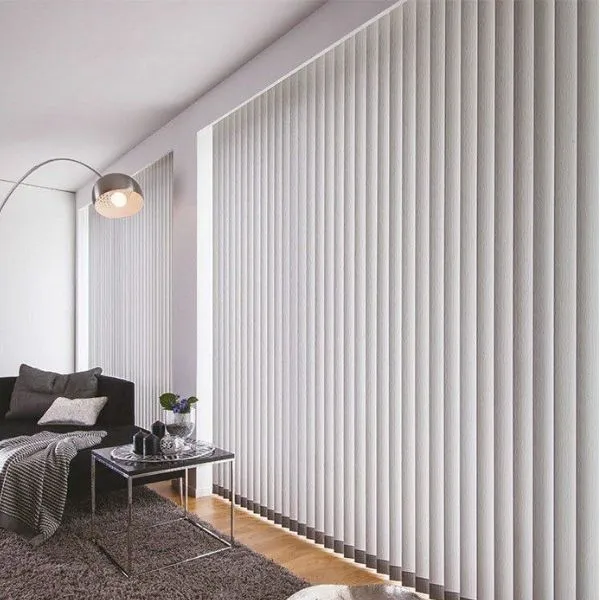
    Vertical blinds serve as a favorite for rather wide windows including sliding glass doors or floor-to-ceiling windows. The blades are also adjustable, either to the horizontal position or completely pulled to the side, thus allowing variations in the level of admitted light.

    • Cost: Vertical blinds can cost anything from $50 to $200 per window depending on the size and material.
    • Material: Therefore, PVC and fabric slats are the most common. PVC is relatively cheaper and costs approximately between $ 50-100 per window while costs for fabric slats are slightly more expensive, running between $100-200 per window.
    • Installation: The initial cost of vertical blinds is somewhat higher than horizontal blinds because of the size of the window Vertical blinds cost is normally between $70-$100 per window.

    Modern Designs for Vertical Blinds:

    However, if one is in search of something out of the regular aesthetic, Aura Curtains includes fashionable vertical blinds in the style and fabric of contemporary buildings.

    4. Roman Blinds:

    Roman blinds are what could be described as stylish and seeking to be decorative in every possible aspect. When lifted, they can be easily folded into pleats giving any room a professional look. Roman blinds are manufactured from high-quality fabric which is the main reason for increased cost.

    • Cost: Roman blinds range from $50 to $120 per window because of the fabric type and possibilities of individualization.
    • Material: Using silk or linen may bring the price up to more than $100 per window while choosing cotton or synthetic can cost between $50 and $80 per window.
    • Installation: Roman blinds can be bought ready-made and self-installed or ordered from a professional who installs them for $50 to $90 per window.

    Why Choose Roman Blinds?:

    Roman blinds are ideal for the living area or bedrooms given that you may want to achieve both style and utility. Roman blinds are elegant and stylish and can be produced to fit both a classic and a contemporary home décor at Aura Curtains.

    5. Cellular Blinds (Honeycomb Blinds):

    Honeycomb blinds also referred to as cellular blinds due to the organization of the structure of the blind, is one that is made with energy conservation in mind. For this reason, their structure retains air to keep rooms warm during winters and cool during summers due to their honeycomb structure.

    • Cost: The price of cellular blinds ranges from $30 and $90 per window.
    • Energy Savings: These blinds do tend to be more expensive than others to purchase in the first place but they are energy efficient which can mean that you will be using less energy so you save money in the long run.
    • Installation: The cost of installing cellular blinds is in the neighborhood of $40 to $75 per window and this once again will vary with the size of the window and its configuration.

    Are Cellular Blinds Worth the Cost?:

    From the perspective of energy conservation, the cellular blind can be regarded as a classic example of getting a long-term payback as the costs of heating and cooling are brought down.

    6. Motorized Blinds:

    Motorized blinds can be considered as the ultimate product of convenience and innovation. Motorized blinds are ideal technological innovations geared towards today’s world as they can be controlled either from a distance or through a mobile device.

    • Cost: Motorized blinds are the most expensive type of blinds and the cost of the blinds varies between $200 and 600 for each window.
    • Exposure to smart home: Most motorized blinds can be hooked into the larger smart home ecosystem, which adds around $100-300 depending on what you want. 
    • Installation: Installing motorized blinds requires professional expertise and will cost you anywhere from $75 to $150 per window.

    How much does it cost to have blinds installed?

    One of the most frequently asked questions after how much do blinds cost? How much does it cost to have blinds installed? This is applicable for all sorts of blinds, you will only have to bear the cost as per the type of blinds & size of windows and according to customization required if any, we will also discuss the average cost of blinds for a house.

    • DIY Installation: Many homeowners opt to install their own blinds, in order to avoid paying for labor. That said, DIY installation can take time and must be done just right — especially for more advanced styles such as motorized or custom blinds.
    • Professional Installation (per window): Professional installation costs between $50 and $100 per window, depending on the complexity. The total price of your order takes into account the labor and any extra tools or materials that may be needed to fit properly. 

    You can consider, for example, the installation service from Aura Curtains that non-problematically certifies that your blinds are installed faultlessly.

    Why Are Blinds So Expensive? 

    Apart from the question how much do blinds cost? People are also concerned about the high prices of the blinds:

    Material Quality: High-end materials, such as hardwoods or bamboo cost more than synthetic alternatives like PVC or Vinyl. Not only will the material will impact the durability and lifespan of the blinds, but also its beauty.

    Customization: Custom blinds are made to fit individual window sizes and designs equipped with personalized fabric selections, patterns, and colors When compared to off-the-shelf options, this level of customization dramatically raises the cost.

    Energy Efficiency: Some blinds, including cellular or honeycomb blinds, are created to be energy-efficient. While these could have a larger price tag upfront, they can save you money over time by lowering your energy costs.

    Smart Technology: Motorized and smart blinds take home automation a step further. Their price ascends by virtue of the high-tech features that many models allow, ranging from remote control and harmoniousness with smartphone apps to automatic timers.

    Brand Recognition: In the same manner as anything you get for your property, you will pay much more for popular brand names of blinds. Luxury or custom blind brands will typically have a higher price point due to their reputation for quality and design.

    How to save money on blinds?

    Blinds can be expensive, especially if you are outfitting an entire home. That said, you can save money without skimping on quality.

    1. Standard Sizes: Custom blinds will typically cost more than a standard size. Try to determine the size of your windows so that when picking out blinds, you will have to pay for custom dimensions.
    2. Affordable Materials: Vinyl, PVC, or aluminum blinds tend to be more cost-effective than wood or fabric blinds. In addition to being made of imprinted concrete, these materials are also durable and easy to clean which makes them elsewhere-practical for high-impact areas such as kitchens or bathrooms.
    3. Buy While On Sale: Different retailers may put their blinds on discounts when they have a seasonal sale or promotional event Look out for these offers to cut down your expenses on buying the suits.
    4. Do It Yourself Installation]: If you are handy with the tools, then self-installing blinds can help you save a lot of money without additional labor charges. 

    Most basic blinds are easily installed, and even complete instructions for noting how to install your new blinds can be just a few steps that you complete in an hour or two.

    Aura Curtains is one of the top blinds and curtains suppliers in Dubai, delivering a broad range of stylish, practical window solutions to suit every lifestyle and budget. You can have an integrated look at every level of your home —whether you are searching for economic roller blinds, insulating cellular blinds, or even premium motorized blinds, Aura Curtains has something for you. 

    They use only top-notch materials in their products, and they are made to ensure durability and elegance. Its uniqueness comes from the fact it specializes in customization with a variety of fabrics, colors, and designs on offer to help you achieve the look. 

    Conclusion:

    Knowing how much do blinds cost per window? Give you an idea to assess while looking for window treatments. You can choose the best blinds for your home which are provided at a less expensive cost along with those discussed in this article. If you need high-quality, customizable blinds in Dubai, Aura Curtains are here for you. Whether you are looking for budget roller blinds or high-end motorized Aura Curtains, we can provide the perfect solution at a fraction of the cost.

  • All You Need To Know About Day And Night Blinds:

    All You Need To Know About Day And Night Blinds:

    Fancy day and night blinds are quite popular mainly for their modern appearance and practical application of use. Today available, these blinds are perfect for contemporary houses and their owners can easily control light and privacy. No matter if you are decorating a bedroom, living room, or working office, day and night blind become a perfect fit that can bring more comfort and beauty to your interior. In this article, you will learn a lot about day and night blinds. 

    What are Day and Night Blinds?

    Day and night blind, also called Zebra or Vision blinds, come with strips of sheer and opaque material. Due to the design of the blinds, they can be adjusted to suit the level of illumination required in the room and block out any light. The translucent one lets in light to come through with the outside view to be seen while the opaque fabric gives a blackout feeling when need be.

    The major selling point of best day and night blinds is that they serve two purposes. One can easily manipulate the relative positioning of the sheer and opaque fabrics to as much light as one wishes to let into the room. 

    How do Day And Night Blinds work?

    Perhaps one of the most frequently asked questions is; how do day and night blinds work? The answer to this can be found in their design which, while uncomplicated, contains all the functionality that is needed.

    Day and night blinds have two fabric fabrics one is translucent while the other is opaque. These alternating fabric strips can be operated in two ways, either by a control chain or by motorized as well, all based on the model. 

    – Sheer Mode (Day): When you arrange the cloth in several layers the light from outside enters the room and you get to have your space open and rather be more private. This mode is useful during the day if you want to light into the house but you do not want to have a clear view of the outside.

    -Opaque Mode (Night): In this setting the opaque strips fit and it becomes fully opaque and lights are shut off. This is best appropriate for bedrooms, media rooms, and any other area where one may need total blackout or no glare.

    There are two modes that can be switched by pulling the control chain or pressing the remote button in case the models are motorized, which makes you the master of your atmosphere.

    Day and night blinds pros and cons:

    Similar to any other window dressing, day and night blinds have their advantages and disadvantages. The information presented on this page will assist in making the right decision on whether to opt for the day and night blinds pros and cons.

    Pros:

    • Light Control: There is one distinctive benefit of day and night blinds: they allow regulating the admission of natural light most accurately. Be it direct sunlight, indirect sunlight or no sun at all these Blinds provide everything you have desired.
    • Privacy: These blinds are quite ideal for creating seclusion while at the same time allowing some light into the house. With the fabric strips, people on the outside cannot be able to see the people inside but light can still be obtained in the room.
    • Energy Efficiency: This also assists in controlling the room temperature in addition to controlling the amount of light allowed into the Room. In the present hot summer, one can shade it to prevent it from being too hot while in the cold winter, one can allow light to get into the room to warm up the room.
    • Aesthetic Appeal: Proving popular in an array of colors, textures, and finishes, day and night blinds will suit any style of home. The elegant, stylish looks appeal to any contemporary home, and therefore, for anyone looking to update their home decor, these would be perfect.
    • Versatility: Irrespective of whether you want to put them in your lounge, your bedroom, your office, or even your kitchen, day and night blinds do not disappoint. Thus, owing to the openness of their design and functionality, they can be used in any room of residence.
    • Easy Operation: Some of the common day and night blinds have motorized features and this is so advantageous. With the controls on a button, the blinds can be operated routinely, and you can even turn the operation into an automatic form that will operate at certain get and set hours.

    Cons:

    • Cost: The first disadvantage of day and night blinds is the fact that they are comparatively or rather costlier than conventional day blinds or curtains. It is possible to note that the use of the two-layer structure and the durability of the material can make the price of the device higher.
    • Cleaning and Maintenance: Day and night blinds are somewhat harder to clean than other types of blinds, although the operation is roughly similar. Silk material can attract dust on the sheer fabric and when washing it extra caution must be taken lest the delicate material gets ruined.
    • Light Gaps: For all the impressive qualities of day and night blinds it must be noted some are not completely blackout. Spaces between the strips can also be narrowed down and this may not be suitable for those who want the strip as a blackout solution, especially for a bedroom or home theatre.
    • Mechanism Wear and Tear: That is the time the control chain or the motorized mechanism can develop some operational problems due to wear and tear. This problem may occur in cheaper machines or if the machine is heavily used.

    Problems with Day and Night Blinds:

    Although day and night blinds provide many benefits, this type of blind has also its disadvantages that should be considered. Here are some of the most frequent problems with day and night blinds, about which you may wish to be informed.

    1. Fabric Misalignment:

    Eventually, fabric strips used in day and night blinds may not be properly aligned to provide the correct degree of light control. This can be so because of the following reasons: 

    Through constant use of the chain or improper management of the chain. If the fabric is not in hardened alignments then the strips that alternate can either not block light or filter it making both the look and performance compromised.

    2. Light Leakage:

    However, for homeowners interested in a blackout, perhaps these blinds are not the optimal option to go with. Despite this unique design that utilizes strips of fabric to create the blind, there is always the chance that a little light will find its way through the slightly raised tally. This issue can be especially troublesome in bedrooms where you need a complete blackout to have better sleep.

    3. Dust Buildup:

    Based on the type of day and night blinds, the power of pull can dust because of the amount of fabric used. This buildup does not only change the look of the blinds but can also make them stick over some time. Cleaning should be done frequently but it has been understood to be difficult because of the fabric used.

    Are Day And Night Blinds Suitable For Every Room?

    Another essential factor to think about when discussing window treatments is deciding which spaces they will be best for. Day and night blind are very popular, but are they good for every house zone? Now is the right time to discover where day and night blinds can be installed and whether they are effective in a particular environment.

    Living Rooms:

    The living room is a central space in a home; light is desirable during the daytime and not so much at night. There is no doubt that these blinds will be perfect for this space because they allow controlling the amount of light that gets in a room and the level of privacy that a room should offer. Since you can wear a sheer layer to let in sunlight and an opaque one to ensure nobody can peek into your house, it’s the best option. 

    Bedrooms:

    Regarding the bedrooms, the suitable types of necessary blinds are day and night blinds which allow changing them whenever it is necessary. The sheer mode lets in neutral and diffused light during the day so your bedroom does not feel enclosed in any way. During the night since they are opaque, the strips must offer the required levels of darkness to allow for sleep to occur. In case you have chosen complete blackout for sleep or rest, just remember that these blinds do allow some amount of light to pass through.

    Kitchens:

    Day and night blinds are also effective in areas such as kitchens, where people would like to have the natural light coming, however, privacy is needed. It is very can be adapted and this is useful in a room, which may require different levels of lighting during the day. 

     Bathrooms:

    Both day and night blinds can be used in bathrooms but it is necessary to choose moisture-resistant materials because bathrooms are rather wet rooms. If you consider privacy to be an important factor in the bathroom, these blinds are what you need. But if you want to avoid the fabric getting spoiled by moisture, adding waterproof blinds or shades will be more appropriate.

    Choosing the right day and night blinds: Some tips.

    When selecting the right day and night blinds for your home, several factors come into play, including:

    – Size and Fit: Make sure your blinds are properly window-sized and not too big or too small to get the right control on light and privacy. Inadequate blind fit also implies that some blinds allow slightly more light seepage as compared to other more effective blinds.

    – Material: Select one that suits your home’s architecture and also would not be costly to maintain. For instance, sheer fabrics might have to be washed more often than heavier fabrics for the same clothing as well and resistance to mildew might be better offered by thicker materials than sheer ones though sometimes sheer material clothing may offer better insulating properties.

    Control Mechanism: Choose between having blinds that are managed by rotation of a wand or through the use of a cord. Mechanical solutions are more convenient and may come in handy when there are many rooms in the house or the windows are located in a hard-to-reach place and the key disadvantage is its cost.

    Price and Budget: Day and night blinds are available at any price level, from the cheap to the most expensive. When making your choice, consider the quality, functionality, and price of the blinds.

    When it comes to searching for the day and night blinds for your home, Aura Curtains Miller offers its clients a high-quality and individual approach in the choice of window treatments. Having a vast range of quality products, Aura Curtains has the most beautiful and Best day and night blinds that can be ordered. Their blinds are made with precision, allowing them to blend in any home setting while giving great benefits for light and privacy. 

    Conclusion

    Day and night blinds are an exciting and modern offering for any homeowner who desires privacy, versatility in light control, and blinds’ design. Sliding doors are designed in two layers which provide the optimal combination of the natural lighting supply during the day and privacy shade at night. Although they may have their problems including light gaps and need for maintenance, the pros for most homeowners outweigh the cons.

  • How to Pull Down Blinds That Are Stuck

    How to Pull Down Blinds That Are Stuck

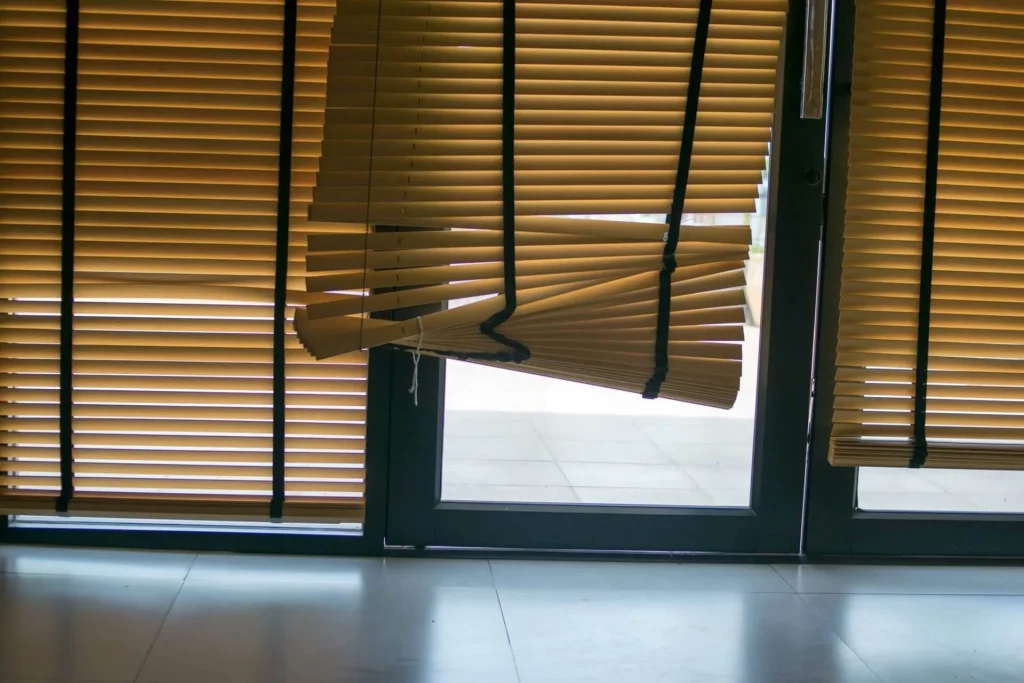
    Window blinds are really useful for controlling how much light comes into a room, giving you privacy, and making the room look nice. Sometimes, though, the blinds can get stuck and you can’t move them up or down. It can be annoying, but usually, it’s not too hard to fix the problem if you know what’s causing it. But don’t worry, because you can learn how to fix stuck blinds.

    This guide will help you fix common problems with blinds. You will learn how to pull down blinds that are stuck, cords that are tangled, gears that are not aligned, how to close blinds with string, and how to pull down blinds without strings. We will tell you step-by-step solutions to these issues.

    Common Reasons Why Blinds Get Stuck

    If your blinds are often stuck, it’s mostly because of these issues:

    • Improper handling: Be careful when you move the window blinds up or down too fast.
    • Misaligned parts: Sometimes, parts like the stick or string can get out of place.
    • Debris and dirt: Too much dust can get blinds stuck at top and then stop inside parts from working.
    • Shipment issues: Blinds don’t work properly if their parts have shifted during delivery.
    • Wear and tear: Using something too much can make it break or not work well.

    Now that you know the reasons blinds get stuck, let’s talk about how to pull down blinds that are stuck.

    1. Blinds Won’t Lower or Raise Properly

    When you try to open or close the blinds by pulling the cord, they might get stuck in the up or down position. And then you wonder why won’t my blinds go down. This usually happens when the cord is trapped in the lock mechanism.

    Solution: Freeing the Cord from the Lock Mechanism

    To open the blinds, pull the cord gently until you hear a small click. If the blinds won’t open, you may need to use a screwdriver to release the lock manually. Always open and close the blinds slowly to avoid getting the cord stuck.

    2. Blinds Won’t Tilt

    If your blinds won’t tilt, it’s often because the rod that controls the angle of the slats has become disconnected from the mechanism that makes the slats move.

    Solution: Reconnecting the Tilt Rod

    Remove the cover from the top and find the long, thin rod that runs horizontally through the headrail. Connect the tilt rod to the gears that move the slats. If it’s not connected, gently slide it back into place. Be careful when using the tilt function of the blinds to avoid dislodging the tilt rod.

    3. Blinds Stuck Due to Closed Slats

    When the slats are closed, do not raise or lower the blinds. Closed slats create extra friction, which can make it difficult for the blinds to move smoothly.

    Solution: Properly Opening Slats

    Open horizontal slats before you open or close the blinds. Pull the blinds’ cord slowly towards the middle of the blinds at a 45-degree angle to unlock them. You’ll hear a click. Let go of the cord slowly, and the blinds should start moving. 

    4. Blinds Stuck After Being Raised or Lowered Too Quickly

    When you move the window blinds vigorously up and down, the strings, because of quick movement, become tangled. As a result, the mechanism of its movement gets affected and that’s why you ask why won’t my blinds go down.

    Solution: Freeing Jammed Cords

    Open the top part of your blinds to see if its strings are twisted or stuck inside. If they are, then use a screwdriver or long-nose pliers to set the strings free. Then put the top blind part back together, and it’ll work fine.

    5. Vertical Blinds Won’t Draw Across the Window

    If you don’t have slats fully opened, the vertical blinds will not move smoothly and freely and it will affect the drawing mechanism and it will become jammed.

    Solution: Realigning Vertical Blinds

    Open the long pieces before you try to close the blinds. If the pieces aren’t moving, check if they are all in a line and not on top of each other the wrong way. Open the top part to see if the inside parts and pieces are  broken or not lined up. In that case, you might need to fix or change the inside parts to solve the issue.

    6. Blinds Won’t Lower After Shipment

    Blinds can malfunction because of Pawl binding in which the pawl, a small part that connects with the lift cord, gets stuck. It usually happens after blinds have been shifted.

    Solution: Releasing the Pawl

    Remove the long metal part from the holders to get inside. You’ll see a small piece called the pawl, which moves along a track. Use a flat screwdriver to press the pawl down. Put the blinds back in place and the string to lift the blind will work smoothly

    7. Cordless Blinds Won’t Lower

    Cordless blinds can get misaligned if you raise them too quickly or with too much force because of their internal mechanisms.

    Solution: Lowering Cordless Blinds

    Pull the bottom of the blinds down and slowly lift the bottom part to make the strings inside go up smoothly. Slats should be even when lifting the blinds. For blinds with no strings, lift them slowly so the inside parts can move up properly otherwise the inside parts will get stuck.

    8. Dirty or Jammed Internal Components

    Not cleaning the inside top part of your window blinds allows the dust to get stuck there. Then, it becomes hard to get rid of.

    Solution: Cleaning the Headrail

    Remove the blinds to clean the inside parts with a soft brush or compressed air to get rid of dust and dirt from the gears, rods, and other moving parts. Spray silicone and lubricants on the inside parts so they can move smoothly.

    Conclusion

    Now you know how to pull down blinds that are stuck. Blinds that won’t open or close properly can be annoying, but they can often be fixed easily if you learn how to fix stuck blinds. Follow the methods we’ve explained and you’re good to go. If the string is stuck, the stick is not in the right place, or the blinds are dirty, you can usually solve the problem. And if you’ve tried everything and your blinds are still stuck, you can call a professional to fix the issue.

  • The Pros and Cons of Zebra Blinds

    The Pros and Cons of Zebra Blinds

    If you want solid curtains made from durable materials like PES and cotton, zebra blinds are customizable to fit your style and home decor. They are available in various fabrics, hues, and textures, making them a popular choice for homeowners today. This article will discuss the advantages and disadvantages of zebra blinds.

    What are Zebra Blinds?

    Zebra blinds, aka dual blinds, consist of alternating horizontal stripes of opaque and sheer fabric. These blinds let you control the amount of light and privacy in your space. They are easy to adjust, switching from day to night with a simple pull of a cord or bar. 

    Let’s discuss the pros and cons of Zebra blinds and the types currently on the market in 2024.

    Advantages and Disadvantages of Zebra Blinds

    Pros Cons
    Light Control: Zebra blinds have both solid and see-through stripes to let in just the right amount of sunlight and to have more or less privacy. Partial Light Leakage: Zebra blinds let in a little bit of light even when they are completely closed because of small gaps in the design. This might not be good for people who need total darkness.
    Privacy Options: You can close the window coverings to have privacy while still letting some light in. So if you ask do zebra blinds provide privacy know that they work great for bedrooms or living rooms. Limited Noise Reduction: Zebra blinds don’t block outside noise as well as thick curtains, so they might not be the best option for rooms where keeping out sound is important.
    Easy Maintenance: Keeping zebra blinds clean is easy. You just need to dust them or wipe them with a slightly wet cloth from time to time, so they don’t need a lot of work to maintain. Need for Regular Cleaning: Zebra blinds are easy to clean, but they need to be taken care of regularly to keep them free of dust and dirt, especially in dusty areas.
    Customizable: Zebra blinds are available in many different materials, hues, and even textures, to get you the perfect match for your home. You can even choose blinds with more than one color. Obstructed View: Even when the curtains let in some light, they can still block the view outside, which might not be great if you have a nice view.
    Durability: Zebra blinds are very strong because they are made from tough PES and cotton. This means they can last a long time if you use and look after them properly. They are also resistant to getting damaged from being used a lot. Not Ideal for Total Blackout: Zebra blinds can make a room less bright, but they can’t make it completely dark. If you want a room to be very dark, you might want to consider using different blinds.
    Energy Efficiency: Zebra blinds keep your rooms warm in the cold weather and vice versa. You don’t need to run appliances, therefore, and save costs on bills. Complex Design: The special two-layer design of zebra blinds can make fixing them harder if part of the blind gets damaged.
    Budget-Friendly: Zebra blinds cost less than other window coverings, so they’re a good option for people who want to save money. Not Soundproof: If you want to block out noise from outside, zebra blinds might not be the best choice because they don’t help to reduce noise like thicker curtains do.
    Motorized Options Available: Install motorized zebra blinds for extra convenience. You can control them easily with the touch of a button. Mechanism Wear: Over time, the wheel or motorized parts might get old and need fixing or replacing, especially if you use them a lot.

    Types of Zebra Blinds 

    Now that we have discussed the pros and cons of zebra blinds in detail, let’s talk about their types. Each type of zebra blind offers unique benefits depending on your needs for light control, privacy, and convenience. They are designed with alternating transparent and opaque stripes, allowing you to manage how much light comes into a room. Let’s explore the different types available and see which one might suit your needs. If you have a questions in mind such as are zebra blinds in style, these types we have discussed below will clear out your confusion.
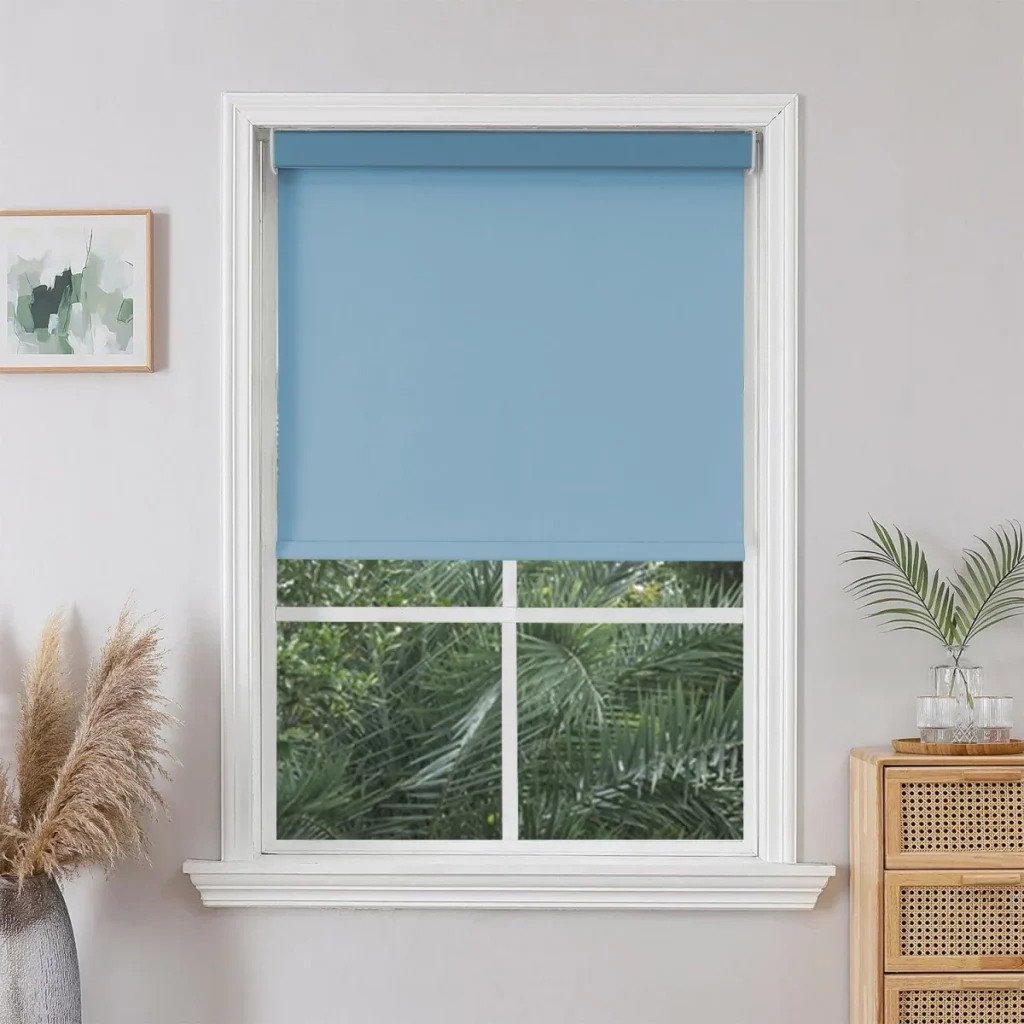
    Light Filtering Zebra Blinds

    These blinds are ideal for living areas where you want to enjoy natural sunlight but still need some privacy. The fabric is made to soften sunlight, giving your room a bright but calm atmosphere. You can adjust the blinds to let in just the right amount of light without making the room too dark. For example, they are perfect for a kitchen or living room where you want light but don’t want the harsh sun rays.

    Room Darkening Zebra Blinds

    If you need more privacy or prefer a darker room, especially for sleeping or watching movies, room darkening zebra blinds are the way to go. These blinds are made from thicker fabric that blocks out more light when fully closed. For example, they would be great for bedrooms, nurseries, or home theaters where you want to reduce glare and have better control over how dark the room is.

    Motorized Zebra Blinds

    For those who want a touch of luxury and convenience, motorized zebra blinds are a great option. They are RC and you can integrate them into a smart home system to open and close blinds with the push of a button. These are perfect for hard-to-reach windows or anyone looking for a modern, hands-free solution. For example, they work well in high windows or offices where convenience is key.

    Day and Night Zebra Blinds

    This type of zebra blind offers the best of both worlds. It has two layers of fabric: one for light filtering and one for room darkening. This allows you to adjust the blinds depending on your mood or the time of day. For example, during the day, you can use the light-filtering layer to let in soft sunlight, and at night, you can switch to the room-darkening layer for privacy and darkness. They are perfect for spaces like bedrooms, living rooms, or any place where you need flexible lighting options.

    Conclusion

    Zebra blinds provide a great balance between light control and privacy. Now you know all the pros and cons of zebra blinds. We talked about what zebra blinds are, how customizable they are, how easy to maintain they are, and if they are available in different types to suit various needs. While they may not offer complete blackout or soundproofing, their flexibility, durability, and affordability make them a popular choice for many homeowners. Whether you want a modern look with motorized controls or a simple solution for everyday use, zebra blinds are a versatile option worth considering for any room.

  • 12 Benefits of Motorized Blinds for Sliding Glass Doors

    12 Benefits of Motorized Blinds for Sliding Glass Doors

    Glass doors look nice and let in sunlight, but sometimes you don’t want everyone to see inside. It’s like having a see-through window that can’t be covered. Motorized sliding door blinds can open and close by themselves and can be controlled from far away. These blinds have many advantages when used with sliding doors. They are very high-tech and are made to give you lots of convenience, control over sunlight, and privacy. Let’s talk about the benefits of motorized blinds for sliding glass doors.

    Advantages of Motorized Blinds For Sliding Glass Doors

    Below are the 12 benefits of using motorized blinds for sliding glass doors.

    1. Helps Retain Warmth in Winter and Reduce Heat in Summer

    Motorized shades make your home more comfortable all year round by using good-quality materials that you can adjust using a smartphone app. These automatic blinds for sliding doors can help keep your home cooler on hot days and warmer on cold days. It’s like adding a cozy blanket to your home to keep the heat in and the cold out.

    1. Lowers Utility Bills by Reducing the Need for Artificial Heating and Cooling

    Motorized shades can help you save on utility bills and make the room with sliding doors more comfortable. They regulate temperature by insulating against heat in the hot weather and wind in the cold weather, improving energy efficiency in homes. This results in less energy consumption and thus, reduces bills by minimizing the use of artificial heating or cooling systems.
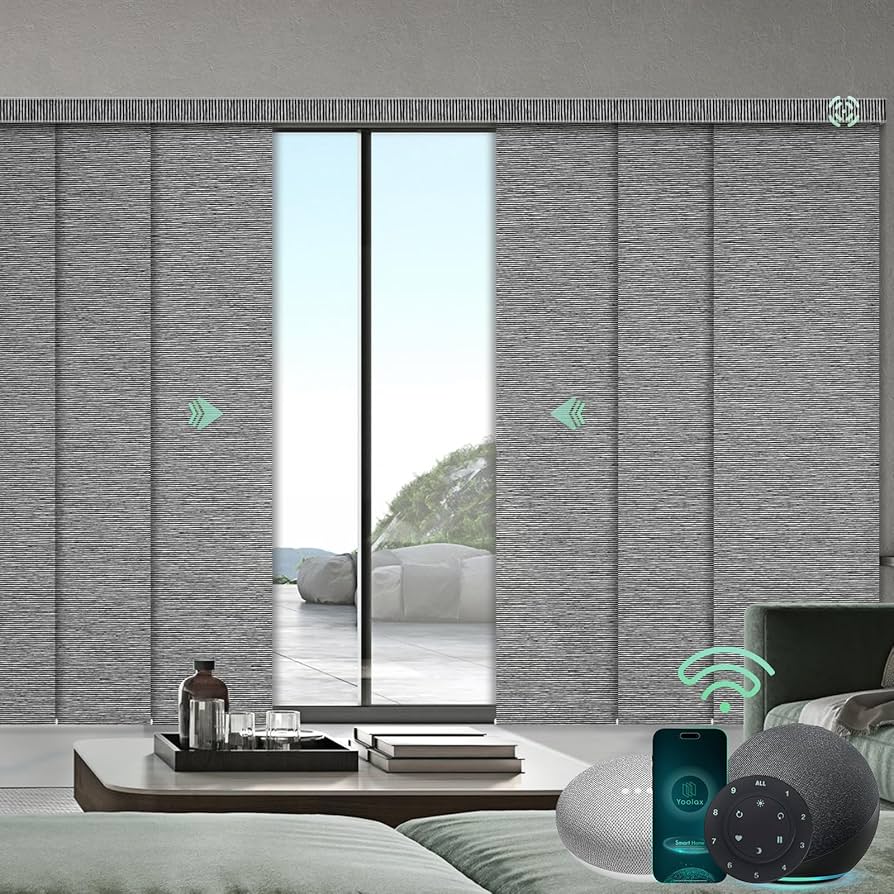
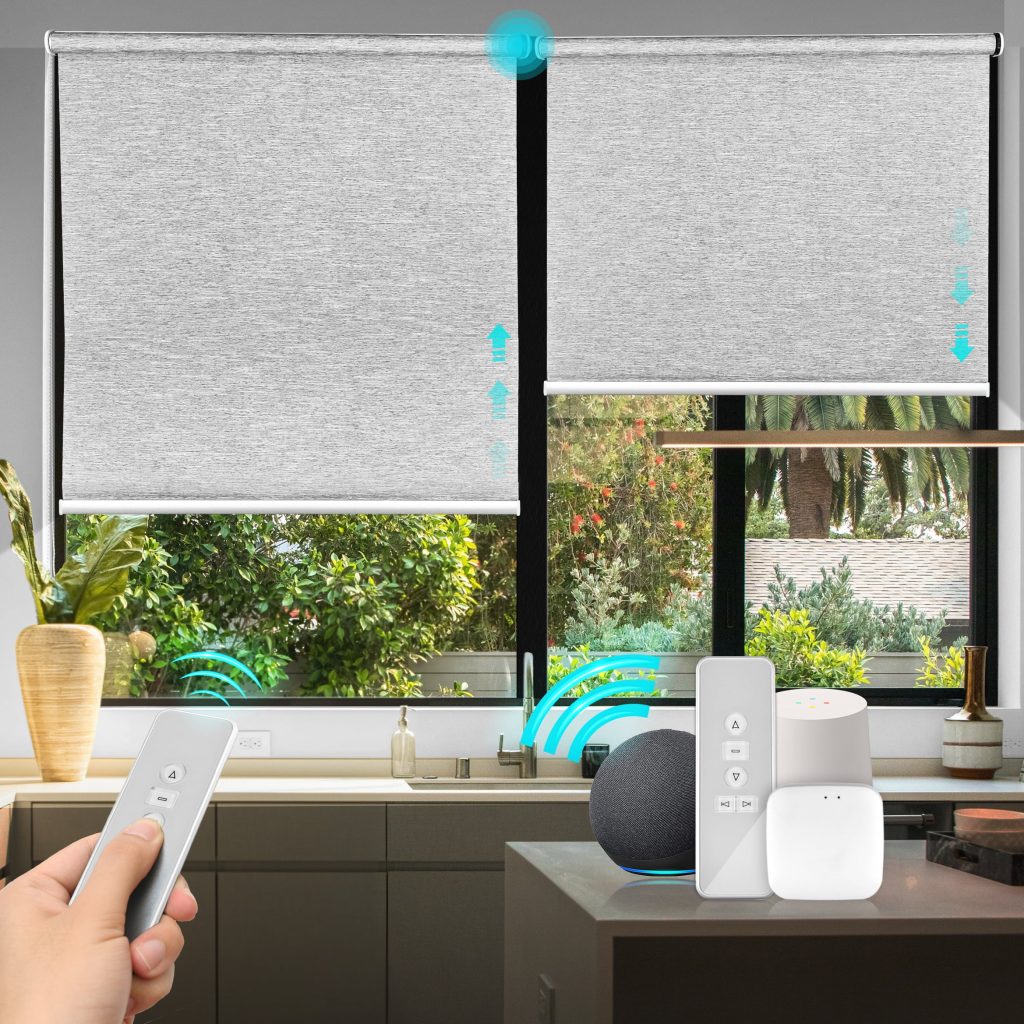
    1. Adjust Blinds Without Leaving Your Seat Using Smartphone or Voice Control
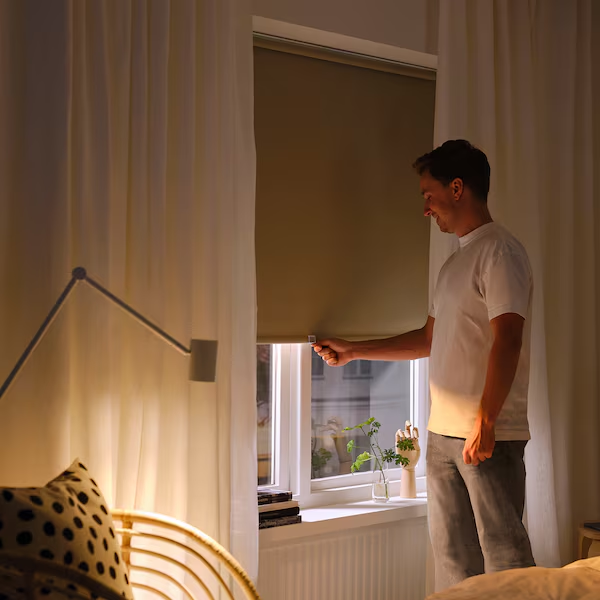
    Motorized blinds can work with your smart blinds. They allow you to do things like pick your favorite positions, make a schedule, check the battery, and connect it to a voice control system if you have one at home. Motorized sliding door blinds can be connected to your smart home system, so you can control them using your smartphone, tablet, or home automation hub. You can easily control how much light comes into your home by just pressing a button or using a voice command.

    1. Automated Schedules Control the Blinds Even When You’re Not Home

    Motorized blinds are all about making your life easier and adding cool smart features to your sliding doors. When you have a schedule set up, your automatic blinds for sliding doors can open and close even when you’re not at home or awake. It happens without you needing to do anything. If you ever need to change the schedule, it’s also easy to do with the right controls.

    1. Different Stuff, Hues, and Designs to Match Your Décor

    Motorized blinds for sliding glass doors help keep your home cozy, control the amount of light coming in, and make your home smarter. One of the best things about them is that you can choose from a lot of different styles, colors, and materials. When you pick out the right electric blinds for sliding doors, you can show off your style and make your home more comfortable and convenient.

    1. Easily Adjust Opacity for Privacy for Large Sliding Doors

    Motorized shades can be opened in the morning to let in sunlight and close at night for privacy and to keep your home warm. You can also control these electric blinds for sliding doors from your phone, even when you’re not at home. This means you can always make sure your home is comfortable and uses energy wisely.

    1. Scheduled Blinds Make Your Home Appear Occupied When You’re Away

    Motorized shades can help by easily changing how see-through the shade is and where it goes. Privacy is a big worry for homes with big glass doors that slide. Also, you can set them to open and close on their own to make it look like someone is inside, which can make your home safer when you’re not there.

    1. Minimizes Glare and Protects Furniture from UV Rays

    Motorized shades can help with this by reducing the brightness and protecting your furniture and floors from getting damaged by the sun. These blinds in sliding doors let in sunlight, but too much sunlight can make things too bright inside and can also fade furniture. 

    1.  Adds a Sleek, Stylish Look to Any Room with Smooth, Clean Designs

    Motorized blinds let you choose from many different blind types, like roller shades and zebra blinds, from Go Smart Blinds. These blinds can help keep your home cool, control light, and match your style because they come in lots of colors and patterns. They also make your home look modern and work smoothly.

    1.  Cord-free Design Prevents Strangulation Risks for Children and Pets

    Motorized blinds are safe. Kids and pets can get hurt by the strings on regular window curtains. But with these new curtains, there are no strings, so it’s safer for them. You don’t have to worry about their safety. These curtains give you peace of mind, especially if you have young kids or pets at home.

    1.  Extra Material Absorbs Sound, Creating a Quieter Environment

    Motorized shades can make your home quieter and more peaceful by blocking outside noise. They have extra material that absorbs sound, which is great if you live in a noisy city or near a busy street. You can adjust these automatic blinds for sliding doors easily to make your home a calmer place whenever you want.

    1.  Allows you to adjust how much natural light enters the room easily

    Motorized blinds let you control how much sunlight comes into your room. These curtains can also add colored light that matches your home’s style. If you want more or less light, you can adjust these electric blinds for sliding doors without getting up from your seat.

    Are Motorized Blinds Right For Your Home?

    If your windows are small or in an unusual shape, motorized blinds might not fit properly. For windows or doors over 100 inches wide, you may want to install two motorized blinds next to each other instead of one large panel. This way, you can control how much light comes in by adjusting each blind separately. However, using two blinds side by side might create a small gap in the middle, letting some light through. 

    If completely blocking out light is important to you, a single panel might be a better choice, even though you’ll have to lift or lower the entire blind to adjust it. It’s a trade-off between flexibility and complete light control. If your home doesn’t have many electrical outlets or you don’t want to bother charging batteries, you might prefer manual blinds. Also, motorized blinds can be more expensive than regular ones if you’re trying to spend less money.

    How To Install Motorized Blinds

    Installing motorized blinds on sliding glass doors is simple with a bit of preparation. Follow these easy steps. With these steps, you’ll have your motorized blinds in sliding doors installed and automated in no time. 

    Step 1: Charge Measure and Mark Bracket

    Unbox your motorized blinds. Charge the plug-and-play motor. No assembly is required for the motor, but it needs a charge. Measure where the brackets will be installed. Ensure brackets are aligned and spaced correctly.

    Step 2: Install the Brackets

    Use L-shaped brackets and insert the headrail at an angle, hook it in, and push upwards until it snaps into place. Use Swivel Brackets to raise the top of the blinds to the center of the bracket. Turn the swivel to the left until it is flush with the blinds. It should lock into place.

    Step 3: Download the App and Pair

    Download the app. Your smart blinds have to connect to your smart hub and integrate with your smart home system. Now you have installed the perfect blinds that give you the convenience of automated blinds that adjust without manual effort.

    Conclusion

    Now you know all the benefits of motorized blinds for sliding glass doors. Motorized blinds for sliding glass doors are a great choice for modern homes. They help keep your home cozy, save energy, and make it easy to control how much light comes in. They also add a modern touch to your home, provide privacy and security, and reduce noise. They offer you a lot of different styles and colors to match your home and lifestyle. If you want blinds that are both useful and look good, motorized blinds are a great option for your sliding glass doors.

  • Do Window Treatments Increase Home Value?

    Do Window Treatments Increase Home Value?

    when it comes to adding value to the property, homeowners may undertake big changes such as remodeling kitchens or bathrooms. However, some details can also contribute greatly to increasing your home value such as window treatments. But, what is the role of window treatments to the home value? do window treatments increase home value? 

    For this article, we will look at the impact of window treatments, focusing on blinds, and do window treatments increase home value. or even do blinds increase home value? 

    How do Window Treatments Increase Home Value? 

    Do blinds add value to your home? To answer this the following are some of how window treatments can help add value to a home. 

     1. Aesthetic Appeal 

    There is still the obvious prospect of the aesthetic and decorative value that window treatments offer and this is one of the main ways in which they are a good investment. If the window coverings are well chosen and put into practice, then you are assured of an enhanced look of the room and orderly structure of the room.

    2. Energy Efficiency 

    Window treatment can enhance a home’s window insulation and help in managing the amount of heat getting into a home. This can help to lower the cost of heating and cooling and hence is seen as a plus by buyers since the cost of living is highly considered. 

    3. Light Control and Privacy:

    Blinds, shades, and curtains enable the homeowner to control the amount of light that comes into the house while ensuring privacy especially when the house is in a compound in an urban area or a certain populated area. In this case, the response to the question Do Window Treatments Increase Home Value? depends on practical functions, privacy, and light management could be considered as the main benefits. 

    4. Customization and Design 

    Blind selections that are made to suit the measure of your home and the style can be of great benefit because they will add value to your home. It also serves as a way of convincing the buyers that the homeowner has taken the time to put a lot of effort, money, and time into getting the best for the home. 

    Do Blinds Increase Home Value? 

    Out of all the possibilities of window coverings, do blinds increase home value? The simple answer is yes, but the level of added value largely depends on the type and quality of blinds that have to be installed. 

    • Quality Blinds 

    Blinds that are made of superior quality material such as wood or faux wood will most definitely add value to your home because of their durability and rich appearance. On the other hand, cheap plastic blinds can create the opposite effect putting off a buyer. 

    •  The Neutral Tones and Ware’s timelessness. 

    Thereby, blinds that come in plain colors with traditional patterns will enhance the resale value of your home since most people will find them appealing. People who are planning to buy window treatments also prefer those products that match various interior design categories, meaning that selecting functional forms is likely to make a house more appealing.

    • Motorized and Smart Blinds 

    In today’s fast technological market, there are motorized blinds. These blinds enable homeowner to operate their window treatments from a distance – it is convenient as well as energy-efficient. If you are asking do blinds increase home value? then smart blinds do add an extra layer of contemporary features that will benefit a homeowner 

    Conditions to Aid in Decision-Making Process

    When choosing the right window treatment, it remains rather obvious that these home additions will instantly augment home value.

    •  Consistency Throughout the Home 

     Using materials of the same type all over the windows makes a lot of sense. After all, be consistent, and make sure that the window covering is the same even if it is in a different part of the house in terms of design and color. The approach to every area must be compatible so that one does not get the feeling that it has been singled out and may reduce the intriguing factor.  

    •  Professional Installation 

    If curtains and blinds are installed ineffectively, then the overall layout of a house is also affected which is why people should hire the services of a professional. If the blinds or shades are properly fitted then they are more practical and generally appear to be more neater.  

    •  Energy-Efficient Options 

     Since insulating a home and energy efficiency a major considerations for today’s home buyer, choosing window treatments that provide the extra benefit of insulation as well as light control greatly enhances the value. Blackout blinds or cellular shades are known to be useful in cutting down energy bills, hence requiring consumers to spend on them in the long run.

    Do Blinds Add Value to Your Home? 

    Therefore, in reply to the question do Blinds Add Value to Your Home? 

    Absolutely. Though blinds may not affect your home as curtains do when you decide to redesign, they make a small but crucial contribution to improving the appearance of homes as well as their usability.

    The overall effect of window treatments:

    Compared to other home improvements that many homeowners might consider, window treatments are not very complicated and they are affordable too but they work wonders when it comes to improving the value of a property. The answer to Do Blinds Add Value to Your Home?  Is yes in the aspects of beauty, efficiency, light, and privacy. It is always advisable to go for quality blinds, shades, or custom drapery; this is a smart decision every homeowner should be willing to make to increase the value of their home. 

    If you are a homeowner seeking to get the best curtains for your home with the best value-added, Aura Curtains offers the best curtain services with the best quality improvements to the looks and uses of your house. 

    Aura Curtains provides modern, energy-saving, fashionable custom-made curtains and blinds for any home improvement. No matter if you need motorized blinds for day-to-day use or drapes for a more traditional look, Aura Curtains guarantees that your window treatments will make a great impression on buyers. 

    Conclusion:

    To sum it up, Do Window Treatments Increase Home Value?  Yes, they do. Since window treatments also affect the appearance of the home in addition to providing a solution to the needs of the homeowner, blinds for instance, can help sell a house or even raise the worth of a home.

  • Signs It’s Time to Replace or Repair Your Window Blinds:

    Signs It’s Time to Replace or Repair Your Window Blinds:

    Window blinds are very functional in home decor as they help create privacy and regulate the light. Eventually, they may be affected by wear and tear, indicating they need to be replaced or repaired. In this article, let us walk you through the signs that you should change your blinds or perhaps consider repairing your blinds, and also how to replace blinds?

    Signs that it is time to replace your window blinds:

    It could be very crucial and useful to know when it is the right time to perform replacement Window blinds.

    At other times a full change is the most advisable option in terms of functionality as well as physical appearance. Here are the main signs it’s time for replacement window blinds: 

    1. Broken or Bent Slats:

    Possibly one of the most obvious signs that it’s time for replacement Window blinds is when they are broken. Slats, no matter what the material, may also wear or become marred over time. If, for instance, there are a multitude of cracked blinds in a certain home, then it will be wiser to go for new replacement window blinds than to repair them. 

    2. Fading or Discoloration:

    Furniture that has windows that directly open to the sun may fade or lose color in the long run, especially for those blinds made from fabric or wooden material. You will notice that if your blind is faded or discolored in any way then it signifies that the material of the blind is weakening. This is the time when replacing blinds is most advisable. 

    3. Difficulty in Operation: 

    It can be unhappy to attempt to open or close your blinds but they are difficult to operate. The biggest indicators that are associated with operating difficulties include but are not limited to tangled cords, misalignment of slats, and broken mechanisms. In case blinds become difficult to operate, replacing blinds is the best option. 

    4. Outdated or Old-Fashioned Blinds:

    It is a fact that trends change with time and your blinds are a perfect subject to this. In case your blinds are old-fashioned blinds and are not fashionable enough for the style of the house, then it is advisable to change them. Replacement window blinds come in several styles, there are also ultra-modern blinds for windows available in different colors, and materials so that you can change the mood of your home and at the same time improve its functionality. 

    5. Worn-out cords or Chains: 

    At some point, the cords or chains may wear out or get entangled even in ultra modern modern blinds for windows thus causing problems in the blinds’ functionality. If you realize the cords have discolored or do not operate smoothly then it might mean you will have to look for ways how to replace blinds. Though you might fix these problems, most of the time, it is wiser and more effective to replace them with a new one. 

    If you are troubled by broken blinds or old-fashioned blinds. Aura   Curtains would love to offer you unique and ultra modern modern blinds for windows  & Curtains. Aura Curtains deals in interior products such as replacing blinds and many other superior-quality window treatments to give your home that stylish and classy look. Whether you have broken blinds and need replacement or a person who wants to shift from broken blinds to a more modern curtain, Aura Curtains guarantees the customer efficient services, and high-quality curtains that last longer as per the customer’s requirements. 

    How Long Do Blinds Last? 

    Most blinds usually last for about 5-10 years, depending on the blinds’ material and the amount of usage. Blind durability is a question that many people would like to know the answer to, how long do blinds last? for them depends on some factors that are explained below. As briefly touched, basic cleaning and simple repair tasks can keep your blinds going longer; if you’re experiencing more than three problems with your blinds including damaged slats, discoloration, and operational problems, then this is time for replacement window blinds. 

    When Should You Repair Your Window Blinds? 

    Here are the key signs that your blinds only need a quick fix: 

    1. Minor Damage to Slats 

    In case several slats are twisted or damaged only slightly a full replacement window blinds may not be called for. Metal or plastic bent slats can be bent back to the normal position by use of hands. For more serious damage, rebuying only the slats that were damaged can be done.  

    2. Cords need to be handled with care:

    Damaged cords or entwined chains tend to be replaced but it is always possible to repair them if at all they are worn out. It is fairly simple to replace blind cords because restringing or changing a few parts is all that is needed.  

    3. Stiff or Stuck Mechanisms 

    Some blinds, which are tough to open or close could be given some touch of maintenance. Problems with the operations are often solved simply by applying oil to revolving components or by merely tightening some screws. 

    4. Mild Fading 

    A little fade that comes with sun exposure is not necessarily an indication that the item has to be replaced. Some types of blinds such as wooden ones can usually be easily redecorated with a new layer of stain or varnish. Fabric blinds can be washed, and the method must be very delicate to bring back the original appearance of the blinds. 

    5. Safe From Children or Pet Interferences 

    Blinds that have been torn by children, or have been chewed by a pet can usually be repaired. In other cases, fixing the broken slats or controlling the cords that have been entangled can restore the blinds to functional order. 

    Conclusion:

    As we have explained above, it is not easy to distinguish between repair and replacement. however, understanding the signs may help you to determine the right step to take with your home. New blind windows are ideal when the ones that are already installed are irreparably damaged, have an older fashion style or when managing becomes a very hard task. Nonetheless, it is less costly as compared to replacement when the damage done is little or some part of the bed such as the slats or cords are damaged. 

    Bear that in mind however when wondering how long blinds last?, it is possible to improve ease and length of use significantly by proper maintenance and repair, however, there will come a time when replacement of blinds is necessary to maintain the look and functionality of a home.