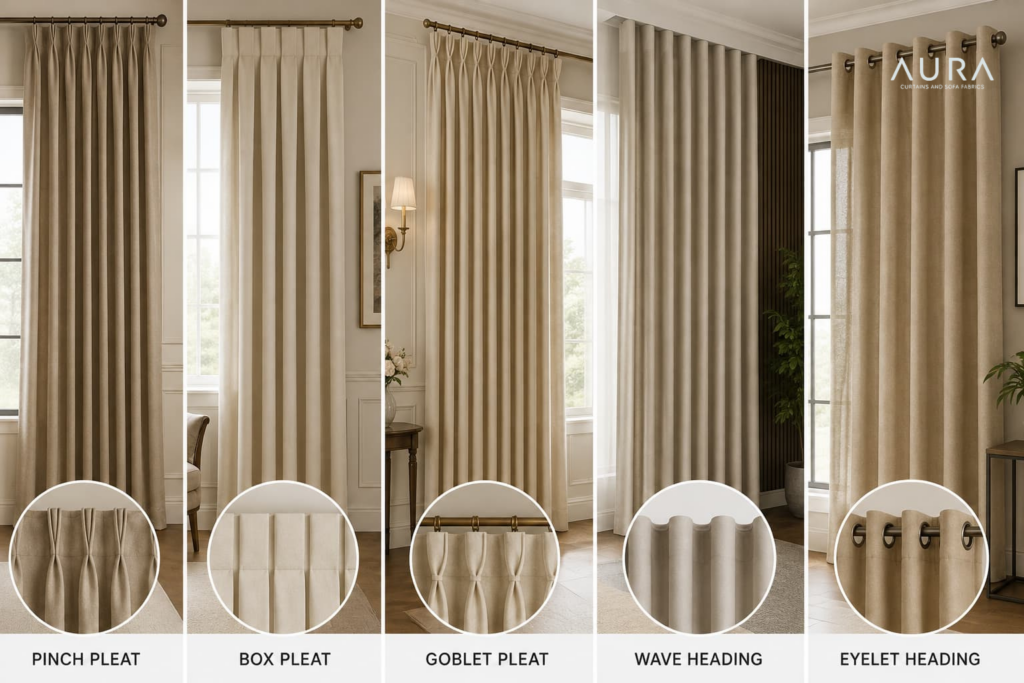
Author: Asghar Paracha

  • How to Make Blackout Curtains (DIY) — Plus How to Wash, Iron & Fix Them

    How to Make Blackout Curtains (DIY) — Plus How to Wash, Iron & Fix Them

    By stitching up your preferred fabric, attaching a blackout liner and grosgrain ribbon, and gathering the right hanging materials, you can create custom blackout curtains of your own that reflect your personal style and creativity for your home windows. However, with the right care, your curtains can maintain their appearance and functionality for years.

    This guide will help you learn how to make blackout curtains by using both sewing and no-sew techniques, plus how to wash, iron, and fix common problems that may arise.

    How To Make Blackout Curtains?

    Buying blackout curtains can cost AED 80 to 400+ per panel, but making them yourself can cut that price to a fraction. It’s pretty simple to make blackout curtains using sewing machines, when all the materials below are gathered:

    • Medium- to heavy-weight front fabric (printed or colored)
    • A 3-pass coated polyester or polyester-cotton blend blackout lining
    • Choose 100% polyester grosgrain ribbon, typically 1.5 inches to 3 inches
    • Choose UV-bonded polyester thread according to the curtain’s color
    • Medium-strength double-sided fabric basting tape for sewing hems
    • Teflon or Denim needles with size 90/14 or 100/16, pins, and sewing clips
    • Measuring tape, fabric chalk, fabric scissors, and iron

    Let’s start the stitching process by following the steps below:

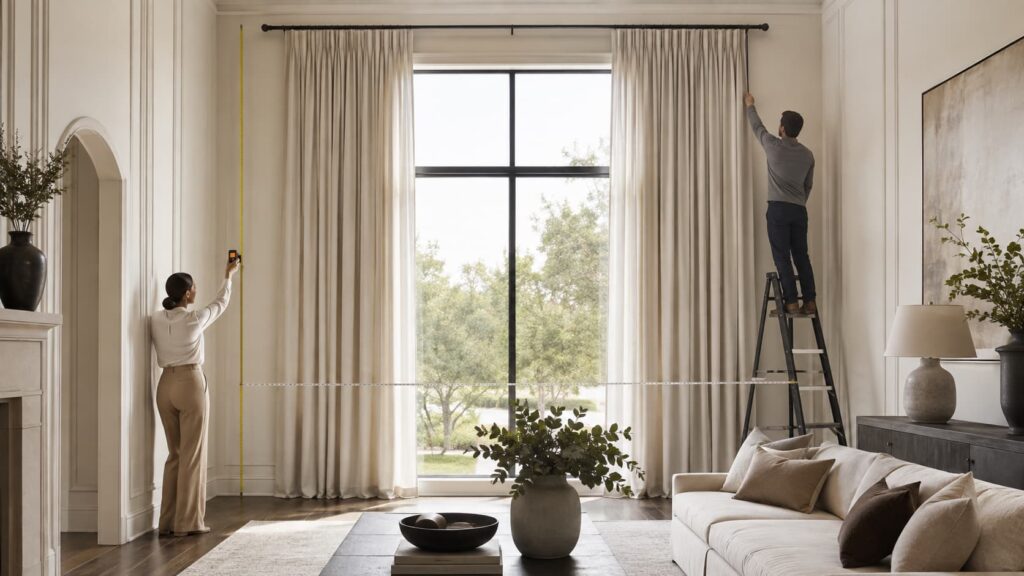
    Step 1: Take Accurate Measurements

    Accurate measurements decide whether your curtains fit and block light or not, so measure carefully and add extra allowances before cutting.

    • Position your curtain rod 4-6 inches above the window frame and extend the width 4-10 inches from each side.
    • Multiply the curtain rod width by 1.5 to 2 times to calculate the total panel width.
    • Measure the curtain drop from the position of the rod straight down to your target point.
    • Add 1 to 6+ inches to the measured length if you prefer the curtains to pool elegantly on the floor.

    Step 2: Cut the Fabric

    Clean, straight cuts make sewing easier, so use your measurements to cut the front fabric and lining accurately, with allowances included.

    • Lay the fabric flat on a clean, spacious surface. Straighten the edges or iron the fabric and align the grain line to ensure accurate, square cuts.
    • Use fabric chalk to mark the required length. Add 8 inches in length and 3 inches in width for hems.
    • Use sharp fabric scissors or sewing shears to cut along the marked line. If working with blackout-coated fabric, use wonder clips instead of pins to avoid puncturing the backing.

    Step 3: Hem the Lining and Join the Layers

    Join the blackout lining and decorative fabric by aligning their edges evenly to achieve a smooth finish and consistent light coverage.

    • Fold the lining bottom up 2 inches twice and stitch
    • Lay the front fabric right side up, lining face down
    • Stick side edges together using double-sided basting tape
    • Leave the top and bottom edges open for now

    Step 4: Stitch & Join the Panels

    Start stitching the fabric layers together using a sewing machine. The right needle and thread keep stitches strong while minimizing tiny light leaks.

    • Place the decorative fabric face up and position the blackout lining face down
    • Align the edges and use fabric clips to hold both layers together evenly
    • Sew the vertical edges on both sides evenly, leaving either the top or bottom unstitched
    • Turn the fabric right side out through the open edge and smooth the seams flat

    Step 5: Add the Header and Hang

    The header attaches the curtain to the rod and corrects hanging issues because gaps around the window let sunlight in.

    • Fold the top down 4 inches and stitch close
    • Sew grosgrain ribbon along the top, then add clips
    • Mount the rod 4–6 inches above the window frame
    • Overlap panels 2–3 inches and let hems graze the floor

    How To Make No-Sew Blackout Curtains?

    Never touched a needle and thread? No problem. You can blackout your existing curtains, whether it’s sheer or any other fabric, in about 30 minutes with the following procedure:

    • Lay existing curtains flat on the floor and place the blackout fabric against the back. Cut it about 1 inch narrower and slightly shorter than the curtain.
    • Place iron-on hem tape between both fabrics, then press each edge with a hot, steam-free iron for 10–15 seconds.
    • Hang the curtains by sliding rod-pocket or tab-top curtains onto the rod, or attach grommet and clip-ring curtains after securing the blackout lining.

    Note: Accurate measurements are essential, so follow the same measuring process outlined in the sewing method.

    Can You Wash Blackout Curtains?

    Yes, most blackout curtains can be washed, but machine washing needs extra-gentle settings compared to hand washing. Here’s what to consider:

    • Use pH-neutral, or baby-friendly, liquid detergents while avoiding bleach and fabric softeners
    • Use a gentle cycle with cold or lukewarm water, as hot water can melt or crack the foam or acrylic blackout lining.
    • Detach metal hooks, heavy rings, and pins to prevent fabric damage during the wash cycle.

    Note: Always check the care label first on ready-made curtains. If you made the curtains yourself, follow the label on the lining.

    How To Wash Blackout Curtains By Hand?

    Hand washing is the safest way to clean blackout curtains at home when their care label specifies “hand washing only” or advises against machine washing and agitation.

    Blackout curtains that feature a thermal foam, acrylic, or plastic blackout coating are usually hand washed. The process includes:

    • Fill a tub with cool water, add a small amount of mild detergent, and mix it well.
    • Remove all hooks, rings, and hardware before soaking the curtains.
    • Shake the curtains to loosen dust, then soak them in the soapy water.
    • Wash them gently with hands, without scrubbing, rinse until the water runs clear.
    • Press out the water. Don’t wring or twist the lining.

    Important: Avoid the dryer after both hand and machine wash too, because acrylic or foam coating of blackout lining can peel or melt by heating, so air drying is the best choice.

    Can You Iron Blackout Curtains?

    Yes, but carefully. The thick woven fabric of blackout curtains gets wrinkled after washing, and these creases need to be removed before hanging for a polished finish. As a hot iron can damage the blackout lining, here are some tips to iron them safely:

    • Set your iron to the lowest suitable temperature to protect the acrylic blackout layer from melting.
    • Iron on the decorative or front side of curtains and avoid applying direct heat to the coated blackout lining.
    • Place a clean cotton cloth between the iron and curtain fabric to provide an extra layer of protection.
    • Glide the iron gently across the fabric without holding it in one place to prevent overheating.
    • Alternatively, you can also use a handheld steamer 4–6 inches away to remove stubborn wrinkles from curtains without removing them from the curtain rod.

    How To Get Rid Of Smell From Blackout Curtains?

    Newly manufactured curtains may have a noticeable chemical or plastic-like smell because of the materials, adhesives, or coatings used during production. Older curtains that are kept in damp or poorly ventilated rooms can lead to an unpleasant, musty smell. You can get rid of the smell from blackout curtains with the help of these tips:

    • Hang the curtains outdoors in a shaded, breezy spot for a few hours.
    • Sprinkle baking soda lightly over the fabric, wait a few hours, then vacuum it off with a brush attachment.
    • If the label allows washing, add half a cup of white vinegar to the rinse cycle.
    • Open windows regularly or use a dehumidifier to stop mildew from coming back.
    • Perfume and air fresheners can mix with the odor and stain the fabric.

    How to Choose Non-Toxic Blackout Curtains?

    Some blackout curtains are made from materials like polyvinyl chloride (PVC), synthetic fabrics like polyester, or foam backing, which can harm your health.

    Over time, these materials start releasing volatile organic compounds (VOCs) into the air that can cause allergies and damage to your liver, lungs, kidneys, or central nervous system.

    Here’s how you can purchase non-toxic blackout curtains to save your indoor air quality:

    • Check certifications: OEKO-TEX Standard 100 means tested for harmful substances, GREENGUARD Gold means low chemical emissions, and GOTS means certified organic fibers.
    • Choose woven lining: Triple-weave blackout fabric blocks light with layers of thread and doesn’t need a PVC, foam, or acrylic coating.
    • Pick natural fibers: Tightly woven cotton, linen, hemp, or thick wool block more light than thin fabrics and avoid plastic-based backing.
    • Read the label: Look for “PVC-free,” “phthalate-free,” and “no flame retardants.”
    • Trust your nose: Return curtains that have a strong chemical odor when you open the package.
    • Air them out first: Hang new curtains outdoors or in a ventilated room for a few days, and wash them first if the label allows.

    Conclusion

    Ready to upgrade your windows with premium, eco-friendly blackout curtains? Visit Aura Curtains to explore premium quality blackout curtains that complement your windows while improving privacy and light control. By understanding your needs, we design personalized blackout curtains that enhance the aesthetic of your space while creating a comfortable indoor environment.

    FAQs

    Is it possible to blackout sheer curtains?

    Yes, you can blackout sheer curtains by adding blackout lining, layering them with blackout panels, or using removable blackout fabric behind them.

    How to clean mold and dust from blackout curtains?

    By vacuuming curtains regularly with a soft brush attachment, you can remove dust from blackout curtains. For mold, spot-clean with mild detergent, following the manufacturer’s care instructions.

    How to get wrinkles out of blackout curtains?

    Use a garment steamer on low heat or hang curtains in a steamy bathroom. Always check fabric care instructions before applying heat.

    How to repair blackout curtains?

    Repair small tears using fabric adhesive or matching thread. Replace damaged hooks, rings, or lining to restore their appearance and functionality.

    How to soften stiff blackout curtains?

    Hang curtains for several days to relax the fabric. Alternatively, gently steam them or wash according to the manufacturer’s care instructions.

  • How to Hang Blackout Curtains: Measuring, Installing Over Blinds & Layering With Sheers

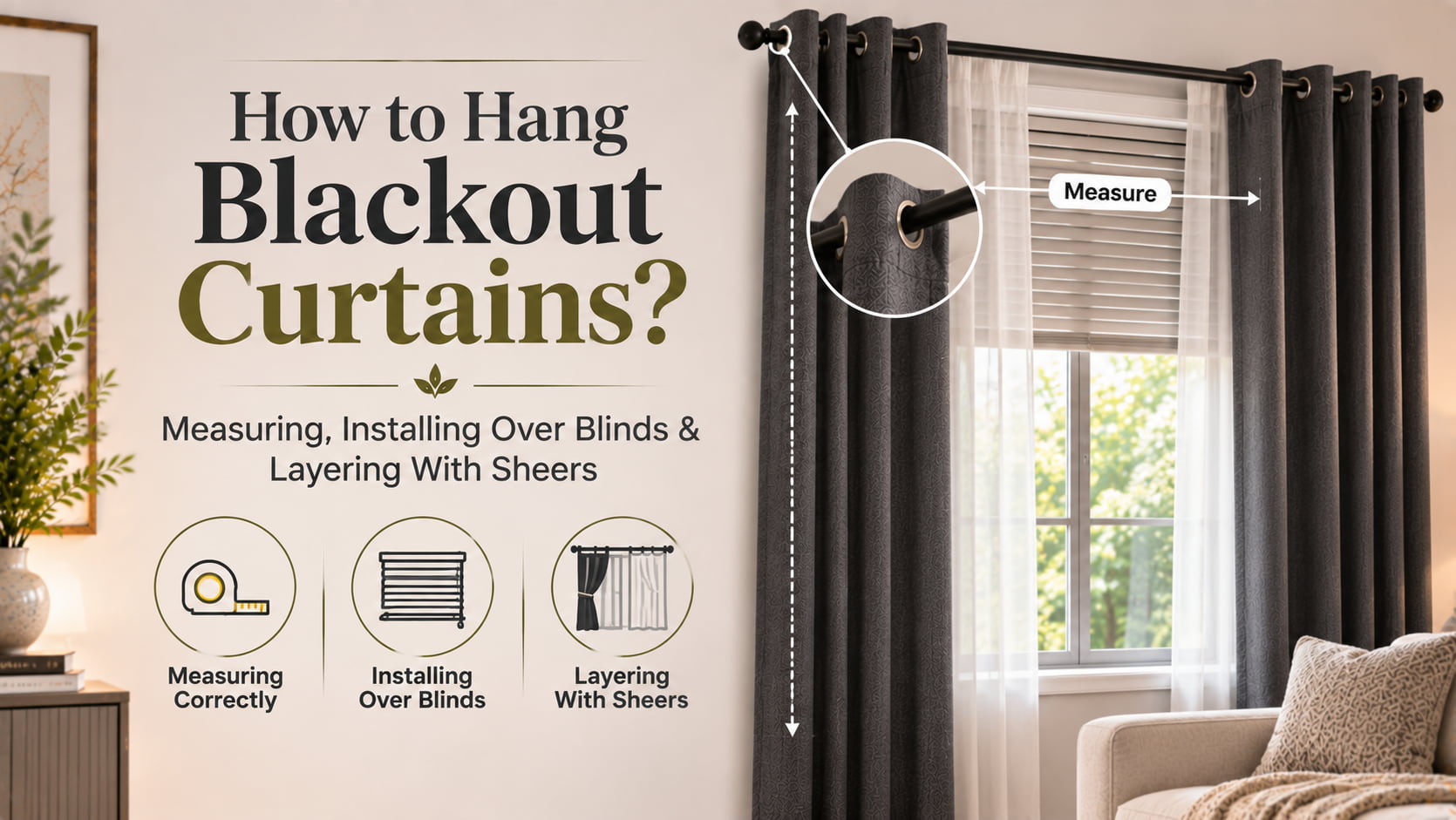
    How to Hang Blackout Curtains: Measuring, Installing Over Blinds & Layering With Sheers

    If the morning sun still finds its way to enter your room after hanging blackout curtains, then the culprit is likely not the blackout fabric but improper hanging. By taking accurate window measurements, including width and height, choosing the right curtain rods, brackets, and curtain hanging techniques, you can significantly cover the gaps that allow sunlight, street light or glare to leak from the edges.

    If you are willing to layer blackout curtains with sheer and need to install over blinds, keep reading this guide to understand how to hang them like a pro to create a dark and conducive environment for peaceful indoors in every season.

    Reason for Light Leakage Around Blackout Curtains

    The Top Gap: Light can pass over the curtain rod and travel behind the fabric. Standard curtain rods often leave this area exposed, allowing sunlight to create a noticeable strip of brightness across the ceiling.

    The Side Gaps: When curtains hang flat against the window, sunlight can enter around their outer edges. This problem is more common with inside-mounted rods that leave little room for wider curtain coverage.

    The Centre Gap: Two curtain panels meeting at the centre may leave a narrow opening that allows sunlight to pass through. Improper panel positioning or insufficient fabric width can make this problem more noticeable.

    The Floor Gap: Curtains that end above the floor leave an opening beneath the fabric, allowing light to enter and reflect across the flooring. This can be particularly noticeable in Dubai homes with light-coloured tiles.

    How To Measure Blackout Curtains?

    Accurate blackout curtain measurements are based on two essential calculations: width for adequate fullness and coverage, and height for achieving the desired drop. Here’s how to take both measurements using a measuring tape in minutes:

    Width: Measure the window width horizontally from one side of the frame to the other. Add 8–12 inches to the total window width (4–6 inches on each side) to allow the curtains to extend beyond the frame to minimize light gaps.

    Height: Now, measure the window height by positioning your measuring tape 6–12 inches above the window frame and extending it vertically down to your desired curtain length, whether just above the floor or at the windowsill.

    How Wide Should Blackout Curtains Be?

    Blackout curtains should generally be 20% to 30% wider than the window frame to provide adequate coverage, create a fuller appearance, and minimise light leakage. If you’re using two panels to cover a single window, ensure they overlap by 2–4 inches at the centre when fully closed.

    How To Hang Blackout Curtains In 3 Simple Steps

    Hanging blackout curtains properly matters just as much as choosing the right fabric. Once you record the measurements, follow a few smart placement choices that can prevent any external light from penetrating through the curtain edges:

    • Choose The Right Curtain Rod

    Blackout curtains are generally heavier than standard curtains, so they require sturdy, durable curtain rods made up of metal or heavy-duty steel. These materials provide reliable support and help prevent the rod from bending or sagging under the fabric’s weight.

    Since you have already measured the window width and added extra inches on both sides for adequate coverage, choose a curtain rod that matches these extended measurements. You can also opt for wraparound curtain rods, which allow the curtain panels to extend closer to the wall.

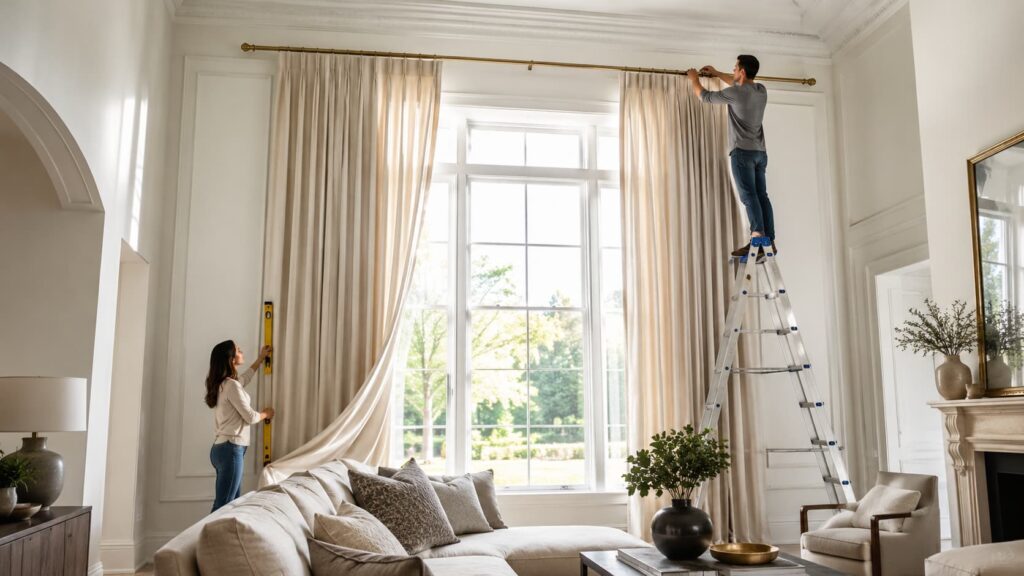
    • Mark The Bracket Placement

    Before drilling, mark the position of brackets. A standard placement is 4–6 inches above the window frame, but positioning them 8–12 inches above the frame can create the illusion of floor-to-ceiling windows.

    After deciding the ideal placement, hold each bracket against the wall and use a pencil to mark the screw-hole positions through its openings. Use a spirit level to check the alignment of your markings, as a wrong one can lead to a curtain unevenly.

    • Attach The Blackout Curtains

    Attachment of blackout curtains to the rod depends on header style. Eyelet curtains feature built-in metal rings that allow the rod to slide through smoothly, while the pleated curtains require curtain hooks or rings to secure the fabric to the rod and create neat, evenly spaced folds.

    Keep the decorative side of the curtains towards the room while the coated side is toward the window. Carefully lift the rod after attaching the curtains and position it onto the installed brackets. Spread the panels, and adjust the folds evenly for adequate coverage.

    Should Blackout Curtains Touch The Floor?

    Blackout curtains are made up of thick, woven fabric, which can easily collect dust if dragged on the floor. Therefore, interior designers suggest blackout curtains that stop about 1/4 inch above the ground, which gives a custom, high-end appearance.

    Additional Tips

    For the closest possible room-darkening effect, consider ceiling-mounted tracks, wraparound curtain rods, or side-channel systems to reduce light leakage around the window’s edges.

    How To Hang Blackout Curtains Without Drilling?

    No-drill options such as tension rods, adhesive brackets, and magnetic curtain rods are highly preferred by tenants and homeowners who want to hang curtains without damaging walls.

    Here’s how to hang curtains without drilling:

    • Tension Rod

    Measure the inside width of your window recess, and choose a rod with an appropriate weight capacity. Position the rod inside the recess and ensure it sits firmly against both sides.

    • Adhesive Brackets

    Clean and dry the mounting surface, and mark the bracket positions evenly. Attach the adhesive brackets and allow them to cure for the recommended period before hanging curtains.

    • Magnetic Rod

    Attach the magnetic brackets to the metal frame. Hang your blackout curtains and check that the magnets hold the combined weight securely.

    Note: These no-drill options can typically bear 5 to 20 pounds (2 to 9 kg). It’s ideal to choose the light to medium weight for hanging with no-drill choices.

    How To Install Blackout Curtains Over Blinds?

    Premium residences across the UAE often feature layered window treatments, with blackout curtains serving as a popular choice. Some homeowners pair them with blinds for greater light control, while others layer them with sheer curtains to create a softer, more elegant appearance.

    If you want to create a dark environment in your room, then install blackout curtains over blinds by following the steps:

    • Measure the window frame and existing blinds, adding 8–16 inches to the width for better side coverage.
    • Select a sturdy curtain rod with sufficient weight capacity to support blackout panels without bending or sagging.
    • Position extended brackets approximately 3–4 inches beyond the blinds to provide adequate clearance and prevent fabric interference.
    • Attach the curtain panels to the rod, lift it onto the brackets, and secure everything firmly.
    • Close the curtains and operate the blinds to ensure smooth movement, complete coverage, and minimal light gaps.

    How To Layer Sheer And Blackout Curtains?

    Layering blackout curtains with sheers is one of the most sophisticated combinations that lets you enjoy softly filtered daylight during the day and a darker, more comfortable environment at night without changing your curtain panels every 12 hours.

    • Choose lightweight materials such as voile, chiffon, or linen sheers and densely woven or lined blackout curtains.
    • Choose a double curtain rod to hang the sheers on the back rod and blackout on the front rod for smooth functionality of each.
    • Mount your double rods or track system above the window frame based on your recorded measurements.
    • Install both curtain layers and adjust their folds evenly. Use tiebacks, holdbacks, or curtain weights to maintain their shape and create a neat, polished appearance.

    You can also put sheer and blackout curtains on one rod by attaching both curtain types using clip rings, alternating sheer and blackout panels to create a fuller, layered appearance. Make sure to select a durable curtain rod with sufficient length and weight capacity to accommodate both types of panels.

    Also Read:

    What Are Blackout Curtains? How They Work, What They’re Made Of & Are They Safe?

    Best Blackout Curtains: How to Choose, What They Cost & Where to Buy

    Conclusion

    Your bedroom should be a place where you control the light, not one where sunlight decides when your day begins. The right blackout curtains can transform your sleeping environment, but achieving effective room darkening requires accurate measurements, quality curtain hardware, adequate fabric coverage, and professional installation.

    Browse Aura Curtain’s blackout curtain collection or schedule a free consultation to find the perfect window treatment for your space.

    FAQs

    Which curtain rod do you need to hang blackout curtains?

    Choose a sturdy metal or heavy-duty steel curtain rod that supports blackout fabric without sagging. Wraparound rods or ceiling-mounted tracks provide better window coverage.

    How to hang blackout curtains without drilling?

    Use tension rods, adhesive curtain brackets, or magnetic curtain rods to hang blackout curtains without drilling holes or making permanent wall modifications.

    What is the biggest cause of light leak in blackout curtains?

    Improper installation is a common cause of light leakage, particularly gaps above the rod, along the sides, between panels, and beneath curtains.

    What to consider while hanging blackout curtains?

    Consider accurate window measurements, curtain width and length, sturdy rods, proper bracket placement, fabric orientation, and sufficient coverage to minimize unwanted light gaps.

  • Best Blackout Curtains: How to Choose, What They Cost & Where to Buy

    Best Blackout Curtains: How to Choose, What They Cost & Where to Buy

    The market is flooded with curtains that are labelled “blackout” but fail to deliver total darkness due to poor fabric quality or choosing the wrong light-blocking level. It has become challenging for buyers to identify the best blackout curtains for their homes.

    But the purchase of blackout curtains can be seamless if you determine the physical factors such as light-blocking level, the right fabric and material, back lining, color, and take accurate window measurements. Meanwhile, factors behind the scenes such as cost comparison and supplier credibility matter a lot as well.

    How to Choose Blackout Curtains?

    Whether you want to shop blackout curtains for your bedroom or home theater, your decision should be based on considering the factors below:

    • Match The Light-Blocking Level With Space

    A blackout curtain that is perfect for a bedroom can make a kitchen feel like a cave, so matching the light-blocking level to the needs of the space is essential.

    • 70% blackout: best for living rooms and kitchens, where you want reduced glare but still want natural light.
    • 80–90% blackout: best for home offices, where it cuts glare on screens without creating total darkness.
    • 100% blackout: best for bedrooms and nurseries, giving full darkness for uninterrupted sleep.

    Tips: Hold a sample against a window or shine a phone torch through it. If you can see a clear glow, it is not a true blackout.

    • Choose the Right Fabric

    Blackout curtains’ fabric determines their overall appearance and longevity, which need to be chosen carefully. Here are four popular fabric choices to consider:

    • Polyester: This fabric is easy to clean, wrinkle- and moisture-resistant.
    • Velvet: It is a heavyweight fabric that offers luxurious appeal to any space.
    • Cotton: This fabric is breathable, resistant to wrinkles, shrinking, and colour fading.
    • Linen: It is a rigid, stronger, and slightly textured fabric.

    Tips: Always check whether the fabric is machine or hand washable before purchase.

    • Blackout Lining

    Blackout lining is the hidden layer behind the front fabric of your curtains, and it does the real light-blocking work when chosen well. Here are the types to look for:

    • 3-Pass Coated Lining: Features three acrylic or foam coating layers that provide excellent light blockage and insulation.
    • Silicone-Coated Lining: Offers a flexible, durable, smooth finish with effective silicone-based lining for maximum coverage from light.
    • Dimout Lining: Filters approximately 70–90% of incoming light, creating a softly lit, comfortable indoor environment.
    • Triple-Weave Blackout: Uses three woven fabric layers and dense central yarns to block incoming light naturally with thermal insulation.

    Tips: Hold the lining up to a bright window and check that it is evenly coated, with no thin patches or pinholes.

    • Color And Style

    Choosing the best colour and style of blackout curtains can set the mood and look of your space. Here are some ideas for every room:

    • Bedrooms and nurseries: Calm navy, taupe, or grey, floor-to-ceiling curtains for adults, while soft pastels with playful prints, floor-kissing curtains for kids’ rooms.
    • Living rooms: Light neutral shades with textured linen keep rooms bright, airy, and welcoming, matching sofas and walls.
    • Home offices: Soft greys, muted blues and greens with matte fabrics reduce screen glare and aid focus.
    • Home theaters: Matte black, charcoal, or deep navy velvet absorbs stray light and stops distracting screen reflections.

    Tips: Create visual contrast by choosing curtains one or two shades away from your wall colour, or match their undertones for a harmonious look.

    • Window Measurements

    Even the best fabric and lining will fail if the curtain is the wrong size. Poor measurements leave gaps at the sides, top, and bottom, and light leaks through them. Here’s how to take accurate window measurements:

    • Width: Extend the pole 15–25 cm beyond each window side and choose panels 1.5–2 times wider.
    • Height: Mount the pole 15–20 cm above the frame and let curtains reach the floor or windowsill.
    • Position: Hang curtains outside the window frame to improve coverage and minimise unwanted light entering through gaps.
    • Overlap and Returns: Ensure panels overlap centrally and use curved poles or returns to minimise side light gaps.

    Tips: Measure twice, use a metal tape measure, and check the window width at the top, middle, and bottom, since walls are rarely perfectly straight.

    How Much Do Blackout Curtains Cost?

    Not all blackout curtains cost the same. From basic ready-made panels to premium custom designs, prices may vary. Here’s what you can expect to spend on different types of blackout curtains.

    Types Estimated Cost Best For
    DIY Blackout Curtains AED 25 – AED 135 per square meter Budget-conscious renters, crafters and small or unusual windows
    Ready-Made Blackout Curtains AED 55 – AED 550+ per square meter Standard-size windows and quick, easy upgrades in most homes
    Custom-Made Blackout Curtains AED 60 – AED 1,500+ per square meter Large, bay or odd-shaped windows, and a perfect fit and finish

    Why Are Blackout Curtains So Expensive

    Buyers often find blackout curtains an expensive window treatment. However, the price of blackout curtains depends on more than their appearance or thickness. The factors below highlight why blackout curtains are costly compared to standard curtains:

    • Specialized fabric and linings: These curtains are designed with dense fabrics and specialised blackout linings that provide high coverage from sunlight.
    • Multi-layer construction: These are multi-layer curtains that require additional materials and more complex manufacturing processes, which increase production costs.
    • Premium Finishings: High-quality stitching, sturdy eyelets, neat hems, and durable fittings require extra materials and skilled workmanship.
    • Thermal Insulation: Insulating layers help reduce heat transfer and improve indoor comfort, adding to the curtain’s overall manufacturing cost.
    • Brand & Design: Blackout curtains from established brands, with custom sizing, exclusive patterns, and designer finishes, often come with higher price tags.

    What Sizes Do Blackout Curtains Come In?

    From small bedroom windows to large floor-to-ceiling glass panels, blackout curtains are available in multiple sizes. Here are some of the most common options:

    • Standard blackout curtain panels that typically measure 135–140 cm wide and 210–230 cm long. They’re suitable for regular windows and sliding doors.
    • Small-window blackout curtains, which typically measure 100–120 cm in width and 110–160 cm in length, are best suited for compact bathroom and kitchen windows.
    • Medium windows blackout curtains typically measure 135–150 cm in width and 160–230 cm in length.
    • Large windows blackout curtains typically measure 250–300 cm in combined width and 230–270 cm in length.

    Where To Buy Blackout Curtains: Key Considerations

    Not all suppliers offer the same quality, fabric options, or level of service when it comes to blackout curtains. So, whatever supplier you choose, make sure to consider the factors below:

    • Choose a supplier with a valid trade licence that authorizes it to sell curtains, window treatments, or home furnishing products.
    • Prioritize suppliers with an established showroom where you can inspect fabric samples, compare blackout materials, and discuss your requirements.
    • Check Google reviews, customer testimonials, and project photos to assess the supplier’s reputation, product quality, and service reliability.
    • Look for suppliers who clearly explain fabric composition, blackout ratings, lining options, durability, and light-blocking performance.
    • Request a detailed quotation covering fabric, stitching, accessories, installation, and any additional charges.
    • Review the supplier’s completed residential and commercial projects to understand its experience with different window sizes, curtain styles, and installation requirements.

    Final Thoughts

    Choosing the right blackout curtains can keep your room calm, cool, and wonderfully dark, no matter how intense the weather outside. Ready to bring that comfort to your home? Explore the Aura Curtains blackout curtain range today that turns your windows into your best sleep upgrade.

    Whether you’re furnishing a bedroom, upgrading your living room, or covering large windows, our premium-quality blackout curtains offer stylish options that suit different spaces and preferences. Book your visit today or shop online for the perfect fit for your windows at Aura Curtains.

    Also Read:

    What Are Blackout Curtains? How They Work, What They’re Made Of & Are They Safe?

    Do Blackout Curtains Keep Heat Out? Heat, Cold, Noise & Energy Savings Explained

    FAQs

    Which blackout curtains are trending now?

    Blackout curtains in textured linen or velvet, with a 3-pass coated lining, are trending.

    What is the best color for blackout curtains?

    Neutral colours like beige, grey, taupe, and white are versatile choices for blackout curtains. However, the best choice depends on your interiors and space requirements.

    How heavy is the blackout curtain?

    Blackout curtain weight depends on fabric, lining, and size. Standard panels generally weigh between 1 and 3 kg, while heavier options weigh more.

    How to choose blackout curtains?

    By considering fabric thickness, blackout lining, colour, measurements, thermal insulation, and noise reduction, you can choose the perfect blackout curtains for your home.

  • Do Blackout Curtains Keep Heat Out? Heat, Cold, Noise & Energy Savings Explained

    Do Blackout Curtains Keep Heat Out? Heat, Cold, Noise & Energy Savings Explained

    When the blazing sunlight passes through the glass windows, strikes your floors, furniture, and walls, heating up your indoors and making them feel uncomfortable, blackout curtains act as a strong barrier. With tightly woven fabric and a foam or acrylic coating on the back, these curtains absorb 99% of the heating effect of sunlight.

    Wondering how blackout curtains keep unwanted heat out? Then read this guide to explore the science behind their heat-blocking properties.

    Do Blackout Curtains Keep Heat Out?

    Yes, blackout curtains are especially crafted to block heat by using dense fabric and 3-Pass coated lining or 2-Pass coated lining. When sunlight strikes a curtain, the fabric reflects some solar radiation and absorbs the rest, reducing the energy that reaches the window and enters the room.

    • 3-Pass Coated Lining: Features three layers, an inner white foam layer, a middle black foam layer, and an outer white or ecru foam layer.
    • 2-Pass Coated Lining: Features two layers, a black opaque layer and a white or light-coloured foam layer.

    How Much Do Blackout Curtains Help With Heat?

    In Dubai, where summer sun is intense, and apartments and villas often have floor-to-ceiling glass and balcony doors, blackout curtains can significantly reduce the amount of heat entering a room by up to 33%, depending on the fabric, lining, colour, fit, and installation.

    Especially from May to early October, when daytime highs commonly reach about 104 to 113°F (40 to 45°C), coastal humidity increases, and the sun feels strong almost every day, blackout curtains help a room stay cool with less effort and lower electricity use.

    Do Blackout Curtains Make Room Hotter?

    Yes, the same properties of blackout curtains that help in summer work in reverse during cold months. From December to February, Dubai experiences its coolest weather of the year. Daytime temperature sits around 73 to 79°F (23 to 26°C), and nights can drop to the mid-50s to low 60s°F (about 14 to 18°C). Blackout curtains, typically around 350 GSM or higher, may provide better insulation by creating a thicker barrier between the cold window glass and the room, making it feel warmer without changing the thermostat.

    Thermal Vs Blackout Curtains: Are They The Same?

    Buyers assume that blackout and thermal curtains are the same, but actually they aren’t, though they do overlap. They look similar and are usually thick, heavy fabrics, but solve different problems. The table below highlights the similarities and differences of both:

    Factors Blackout Curtains Thermal Curtains
    Purpose Block light for sleep, privacy, and glare control Insulate the window against heat loss and heat gain
    Construction Design with triple weave technology to provide a three-layer approach to functional curtains Multi-layer construction that helps in controlling temperature
    Material Polyester or a cotton-polyester blend, plus an opaque layer such as acrylic or foam coating, or a dark middle yarn layer Polyester, cotton, or velvet face fabric, plus an insulating interlining such as polyester batting or foam
    Benefits Blocks out 99% of sunlight, promotes better sleep, maximum coverage from outside view, insulation, and noise reduction properties Keeps indoors warm in winters, lowers the need to turn up the thermostat, blocks out sun and outdoor light
    Drawbacks Cheaper coatings may smell at first or crack over time; light leaks around the edges unless the curtain is wide enough and insulation is moderate Bulkier and heavier appearance, higher prices, can’t give complete coverage from sunlight unless also blackout

    Do Blackout Curtains Save Energy?

    Yes, blackout curtains are an energy-efficient solution, as they reduce heat loss by up to 25%, which lowers energy bills and greenhouse gas emissions.

    In Dubai, where summers last for several months and air conditioners run almost nonstop, closing blackout curtains on sun-exposed windows during the hottest part of the day can help reduce solar heat gain and cooling demand. Moreover, in winter, closing them at night can help reduce heat loss through windows and lower the need for heaters.

    In homes with older single-pane windows or poorly sealed windows, blackout curtains may provide more noticeable energy savings. In homes with modern double-pane, low-emissivity (Low-E) windows, the additional benefits may be smaller because these windows already provide better insulation and help limit heat transfer.

    Remember, blackout curtains won’t dramatically reduce your energy bills overnight; they are generally more affordable than window replacement and may offer energy savings over time.

    Do Blackout Curtains Reduce Noise?

    Yes, blackout curtains can reduce noise, but they are not soundproof. Whether it’s early morning drilling next to your residence or traffic hum, standard blackout curtains reduce sound by 2-5 dB, based on acoustic testing, which is barely noticeable. Heavy blackout curtains with mass-loaded vinyl (MLV) layers can reduce noise up to 5-10 dB.

    Their thick, heavy fabric soaks up some of the sound that bounces around inside a room, reducing echo and making a space feel quieter and calmer. But true soundproofing requires mass, airtight seals, and decoupled construction, none of which a curtain provides.

    You’ll get the best results from curtains that are thick, multi-layered, and extend well beyond the window frame on all sides. Pair them with a rug, upholstered furniture, or bookshelves, and the overall effect on room acoustics improves further.

    Do Blackout Curtains Block UV Rays?

    Yes, the engineered construction of blackout curtains with tightly woven, multi-layered fabrics with UV-resistant coatings significantly stops visible light and blocks up to 100% of harmful UVA, UVB, and UVC rays.

    However, Dubai is known for luxurious residences with premium decor and furnishings, which commonly feature wide, floor-to-ceiling windows that can allow sunlight to seep inside homes. Over time, the harmful UV rays in that light can:

    • Bleach silk and velvet upholstery
    • Dry out and crack leather sofas
    • Fade designer rugs, artwork, and framed prints
    • Dull hardwood and lacquered finishes

    Here, blackout curtains such as coated, three-layer composite, and flame-retardant types act as a barrier by absorbing and reflecting a significant portion of harmful UV rays before they affect your interiors.

    Final Thoughts

    Choosing the blackout curtains for your windows can block the sun in summer, seal in warmth in winter, and let you enjoy a quieter and darker room. Although they won’t solve every insulation problem or completely block outside noise, blackout curtains can offer several practical benefits at a relatively affordable cost, depending on the fabric, lining and fit. The result is a cooler, quieter, darker home with protected interiors and a lighter energy bill.

    Book a visit or shop blackout curtains from Aura Curtains, and let our professional team help you choose the right fabric, fit, and finish for your windows.

    Also Read:

    What Are Blackout Curtains? How They Work, What They’re Made Of & Are They Safe?

    FAQs

    Do Blackout Curtains Keep Heat In?

    Yes, to a useful degree. Thick blackout fabric traps still air against the window, cutting heat loss through the glass by up to 25%. Thermal-lined versions work best, especially on cooler winter nights in Dubai.

    Are Blackout Curtains Insulated?

    Partly. The dense weave and backing of blackout curtains give moderate insulation. Thermal blackout curtains, with an insulating lining or foam backing, perform noticeably better.

    Are Thermal Curtains The Same As Blackout?

    No, but they overlap. Blackout curtains are defined by what they block (light), while thermal curtains are defined by what they resist (heat transfer). Choose thermal blackout curtains for both benefits in a single product.

    Do Blackout Curtains Help Keep Room Cool?

    Yes. They block sunlight before it becomes indoor heat, often making a sunny room 3 to 8°F (2 to 4°C) cooler. Closing them early on sun-facing windows helps your AC work less in Dubai summers.

  • What Are Blackout Curtains? How They Work, What They’re Made Of & Are They Safe?

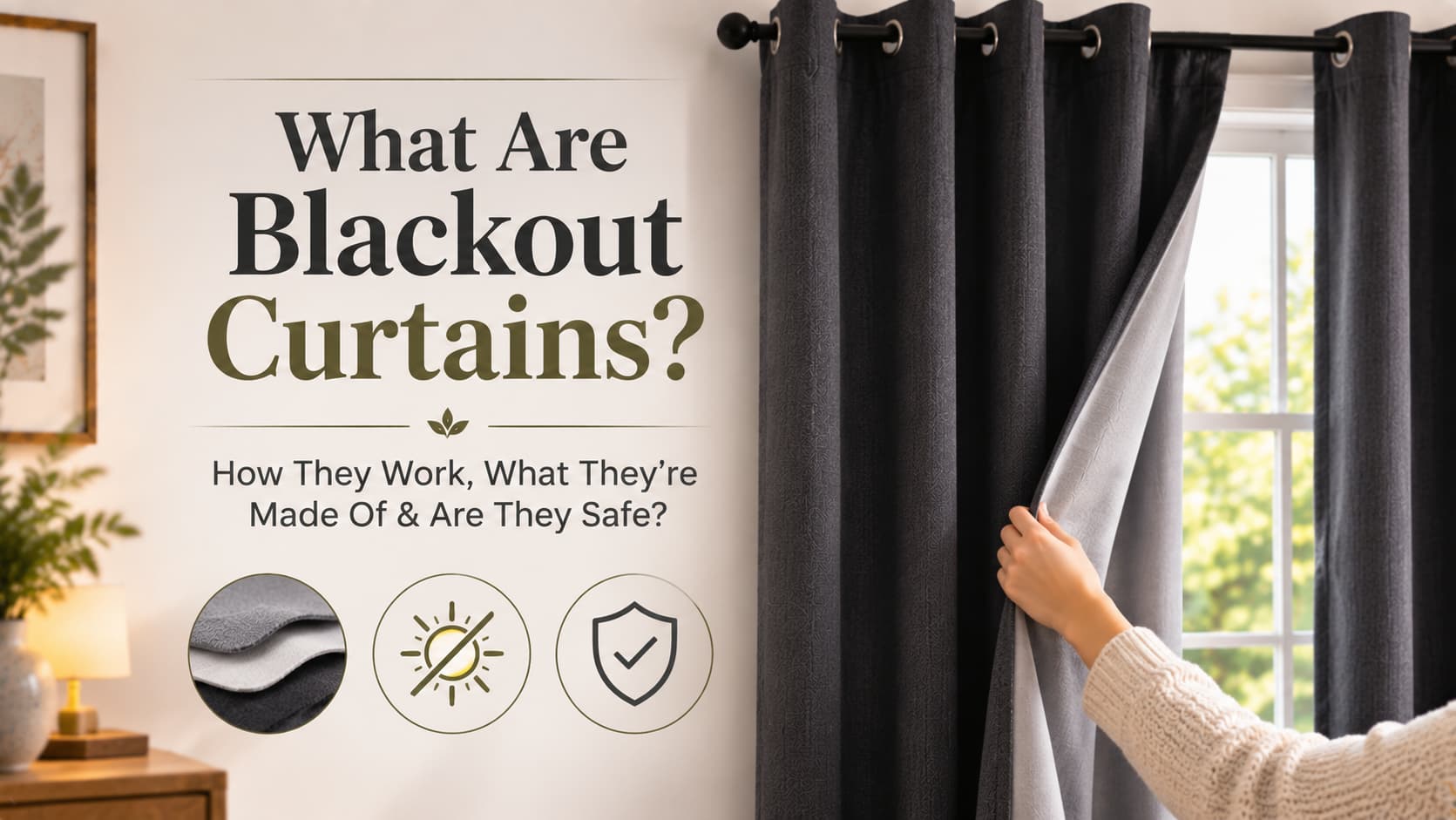
    What Are Blackout Curtains? How They Work, What They’re Made Of & Are They Safe?

    Blackout curtains are thick curtains that block sunlight from entering a room. The sunlight these curtains block reaches your bedroom every morning to disturb you. You are asleep when sunrise brings the day’s 1st sunlight into your bedroom, and wakes you up before your alarm does.

    With that said, if waking up too early and keeping your room cool are concerns for you, this guide is for you.

    What Are Blackout Curtains?

    Blackout curtains are special types of curtains that block sunlight and heat entering indoors.

    What Do Blackout Curtains Do?

    Blackout curtains have a dense layer behind the decorative fabric. That layer stops sunlight and street light from passing through. A blackout curtain pair that is wider and taller than the window frame can block about 99.9% of daylight. Light then has no gap to enter through.

    How do Blackout Curtains Work?

    An ordinary curtain fabric has tiny spaces between its threads, which let sunlight into your room. A blackout curtain has no tiny spaces between its threads as its threads are tightly held together or sometimes there is a coating behind its threads, leaving no space for light to enter.

    Do Blackout Curtains Really Work?

    Yes. Blackout curtains made with the right material effectively block light and heat entering your room, helping you obtain absolute darkness and cooler temperature. We’ll cover the right blackout curtain material later in the blog post.

    How Long Do Blackout Curtains Last?

    High-quality blackout curtains can last between 5 to 15 years and even more, provided that they are being maintained well by the user. Daily sun exposure causes low quality blackout curtains fabric to fade and become brittle over time and that’s why purchasing a high-quality blackout curtain is essential.

    At Aura Curtains, we offer the premium range of blackout curtains that lasts over 15+ years.

    3 Main Types of Blackout Curtains

    The word blackout has no legal definition but there are 3 different ways manufacturers craft a blackout curtain. You can find its type printed on the label of the blackout curtain you purchase. The 3 types of blackout curtains are:

    • Separate lining blackout curtains: If the seller offers you this type, the maker sewed a tightly woven polyester or cotton layer behind the decorative front fabric. That layer is the lining, an extra piece of fabric sewn separately behind the front. Light that passes through the front fabric meets the lining and stops there.
    • Coated back blackout curtains: If the seller offers you this type, the maker applies a foam or rubber coating to the back of the fabric. The coating seals the weave, which means it fills the spaces between the threads. This variant of blackout curtain blocks light well but raises a safety question that a later section of this guide covers.
    • Triple weave blackout curtains: If the seller offers you this type, the maker wove three layers into one fabric and placed a dark layer in the middle. The dark layer absorbs light, which means it takes in the light that reaches it. The curtain hangs as a single piece, so it has no separate lining.

    Blackout Vs Room Darkening Curtains: What’s The Difference?

    Some brands sell room-darkening curtains that do a good job of blocking incoming light from outside. However, they still allow a soft ambient glow to enter around the edges. What makes blackout curtains the best choice for completely blocking light is their specially designed construction and fabric material, which can block 99% to 100% of sunlight.

    Can You See Through Blackout Curtains?

    If you have purchased high-quality blackout curtains and installed them properly, it should not be possible to see through them. Blackout curtains are made of dense fabrics with multiple layers that make it nearly impossible for light to pass through or for people to see through the curtains.

    Do Blackout Curtains Have To Be Black?

    There is a common misconception that blackout curtains have to be black. However, they come in a wide variety of colors, as you can see at Aura Curtains. The term “blackout” is used because these curtains feature a blackout lining sewn into the back of the fabric, regardless of the color of the fabric on the front.

    However, there is one important caveat: lighter-colored blackout curtains tend to show dust more easily over time, whereas this is less noticeable with black curtains.

    What Is The Best Fabric For Blackout Curtains?

    Of the 3 types of blackout curtains we listed above, the separate lining blackout curtain blocks the light completely and is safer than coated back blackout curtain. However, it works only when the lining is thick and opaque, which means the lining lets no light pass through it.

    How to Stop the Light Leaks Completely with Blackout Curtains?

    A curtain needs two things to block light: 1) the right fabric and 2) a hang with no gaps.

    The light leaks in at 3 gaps or points: 1) over the top of the curtain, 2) past the sides, and 3) under the bottom.

    How to Hang Blackout Curtains in a Way So No Light Leaks Through?

    To stop the light leaks completely with blackout curtains, you need to close all 3 places/gaps where light breaks into.

    • Top: Fix the curtain rail (the bar the curtain hangs from) on the ceiling, or as high above the window as you can. A rail fixed right above the glass leaves a strip of open glass above the curtain, and sunlight comes in through that strip. A rail on the ceiling lets the curtain hang from the ceiling down, so no open glass is left above it.
    • Sides: Make the curtain rail 10 to 15 cm longer on both sides of the window frame. A longer rail holds a wider curtain, so the fabric covers the wall next to the window. Light then has no way in at the edges of the window.
    • Bottom: Let the curtain hang down to 1 cm above the floor. A curtain that ends at the bottom of the window leaves an open gap below it, and light comes in through that gap.

    It is important to note that the gaps may be closed, but light can still come through the curtain if the fabric of your blackout curtain is too thin. So the next section names the materials of fabrics of blackout curtains that will stop light.

    What are Blackout Curtains Made up of?

    A blackout curtain is made of up to 4 layers, and most curtains combine several of the 4 layers below. Ask your supplier, the company selling you the curtain, which of these layers your curtain contains. Find that layer in the list below and read what it does:

    • Face fabric

    Face fabric is the layer you see from inside your room. The maker can use cotton, linen, velvet, suede or polyester for it. The face fabric decides how the curtain looks.

    • Blackout lining

    Blackout lining is the layer sewn behind the face fabric. It is the layer that stops light. The maker weaves it tightly from polyester or cotton, so light finds no spaces to pass through. It is usually done for linen curtains with no lining because those let light through, due to the small spaces between linen threads. The curtain maker sews a polyester blackout lining behind the linen, so the light that passes through the linen meets a layer that blocks it.

    • Coating layer

    A coating layer is usually a foam or rubber layer that the maker applies behind the face fabric on some curtains. It seals the spaces between the threads.

    • Thermal layer

    A thermal layer is an acrylic or polyester layer that some curtains add to slow heat from passing through the curtain into your room.

    Note: All blackout curtain fabrics are dense and weigh more than an ordinary curtain. You can’t hang them on a weak rod as it will bend under curtain weight. You can contact Aura Curtains and let our team fit both the right rod and track for your next blackout curtain installation.

    Why Dubai Homes Need Blackout Curtains

    There are mainly 4 reasons Dubai homeowners need blackout curtains. Blackout curtains help them 1) sleep better, 2) lower their electricity bills, and 3) protect their furniture and flooring from sun fading, and ensure their babies are safe from harmful UV rays.

    • Do Blackout Curtains Help You Sleep?

    A bedroom that faces east receives that light directly, and the light wakes you before your alarm. Besides that, many apartments in JBR, Downtown, and Business Bay have floor-to-ceiling glass in the bedroom. The glass passes the sunrise light straight to your bed, and at night, the same glass passes light from other towers.

    An ordinary curtain lets light into your rooms, as the section on how blackout curtains work showed. But a blackout curtain closes the spaces between the threads, so your room stays dark while you are asleep.

    • Do Blackout Curtains Help You Get Relief in Electricity Bills?

    Heat is the second problem. On top of that, the Dubai Electricity and Water Authority (DEWA) advises residents to keep windows covered to reduce the heat entering through glass. It recommends a 24°C thermostat setting, and it says each degree you lower the thermostat raises AC consumption by about 5%.

    A blackout curtain slows heat passing through the window because its fabric is dense. Less heat reaches your room, so the air conditioner has less to cool and runs less. An air conditioner that runs less uses less electricity, so your electricity bill drops.

    • Do Blackout Curtains Help You Protect Furniture from Fading?

    Sunlight that keeps shining on furniture or flooring slowly drains its colour. This loss of colour is called sun fading. A closed blackout curtain stops sunlight at the window. The sunlight then cannot reach your furniture or flooring, so their colour stays as it is.

    • Do Babies Need Blackout Curtains?

    Science suggests that babies around 3 to 4 months of age may benefit from a dark sleeping environment to support their natural growth and development. Darkness helps regulate the production of melatonin, the hormone that promotes sleep. This is why blackout curtains can be beneficial for babies: they block sunlight and help reduce heat that may disturb an infant’s sleep throughout the day, whether in the morning or early afternoon.

    This also raises two important questions:

    I) Do You Need Blackout Curtains For A Nursery?

    Many homes in the UAE have nurseries, dedicated spaces for babies, or special bedrooms for infants. Nurseries can be found in both homes and hospitals. Blackout curtains are good for nurseries because the pitch darkness they provide triggers the natural release of melatonin, which is important for growing infants who are around 4 to 5 months of age.

    Blackout curtains also help block sunlight and harmful UV rays, creating a more comfortable environment for them throughout the day, which is important for a baby’s growth and development

    II) When To Start And Stop Using Blackout Curtains For Baby?

    Blackout curtains can be used in nurseries and babies’ bedrooms from around 3 to 4 months of age and can remain in use until children are about 3 to 5 years old.

    You may consider stopping using blackout curtains when your child has completely stopped taking daytime naps or begins expressing a fear of total darkness, which is typical for children who are about 3 to 5 years old.

    Are blackout curtains harmful to babies under 3 to 4 months old?

    Yes. Experts advise parents to avoid using blackout curtains for babies who are under 8 weeks old (around 3 to 4 months of age). Babies at this age are still developing their circadian rhythm, which is the body’s internal clock that helps regulate when we feel awake and when we feel sleepy. For that reason, babies need to learn the difference between day and night. Keeping their room completely dark during the day may affect the light cues they experience.

    Before installing blackout curtains in your baby’s room, consult a paediatrician, especially if your baby is under eight weeks old.

    3 Proven Medical Benefits of Blackout Curtains

    Below, we discuss the 3 main benefits of installing blackout curtains along with a case study.

    1. A dark bedroom can lower your risk of 9 medical conditions.

    Sleep affects your cardiovascular system (your heart and blood vessels), your digestive system and your nervous system. Doctors link too little sleep to the nine conditions in this list. Find a condition below to see what it means:

    • Anxiety: constant worry that is hard to control.
    • Coronary heart disease: narrowed arteries that supply blood to the heart.
    • Depression: a long period of low mood.
    • Hypertension: high blood pressure.
    • Metabolic disorders: conditions that disrupt how the body uses energy.
    • Obesity: a high level of body fat.
    • Stroke: a blocked or burst blood vessel in the brain.
    • Type 2 diabetes: blood sugar that stays too high.
    • Work-related accidents: injuries that happen at work.

    2. Blackout curtains help you sleep easily.

    Your body runs on a 24-hour clock called the circadian rhythm, and light sets that clock. When your room is dark, your brain releases melatonin, the hormone that prepares you for sleep. Light that reaches your eyelids during the night weakens that melatonin signal, so your body gets a weaker cue to sleep.

    3. Steady Sleep Schedules Lowered the Risk of Early Death.

    Consistent sleep has two parts. The first is a dark bedroom, which a blackout curtain gives you. The second is a steady schedule, which means you go to sleep and wake up at similar times each day.

    A study that used UK Biobank, a large health research project in the United Kingdom, tested whether a steady schedule matters. The researchers followed more than 60,000 people for almost eight years and compared how regular each person’s sleep times were.

    People with the steadiest sleep schedules had a 20 to 48% lower risk of death over those years than people with the most irregular schedules. If you keep similar sleep and wake times, your risk of death over a period like this is lower than if your times change from night to night.

    A Case Study: What one night did to healthy adults’ bodies

    In 2022, researchers at Northwestern University, a university in the United States, studied what light in the bedroom does to the body. They asked healthy adults to sleep one night in a room with moderately bright light and one night in a room with darkness.

    The next morning after they slept in a moderately bright light room, they saw their bodies respond worse to insulin, the hormone that moves sugar from the blood into cells. This worse response is called insulin resistance. When insulin resistance rises, the body has more trouble clearing sugar from the blood.

    But when they slept in a dark room, they saw the next morning their heart rates stayed lighter during the night than they would have in a moderately bright room. These changes appeared after a single night of light, and all of the adults were healthy.

    The research concluded that a bright bedroom can therefore affect your heart and your blood sugar after one night, even when you have no health condition.

    Blackout Curtains Vs Blinds: Which Is Better?

    Match your situation to a line in this list:

    • If the room is a bedroom: choose blackout curtains. Blackout curtains hang wider than the window frame, so the fabric covers the wall on both sides of the window and light cannot come in at the edges.
    • If the window is small, or sits in a kitchen or home office: order a custom blackout roller blind. A roller blind easily fits inside a small window frame, and you roll it up to clear the window.
    • If you want full darkness at night and soft light by day: choose our blackout curtains duo layered with sheer curtains. It has a blackout curtain in front of sheer curtains. Close both layers at night. Close only the sheer curtain by day.
    • If you want the darkest room you can build: hang blackout curtains in front of a blackout blind. Light has to pass through two layers that each block light before it reaches you.

    Are Blackout Curtains Bad For You? What Are The Disadvantages Of Blackout Curtains?

    Below we discuss the 3 problems that come along with blackout curtains along with a fix for each.

    New Blackout Curtains Can Smell Bad

    New synthetic fabrics and foam or rubber backings can release VOCs (volatile organic compounds, chemicals that evaporate into the air) for a short time after you unpack them. This release is called off-gassing, and it is the cause of the chemical smell.

    Are Blackout Curtains Toxic?

    No. Blackout curtains are not toxic, however, to set safe exposure levels, you need to take the three steps below in this order:

    1. Before you order: Ask the seller for the test certificate of the exact fabric you are buying. You can ask us the same question.
    2. On installation day: Open a window or balcony door for several hours. Fresh air then replaces the air around the new fabric.
    3. If a smell stays after a few days: Tell the seller.

    Two certificates show that a fabric was tested. Look for them on the test certificate:

    • OEKO-TEX Standard 100: a laboratory tested the finished fabric for harmful substances. Class 1 is the strictest class and covers baby products.
    • GREENGUARD: a laboratory tested the product for the chemicals it releases into indoor air.

    Cotton and linen face fabrics (the layer you see from the room) release fewer chemicals than synthetic fabrics. These face fabrics still need a blackout lining to stop light, so ask the seller what that lining is made of.

    Blackout Curtains Being Unsafe for Young Children

    Cords on curtains and blinds can strangle young children. If a baby or toddler sleeps in the room, choose motorized curtains or cordless blinds. Tie any loose cord high up, out of a child’s reach.

    Blackout Curtains Can Become the Reason People Wake Up Groggy

    Sleep experts say morning light helps your body release cortisol, a hormone that makes you alert. A fully dark room gives your body no morning light, so your body gets no signal to release cortisol. Some people who add blackout curtains report feeling groggy (tired and slow) in the morning. Their bedtimes and wake-up times drift later.

    To fix this, let light into your room at the hour you want to wake up. Find your situation below and follow the line beside it:

    • If you wake to an alarm: open the curtains the moment it rings. Daylight reaches your eyes, and your body starts producing cortisol.
    • If you don’t wake to an alarm: choose motorized curtains. Our motorized curtains and blinds work with a remote, a mobile app, Alexa, Google Home, and Apple Home. You set the curtain to open automatically at time you wake up, and the sunlight enters the room, and your body gets the morning signal without you leaving the bed.

    How to Know if Blackout Curtains are the Right Choice for you

    Again, find your situation in this list and follow the line beside it:

    • If you work night shifts: you sleep while the sun is up, and Dubai gives you about 10 hours of sun a day. A blackout room creates an artificial night for your daytime sleep.
    • If you have a baby or toddler: a dark room helps naps happen in bright afternoons. Ideal Home’s 15 October 2026 guide names infants, light sleepers, and shift workers as the people for whom a fully sealed, layered set-up makes the biggest difference.
    • If you wake easily: the Penn State study found that bright rooms lowered sleep quality in young adults, and a blackout curtain removes that brightness at the window.
    • If you fly often: you land at odd hours and sleep when your body clock says it is day. Blackout curtains give you a dark bedroom at any hour.

    5 Places to Install Blackout Curtains

    People use blackout curtains in five kinds of places. Find your space in this list to see what they do there:

    • If you are fixing a bedroom: install blackout curtains there to keep the room dark at any hour, so you can sleep past sunrise.
    • If you are fixing a living room: install blackout curtains on the window where afternoon sun glares on your television. The curtains cut the glare, so you can watch in daylight.
    • If you are fixing a whole home, such as a villa, apartment or penthouse: install blackout curtains in the main rooms. The sun fades sofas and wooden floors over time, and the curtains block that sun.
    • If you run a hotel: install blackout curtains in guest rooms. Guests who land on overnight flights can then sleep through the morning.
    • If you design interiors for clients: sew a blackout lining behind the decorative fabric your client chose. The client keeps that fabric and gets a dark room.

    Pair blackout curtains with sheer curtains and you get a dual layer system. The sheer layer softens daylight, and the blackout layer stops it. You close one layer, both layers, or neither, so you choose full darkness, gentle daylight, or an open view, whichever the hour calls for.

    Both layers depend on one idea, so the next section explains how a blackout layer stops light. We learn about that in next section.

    Setting Up a Dual Layer System (Blackout Curtains + Sheer Curtains)

    A dual layer system hangs two curtains in front of one window. The sheer curtain hangs closest to the glass, and the blackout curtain hangs in front of the sheer. A double track or double rod holds both, and our team fits it during the visit.

    The window then has three settings. Find the time of day you care about in this list:

    • Morning and evening, when you want the view: open both layers.
    • Afternoon, when the sun is strongest: close the sheer only. The sheer softens the glare, and daylight stays in the room.
    • Bedtime, nap time, or movie night: close both layers. The blackout layer stops the light, and the room goes dark.

    The same system suits several spaces. In a living room, the sheer handles the afternoon and the blackout handles movie night. In a hotel suite, guests choose their own light level without calling reception. In an interior design studio, you can show a client both settings on one window and let them choose.

    A dual layer system works only when the curtains are cut and hung to stop light at the edges. That is where most blackout curtains fail, so the next section covers it.

    Time for a final decision

    If you’re looking to purchase blackout curtains, we have simplified the decision-making for you. Find your situation in this list to see suits you the most:

    • If you want the darkest bedroom: shop blackout curtains with a ceiling track and wide overlap.
    • If you want darkness at night and daylight by day: order blackout curtains duo that comes with a sheer layer. We offer a dual-layer system in which you get a blackout and sheer curtain combo.
    • If you wake groggy or share a room with a baby: Get a quote for custom motorized blackout curtains, which open and close on a schedule automatically.

    FAQs

    What does it mean by blackout curtains?

    Blackout curtains are specialized curtains made up of dense fabric that blocks outside light and heat easily. These curtains also reduce outside noise and glare as well.

    What are blackout curtains used for?

    Blackout curtains are mostly used for blocking outside light and heat as they do a good job blocking 99% of external light and UV rays. They are commonly used in bedrooms where people complain they wake up before their alarm due to early and direct sunlight. Blackout curtains block the light save them from trouble of waking up earlier than intended. Besides a bedroom, they’re also used in nurseries, Media rooms, kitchens, and home theatres.

    When were blackout curtains invented?

    Blackout curtains were first created during World War II in 1939.

    Who created/invented blackout curtains?

    It’s not listed in history books who was the person behind inventing these specialized curtains. However, during WW2 in 1939, the British government enforced Air Raid Precautions regulations where it was asked to the people of Britain to hang black dense fabrics over their windows, so that inside light could not escape outside. This suggests that the concept of blackout curtains may have originated in Britain.

    Why did they have blackout curtains in WW2?

    They used them to protect their homes, factories, and other buildings from enemy air raids. The thick, heavy blackout curtains they hung over their windows prevented light from escaping and being seen from outside, especially by enemy bomber planes.

    Do blackout curtains block 100% of light?

    Yes. A well-made pair hung with the right overlap covering the top, right, left, and bottom blocks about 99.9% of external light.

    Are blackout curtains soundproof?

    Blackout curtains soften the outside noise but don’t block them completely. A soundproof room needs wall-level work. Blackout curtains have dense fabric that absorbs some sound, making noise less disturbing.

    Do blackout curtains mess with your circadian rhythm?

    Yes. Blackout curtains when not used wisely can mess with your circadian rhythm, making it harder for you to wake up. While they help you sleep at night by blocking artificial light and prevent morning sunlight from waking you up before your alarm, keeping them closed throughout the day can prevent natural light from entering your room and reaching your eyes.

    Without this light cue, your brain can continue producing melatonin, leading to morning grogginess, brain fog, and a delayed wake-up time.

    How do blackout curtains help in the kitchen?

    Kitchens can become even hotter when direct sunlight enters through the windows. Blackout curtains help block sunlight, reduce solar heat gain, and keep the kitchen cooler and more comfortable during the day.

    How long does their installation take?

    Blackout curtains and blinds both take about 30 minutes to install on each window. This way, the entire installation finishes within a few hours.

    What do blackout curtains look like from outside?

    Blackout curtains look like normal curtains from the outside and are usually white, cream, or other light colors. Curtain manufacturers usually prefer these colors to give buildings a clean exterior appearance from the street.

    How to tell if curtains are blackout?

    You can test your blackout curtains in two ways. First, when you purchase them, hold a bright flashlight against the fabric and see if any light passes through. Second, hang them over a window and check whether any sunlight leaks through.

    Are there white blackout curtains?

    Yes, you can find white blackout curtains that block up to 99% of outside light and glare, just like black blackout curtains. Their outer color doesn’t necessarily determine how much light they block, provided they are made of good and dense fabric material.

    What are grey eyelet blackout curtains?

    Grey eyelet blackout curtains are the same thick curtains designed to block outside light. They have metal rings sewn into the top just like any regular eyelet curtain. The rings slide onto a curtain rod, making the curtains easy to hang and open or close.

    What are non-blackout curtains called?

    There are different types of non-blackout curtains, typically involving light-filtering curtains, room-darkening curtains, and sheer curtains.

    Do blackout curtains lose effectiveness?

    Yes, blackout curtains can become less effective over time. Regular washing, everyday wear and tear, and prolonged exposure to sunlight can weaken the fabric and reduce its ability to block light. However, a high-quality pair of blackout curtains can typically last for over 15 years.

    How often do I need to clean blackout curtains?

    Weekly, wipe dust off your curtains gently with a dry cloth. Every 4 to 6 months, take your curtains to a dry cleaner, so its fabric maintains its shape.

     Should I get blackout curtains for a nursery?

    Yes. Blackout curtains are good to hang in a nursery because the pitch darkness they provide triggers the natural release of melatonin, which is important for growing infants who are around 4 to 5 months of age.

     Do babies need blackout curtains for naps?

    It’s not like they need blackout curtains, however, hanging these curtains in their room can provide them good sleep and save them from easily getting distracted due to bright light entering their room.

     Are blackout curtains good for babies?

    Not always, especially if your baby is under 8 weeks old (2 to 3 months old). Some experts advise parents to avoid using blackout curtains for babies under 8 weeks old because at this age, babies are still developing their sleep patterns and learning the difference between day and night. Keeping the room completely dark during the day may make this process more difficult.

    That’s why before using blackout curtains in your baby’s room, it’s recommended to consult a paediatrician.

     When to start using blackout curtains for a baby?

    When your baby is around 2 to 3 months old, you can use blackout curtains in the nursery or your baby’s bedroom to protect their sleep and support their growth.

     When to stop using blackout curtains for a baby?

    There are 2 instances when parents should think about whether blackout curtains are suitable for their child:

    1. When the baby is under 3 months old: Ask your baby’s doctor before using blackout curtains. Babies at this age are still learning the difference between day and night.
    2. When the child becomes afraid of the dark: This fear can start around age 2, but every child is different. If your child feels scared in a dark room, open the blackout curtains to let in some light or remove them. You can also use a dim night-light to make the room feel less dark.
  • 7 Best Grommet Curtains For Living Room

    Grommet curtains come in endless designs, but for living rooms, a few styles truly stand out. From eye-catching geometric patterns to relaxed boho designs and elegant Korean-inspired, each can be a stylish upgrade for modern living rooms.

    With built-in metal rings, smooth movement along the curtain rod, and evenly spaced folds, grommet curtains have gained immense popularity among homeowners. But the right grommet curtain design has the potential to instantly add personality and appeal to any space.

    If you feel stuck while choosing grommet curtains for living room, then keep reading this guide. It is going to simplify your selection by uncovering the 7 best grommet curtain designs.

    Why Choose Grommet Curtains for the Living Room?

    Grommet curtains offer the perfect blend of style and functionality. Wondering what makes them a great choice for your living room? Then explore their key features below:

    • They create neat and consistent wave-like folds.
    • They are available in a wide range of fabrics.
    • They feature a straightforward and practical construction.
    • They offer effortless operation without snagging.
    • They allow simple installation without hooks or pins.

    7 Best Grommet Curtains For Living Rooms Upgrade

    From bold geometric designs to elegant layered curtains, explore the best grommet curtain styles to enhance your living room’s overall aesthetics.

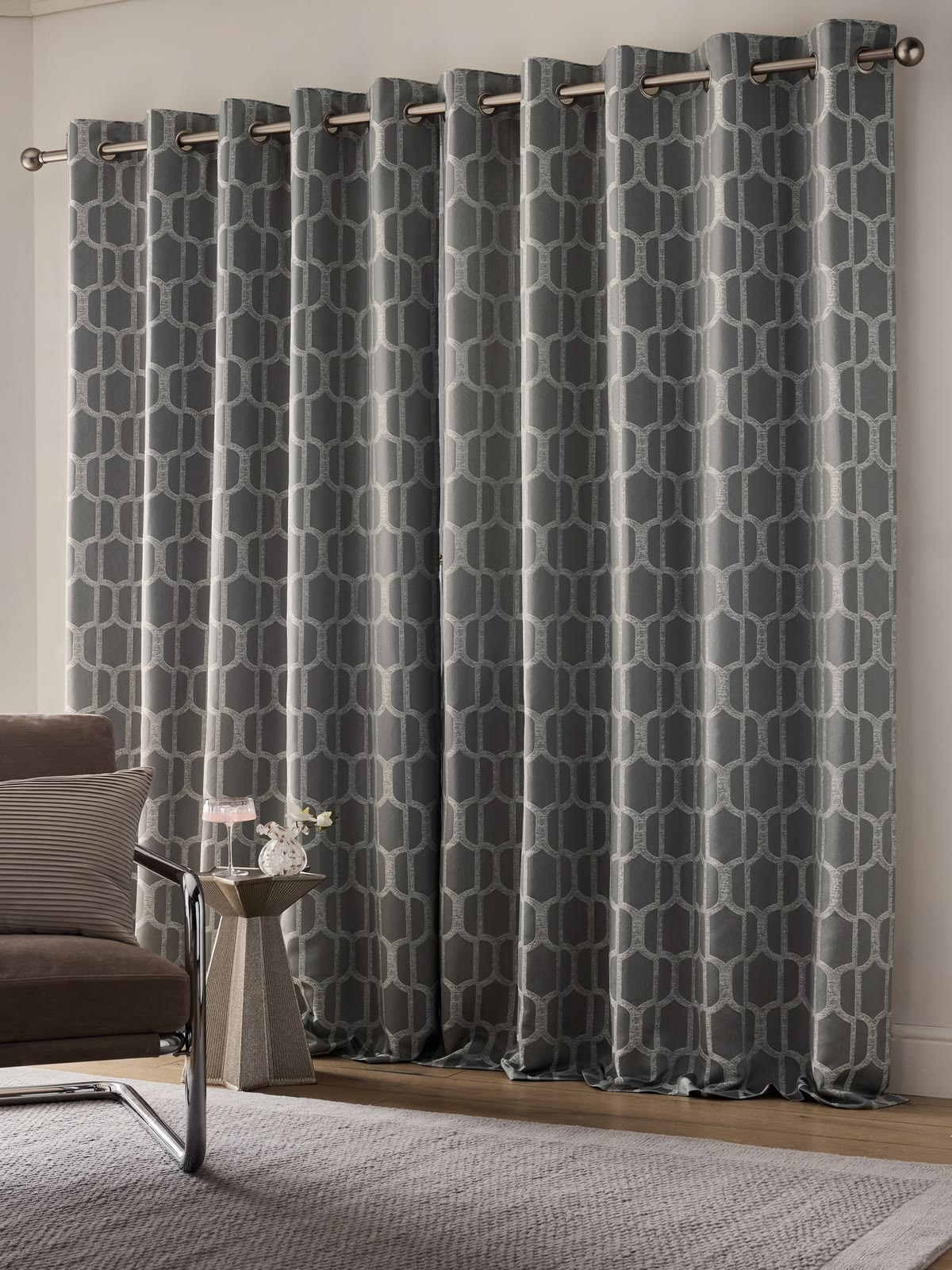
    • Geometric Design Grommet Curtains

    Geometric Design Grommet Curtains

    The classic strips, zig-zag, or honeycomb patterns make geometric grommet curtains an essential addition to contemporary-style living rooms.

    Choosing the grommet curtains with the right geometric pattern can set the mood of your living space. For example, a zig-zag pattern adds an energetic vibe, while a honeycomb design creates a neat and sophisticated appearance.

    If your living room is large, opt for grommet curtains with large-scale geometric patterns, as they can transform your windows into a striking focal point. On the other hand, small-scale patterns are better suited to compact spaces for creating visual interest.

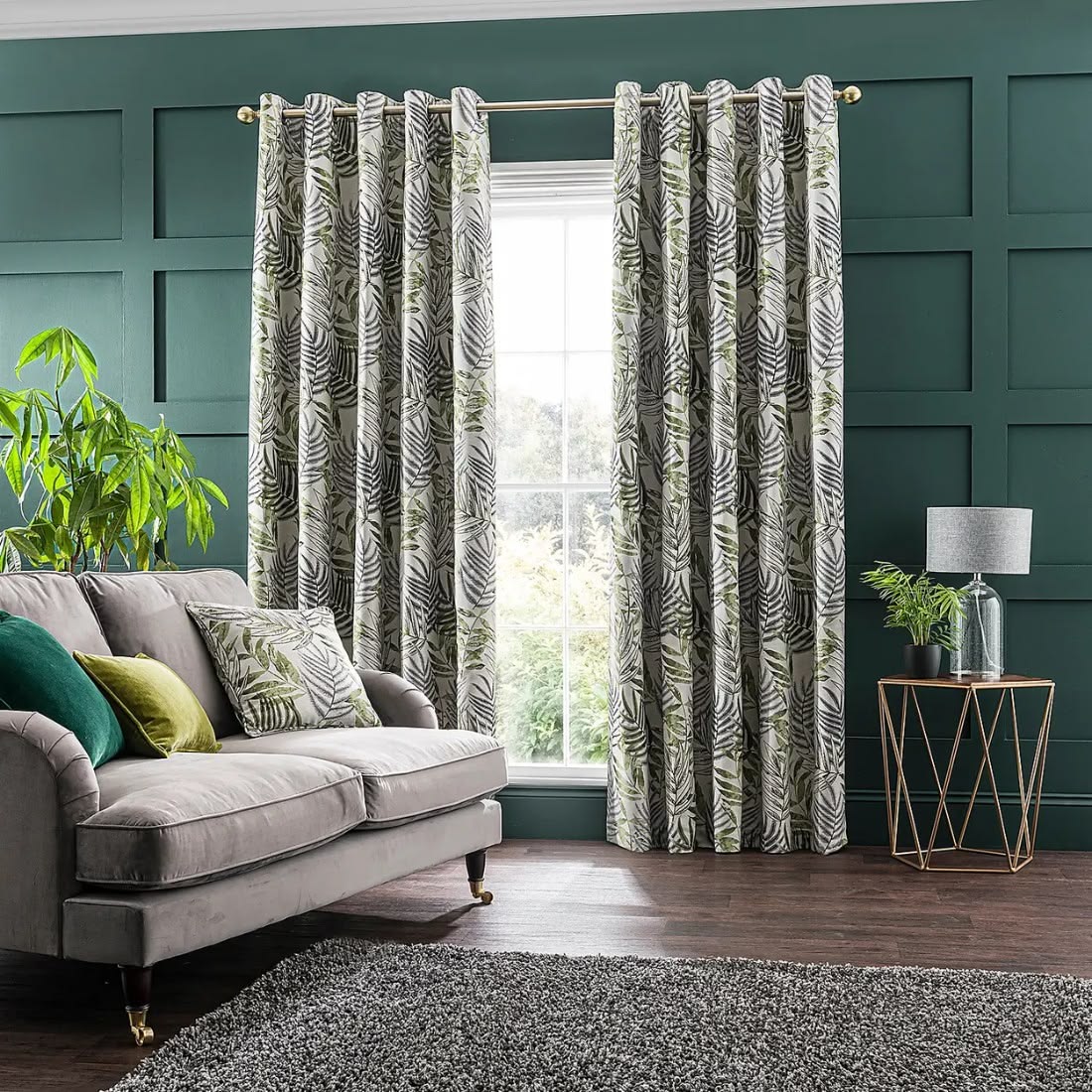
    • Nature-Inspired Grommet Curtains

    Nature-Inspired Grommet Curtains

    Delicate florals, leafy greens, and abstract nature-inspired grommet curtains bring a fresh, rejuvenating energy into your living rooms.

    Grommet curtains with different prints such as ferns, palms, whimsical foliage, abstract floral motifs, or understated wildflowers can whisper calmness into your living room instead of shouting like bold patterns.

    A most important thing that can’t be overlooked is allowing natural light into the living room. So, use a layered combination of thick cotton fabric with lightweight sheer panels to control sunlight while keeping the room bright, airy, and connected to nature.

    • Luxurious Damask Grommet Curtains

    Luxurious Damask Grommet Curtains

    Featuring reversible patterns with a glossy design on a matte base, damask grommet curtains can transform an ordinary living room into a luxurious one.

    If your living room features high windows, damask grommet curtains with traditional motifs like roses, peonies, and chrysanthemums can create a grand, architectural appearance. Adding curtains with abstract motifs can create a luxurious and modern feel in your living room.

    Cream, grey, and light gold metallic damask grommet curtains in blackout fabric add a touch of glamour and sophistication to transitional and traditional style living rooms. However, damask grommet curtains in voile fabric are ideal if you want a lighter look and an airy feel.

    • Boho-Inspired Grommet Curtains

    Boho-Inspired Grommet Curtains

    Boho-inspired grommet curtains bring life and personality to your home by effortlessly blending creativity, texture, and individuality.

    Natural textures of linen and cotton, relaxed drapes, and an earthy palette of these curtains create a seamless connection to the outdoors. While quietly settling down with existing furniture and decor, boho-inspired grommet curtains stand out as an amazing addition in living rooms.

    Pairing boho grommet curtains in sheer fabric with woven rugs, rattan furniture, and warm-toned walls can create a cozy, relaxed living room. Matching the curtain color closely with the walls can also make the space feel more open and connected.

    • Korean-Style Gauze Grommet Curtains

    Korean-Style Gauze Grommet Curtains

    Choosing Korean-style gauze grommet curtains for the living room can create a soft, elegant, and airy feel by combining lightweight texture with a clean, minimalist appearance.

    The delicate gauze fabric gently filters natural light into your living room, creating a bright and comfortable atmosphere. While neutral and pastel shades such as white, cream, beige, light grey, and soft pink give your living room a subtle and soothing appearance.

    Its relaxed drape and subtle texture work particularly well with the modern minimalist interior, which features light-toned walls, wooden accents, and simple decor. For better privacy and light control, you can also layer them with thicker blackout curtains.

    • Foil-Textured Grommet Curtains

    Foil-Textured Grommet Curtains

    A subtle metallic sheen texture on soft velvet, blackout polyester, and chenille makes foil-textured grommet curtains a glamorous addition to your living room.

    Especially if you choose these curtains in charcoal grey, taupe, beige, deep green, navy, and warm gold shades, they create a cohesive and polished living room without requiring additional embellishments.

    Their smooth, heavy drape pairs beautifully with modern, contemporary, and transitional interiors that feature metallic accents, plush furniture, glass surfaces, and warm-toned decor. By contrast, these curtains with decorative cushions or rugs can add character to the space.

    • Dreamy Layered Grommet Curtains

    Dreamy Layered Grommet Curtains

    The soft, sheer inner fabric and heavy outer blackout fabric of grommet curtains create a dreamy layer that adds depth, movement, and dimension to your living room.

    Choosing sheer fabric in ivory, beige, and white allows gentle, passing sunlight into your living room. On the other hand, blackout layers with sage green, taupe, light grey, and muted blue create a dramatic visual while giving full control over privacy and UV blockage.

    This dual functionality makes dreamy layered grommet curtains a versatile choice for contemporary living rooms. The same window treatment can shift effortlessly from an open, luminous look to a warm and intimate setting.

    Conclusion

    A living room deserves thoughtful decor, so choosing the best grommet curtains significantly complements the entire interior. From geometric designs to layering, every grommet curtain offers practical benefits along with a stunning appearance.

    Looking for grommet curtains for your living room in Dubai? Get in touch with Aura Curtains. Our extensive collection features stylish grommet curtains in premium fabrics, colors, and designs, helping you find the perfect option to complement your living room décor.

    FAQs

    How to choose the right grommet curtains for a living room?

    Before buying grommet curtains for the living room must ensure to measure your window size, consider your space requirements, and interior style.

    What are grommet curtains?

    Grommet curtains refer to curtains whose headers feature built-in metal rings that allow panels to slide smoothly across a curtain rod while creating stunning falls.

    Why should you choose grommet curtains?

    The reasons to choose grommet curtains for the living room are smooth operation, easy installation, neat folds, and versatile designs.

    What should you avoid when choosing grommet curtains for a living room?

    Avoid incorrect sizes, unsuitable fabrics, excessive patterns, and colors that clash with your furniture, walls, or overall living-room decor.

    Is it easy to install grommet curtains?

    Yes, grommet curtains are easy to install because their built-in rings simply slide onto a compatible curtain rod.

  • Grey Living Room Curtains Ideas

    Grey Living Room Curtains Ideas

    Grey walls may be easy to style, but choosing the right curtains to make your living room look effortlessly elegant is where the real challenge begins. While white, beige, navy blue, lavender, and dusty pink colors of curtains are beautiful options, the perfect choice also depends on your grey undertones, curtain style, existing furniture, and overall decor.

    Keep reading this guide to discover grey living room curtain ideas and practical styling tips that can help you bring a perfect finishing touch to your space.

    Which Shade of Grey Does Your Living Room Have?

    Your grey walls may have warm and cool undertones, and each works differently with curtain colours. It’s essential to identify your grey to choose the curtain shades that create a well-coordinated appearance:

    Shades of Grey Undertones Best Curtain Colors
    Warm Grey Blue, green, or purple undertones Beige, ivory, lavender, olive, chocolate brown, mustard
    Cool Grey Beige, taupe, or brown undertones White, soft coral, navy blue, dusty pink, emerald green, charcoal, teal

    Let’s take a closer look at each curtain shade and how it can transform your grey living room:

    Beige

    Rather than dominating the grey living room, beige curtains settle naturally and give the space a comfortable, lived-in feel. These curtains bring a warm, soft, natural, and understated quality to your living room with their earthy undertones.

    beige curtains for grey living room

    Ivory

    Their ivory curtains create a gentle contrast against grey walls, brightening the space without the starkness of pure white. It also adds warmth and a cosy, sophisticated touch, making it an excellent choice for both modern and classic interiors.

    ivory curtains for grey living room

    Lavendar

    Lavender is a soft, sophisticated, calming, and airy colour that adds a subtle touch of elegance without overwhelming the space. Its cool, gentle purple undertones can make a grey living room feel more peaceful, spacious, and refined.

    lavendar curtains for grey living room

    Olive Green

    For a natural, earthy, and calming living room, olive green curtains beautifully complement warm grey walls. Their muted green tone creates a subtle connection to nature while adding warmth, depth, and character, without overwhelming the space.

    olive green curtains for grey living room

    Chocolate Brown

    The deep brown tones of chocolate brown curtains create a striking contrast against grey walls, adding depth and visual warmth to the space. These warm undertones work especially well with cool grey walls, making the room feel cosier and more grounded.

    chocolate brown curtains for grey living room

    Musturd

    If you want to add character to your grey living room, mustard yellow curtains are a great choice. This trending accent colour infuses the space with lively, spirited energy while beautifully complementing the neutrality of grey.

    musturd curtains for grey living room

    White

    White curtains add a classic yet modern feel to your grey living rooms, without making them feel visually heavy. It keeps your living room bright, the walls look intentional, and nothing competes for attention.

    white curtains for grey living room

    Soft Coral

    Soft coral curtains bring a warm, cheerful, elegant, and welcoming touch to a grey living room. This gentle pastel shade with warm pink-orange undertones adds a subtle pop of colour without overpowering the neutral grey walls.

    soft coral curtains for grey living room

    Navy Blue

    Among grey living room curtain ideas, pairing navy blue curtains with grey walls is a classy yet stylish combination that creates a visually striking space. If you have a larger living room, navy blue curtains perfectly add depth and sophistication.

    navy blue curtains for grey living room

    Dusty Pink

    You can transform an ordinary grey living room into a warm and inviting space with dusty pink curtains. Their soft, muted tones instantly create an elegant and balanced look while adding a subtle romantic feel to the room.

    dusty pink curtains for grey living room

    Emerald Green

    Emerald green curtains pair beautifully with warm grey walls, creating a rich and sophisticated look. The deep, jewel-toned shade adds a luxurious touch while bringing a subtle, nature-inspired feel to your grey living room.

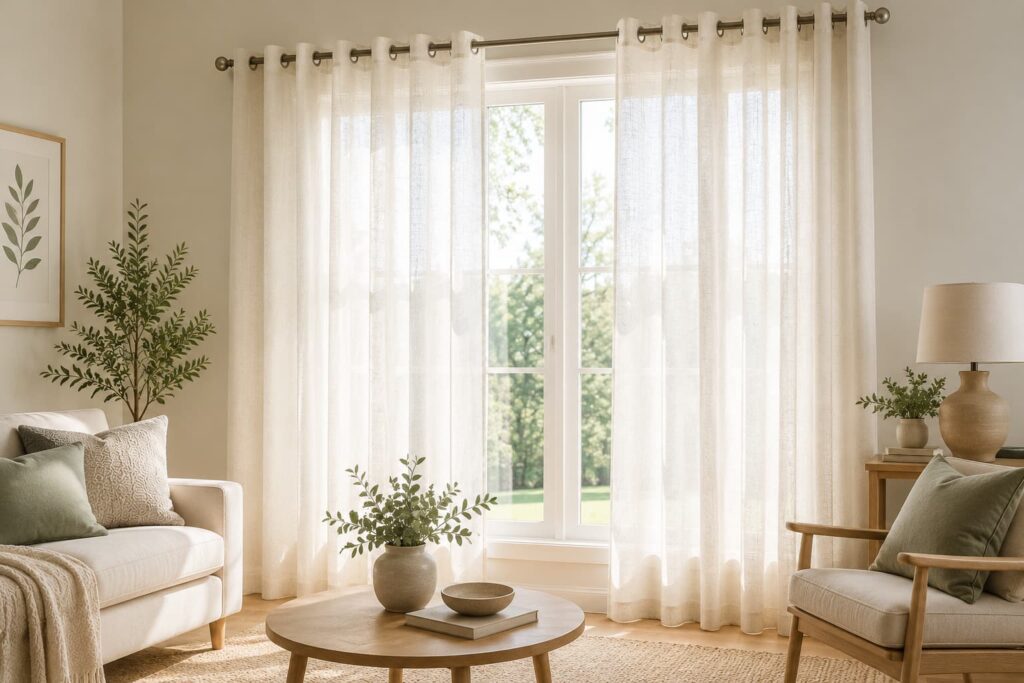
    emerald green curtains for grey living room

    Charcoal

    Whether you want a calm retreat or a modern statement in your grey living room, pairing charcoal curtains with cool grey walls creates a striking, balanced visual that instantly grabs attention.

    charcoal curtains for grey living room

    Teal

    Teal curtains create an understated backdrop. The combination of soft blue and lush green tones in aqua green creates a serene yet refreshing atmosphere when paired with the grey walls of your living room.

    teal curtains for grey living room


    Which Curtain Styles Suit Best In Grey Living Rooms?

    Once you understand the best colors of curtains for living rooms with different grey shades, it’s time to look at curtain styles that add texture, character, and visual balance to your living room.

    Pleated Curtains

    Pleated curtains feature structured folds, offering excellent fullness, light control, and a polished look against grey walls.

    Eyelet Curtains

    Eyelet curtains use metal-ringed openings along the header, offering a simple, contemporary look without making the neutral space feel overly formal.

    Layered Curtains

    Layered curtains combine sheer and blackout or linen panels, providing flexible light control, privacy, and insulation while adding depth and a dimensional look to grey rooms.

    Embroidered Curtains

    Embroidered curtains feature decorative threadwork on fabric, adding subtle texture and artistic detail on grey walls while maintaining the aesthetics.

    Printed Curtains

    Printed curtains that feature floral, geometric, or abstract patterns introduce personality while filtering light and breaking up the neutrality of grey walls.

    Grey Living Room Curtains Ideas: How to Choose A Perfect One?

    Here, we provide a clear idea of how to choose the right curtains for grey walls, including the most suitable colours and styles based on the following considerations.

    Sunlight Direction

    Consider which direction your windows face and how much sunlight enters the room. South-facing windows may benefit from heavier fabrics, while north-facing rooms suit lighter curtains.

    Example: For cool grey walls, choose ivory blackout curtains for south-facing windows; for warm grey walls, try beige linen curtains in north-facing rooms.

    Furniture and Decor

    Choose curtains that coordinate with your sofa, rug, cushions, flooring, and decorative accents to create a cohesive colour palette without making the room look overly matched.

    Example: Pair soft beige linen curtains with a warm grey sofa and wooden furniture, or choose navy velvet curtains with cool grey walls and contemporary decor.

    Window Size

    Consider your window’s width and height when selecting curtain styles, as larger windows can handle fuller fabrics and layered treatments without appearing visually heavy.

    Example: Dress large floor-to-ceiling windows with full-length layered curtains in ivory and grey, while smaller windows suit lightweight pleated curtains in soft beige or white.

    Also Read:

    Top 25 Best Curtain Ideas for Living Room

    10 Ideas For Black And White Curtains For Living Room

    Conclusion

    Grey walls offer a versatile backdrop, but choosing the right curtains can make all the difference in creating a cozy, stylish, and inviting living room. For premium-quality curtains that are designed to suit different interiors and preferences, Aura Curtains offers a wide range of stylish options that bring comfort, elegance, and personality to your living space.

  • 10 Ideas For Black And White Curtains For Living Room

    10 Ideas For Black And White Curtains For Living Room

    If your living room has the right furniture, colours, and accessories but still feels incomplete, consider adding black and white curtains — a classic combination that never goes out of style. Regardless of your interior design style, the striking contrast of black and white curtains can create a clean, sophisticated visual statement in your living room.

    If you’re struggling with how to choose the right black and white curtains for the living room, then keep reading this guide. It will walk you through 10 ideas to help you choose the right curtain design, pattern, and fabric for your space.

    1. Black and White Striped Curtains

    Black and white striped curtains are ideal for adding pattern without overwhelming your living room. Vertical stripes can draw the eye upward, creating the impression of taller ceilings, while horizontal stripes can make windows appear wider. Choose wider stripes for a bold statement or narrower ones for a subtle look. Pair them with simple furniture to keep the room balanced.

    Black and White Striped Curtains

    2. White Sheer Curtains with Black Borders

    White sheer curtains with black borders offer an elegant way to introduce contrast while keeping your living room bright. The sheer fabric allows natural light to filter through, while the black edging gives the curtains a defined, sophisticated finish.

    This style works particularly well with minimalist and contemporary interiors and can easily complement black furniture, lighting fixtures, cushions, or decorative accents.

    White Sheer Curtains with Black Borders

    3. Black and White Two-Tone Curtains

    Two-tone curtains combine solid black and white fabrics to create a contemporary window treatment without relying on bold prints. You can choose vertical colour blocking for a taller appearance or horizontal sections for a wider visual effect.

    This design works beautifully in modern living rooms and gives you the flexibility to coordinate the curtain colours with your existing furniture, walls, rugs, and accessories.

    Black and White Two-Tone Curtains

    4. Blackout Black Curtains with White Sheers

    Combine blackout curtains with white sheers when you want both style and functionality. The white sheers allow soft daylight into the room while creating a light, airy appearance during the day. When you need greater privacy or reduced sunlight, the black blackout panels can be closed. This layered combination is particularly practical for living rooms with large or sun-facing windows.

    Blackout Black Curtains with White Sheers

    5. Black and White Geometric Curtains

    Black and white geometric curtains for the living room can turn your ordinary window into a striking focal point. Designs featuring diamonds, squares, lines, or abstract shapes work especially well in modern and contemporary living rooms. Since.

    Choose a smaller-scale pattern for subtle sophistication or a larger design for greater visual impact. These patterns naturally attract attention; balance them with solid-coloured sofas, rugs, and accessories.

    Black and White Geometric Curtains

    Also Read:

    Modern Living Room Sofa Ideas to Transform Any Space

    6. Black and White Botanical Curtains

    Black floral or botanical curtains offer a softer alternative to sharp geometric patterns. Delicate leaves, branches, or floral motifs against a white background can introduce personality while maintaining a sophisticated monochrome palette. They work well with neutral furniture and natural materials such as wood.

    Choose smaller botanical prints for an understated appearance or larger designs when you want the curtains to become a statement feature.

    Black and White Botanical Curtains

    7. Black Velvet Curtains with White Sheers

    For a luxurious living room, consider combining rich black velvet curtains with lightweight white sheers. The velvet adds depth, texture, and a dramatic appearance, while the white sheers soften the overall look and allow filtered daylight into the room.

    This combination works particularly well with elegant furniture, metallic accents, and warm lighting. It is an excellent choice when you want your windows to feel luxurious.

    Black Velvet Curtains with White Sheers

    8. Black-and-White Ombre Curtains

    Black-and-white ombre curtains provide a contemporary alternative to traditional patterns. Their gradual transition between light and dark shades creates visual movement without introducing additional colours. They can add depth to a simple living room while maintaining a clean monochrome aesthetic.

    Pair them with neutral walls and understated furniture so the gradual colour transition remains noticeable without competing with other decorative elements.

    Black-and-White Ombre Curtains

    9. Black and White Pinch-Pleat Curtains

    Black and white pinch-pleat curtains create a tailored and polished appearance that suits sophisticated living rooms. The structured pleats allow the fabric to fall in neat, consistent folds, giving the windows a more refined finish.

    Choose a simple black-and-white pattern or solid two-tone design depending on your décor. Pair them with elegant furniture and accessories for a cohesive, upscale appearance.

    Black and White Pinch-Pleat Curtains

    10. Floor-to-Ceiling Black and White Curtains

    Floor-to-ceiling black and white curtains for the living room can make a strong visual impact while enhancing the proportions of your living room. Installing curtains higher and allowing them to extend to the floor creates a continuous vertical line that can make ceilings appear taller.

    Choose a design that complements your existing décor, and use generous fabric fullness to create soft, elegant folds when the curtains are closed.

    Floor-to-Ceiling Black and White Curtains

    Also Read:

    Grey Living Room Curtains Ideas

    Conclusion

    Whether you prefer bold stripes, geometric prints, luxurious velvet, or layered sheers, the right design can complement your décor while giving your windows a polished finish. Explore these ideas and choose a style that matches your space, lighting, and personal taste.

    Looking for the perfect living room curtains? Aura Curtains offers a wide range of stylish, high-quality curtain options designed to complement your interiors. Explore their collection and find the right window treatment to elevate your living space.

  • Grommet Curtain Ideas For Living Room

    Grommet Curtain Ideas For Living Room

    Grommet curtains are curtain panels with metal rings (grommets) sewn directly into the top hem, which slide over the curtain rod instead of using hooks or a separate header tape. This design creates a modern, uniform look and allows the panel to glide smoothly across the rod.

    Grommet curtains slide easily because the metal rings sit directly on the rod, removing the friction of hooks or rings. This makes them a practical choice for busy households that open and close curtains daily. With all this, they add style, softness, and a finished look to the room. 

    So if your goal is to add privacy, better light control, or just a cleaner look, grommet curtains are a smart and stylish option available. Find out the grommet curtains ideas for living room and things you need to keep in mind to make them perfect. 

    Best Fabric Choices for Grommet Curtains 

    When it comes to choosing curtains for your house rooms, especially living rooms, you need to check for some of the materials that can work well. The best fabrics for grommet curtains fall into three weight categories: light (cotton, linen, sheer), medium (polyester blends, textured fabrics), and heavy (velvet, blackout). Medium-to-heavy weight fabrics hold the cleanest, most uniform folds.

    • Light fabrics 

     Light fabrics for grommet curtains: cotton, linen, and sheer — let natural light pass through, creating an open, airy feel. They suit homes that want brightness and softness without full light-blocking coverage. These fabrics even create a light and relaxed feel. Additionally, these fabrics are known as the best choice for homes that want comfort without heavy coverage. In the same way, the sheer curtains work well when you want some privacy, but still allow sunlight in the room. 

    Light fabrics

    • Medium fabrics 

    Medium-weight fabrics for grommet curtains, such as polyester blends and textured weaves — balance light filtering with privacy, making them the most versatile choice for everyday living rooms. This feature makes it useful for everyday living rooms. They give a perfect balance of style and privacy. This means you can enjoy the natural light entering the space, but at the same time your room will not feel exposed. Textured fabrics also add a little depth and character, making the space feel more finished and warm. 

    Medium fabrics

    • Heavy fabrics 

     Heavy fabrics for grommet curtains: velvet and blackout material — block the most light and offer the highest privacy. Velvet adds a soft, luxurious texture; blackout fabric is best for reducing daytime sunlight. These fabrics even make the room feel richer and more elegant. Velvets add a soft and luxurious feel, whereas blackout curtains are best for rooms where you want to reduce sunlight during the day. Both options work well if you want a more dramatic look and a stronger sense of comfort in the living room. 

    Heavy fabrics

    Why do Grommet Curtains Work Well in Living Rooms?

    Grommet curtains work well in living rooms for four reasons: they slide with minimal friction, fold into consistent designer-style waves, suit almost any fabric or budget, and cause less wear on the fabric over time than other header styles.

    • They slide effortlessly

     Grommet curtains slide with minimal effort because the rigid rings ride directly on the rod, eliminating the friction created by fabric-on-rod contact or separate curtain hooks. This makes the panels open and close easier with one smooth pull. 

    • They fold into clean, even waves 

    Grommet curtains are self-pleating: the fabric naturally folds into even, S-shaped waves from top to bottom whether open or closed — giving a designer look without the cost of custom pinch pleats. When you close them, the same structure is followed. This is the most designed look you can get without paying for custom pinch pleats. 

    • Gives the best look on almost any fabric and budget 

    Grommet is a header style, not a fabric type — meaning it works with almost any material, from lightweight cotton to 4-layer blackout and heavyweight velvet. Heavier fabrics tend to hang best, as the added weight deepens the wave fold. Heavier ones actually hang especially well on grommets, as the weight helps the waves to fall deep and even. 

    • Zero wear on the fabric 

    Grommet curtains experience less fabric wear over time because the metal ring — not the raw cloth — makes direct contact with the rod, reducing abrasion from repeated opening and closing.

    Perfect Styling Tips for Curtains 

    With knowing grommet curtains ideas for living room, it is time to check out some of the combinations you can use to further enhance the look of your space. 

    • Minimal and modern look 

    For a minimal, modern look, choose grommet curtains in white, beige, grey, or taupe, paired with straight-lined furniture and minimal patterns to keep the space feeling calm and open.

    Minimal and modern look

    • Warm and cozy look 

    For a warm, cozy look, choose grommet curtains in cream, brown, rust, or soft gold, paired with rugs, cushions, and wood accents for added texture and comfort. These tones bring a sense of comfort into the space. You can pair them with rugs, cushions, and wood details. A soft rug will make the room more comfortable. Cushions will even add extra color and texture. And think of adding wood furniture or decor that can make the space feel warm and homely. 

    Warm and cozy look

    • Bold and elegant look 

    For a bold, elegant look, choose grommet curtains in navy, emerald, or deep brown, paired with matching cushions, wall art, or a throw blanket for a cohesive, upscale finish. They help make the space look more stylish right away. You can further enhance the look of the space by adding matching accessories. Use cushions, wall art, or a throw blanket in a similar tone. This gives the room a balanced look. 

    Bold and elegant look

    • Layered window treatment look 

    Last but not least, for a layered window treatment, pair grommet curtains with blinds or sheer panels: sheers soften the look while blinds add extra light control and privacy, creating a fuller, more finished window. You can let in soft sunlight or block it when needed. It also adds more depth to the window area. Layering makes the room look fuller and more finished. Sheer curtains can soften the look, while blinds can add extra privacy. When combined, they create a smart and practical window style.  

    Layered window treatment look

    Conclusion 

    Grommet curtains suit living rooms of any style — minimal, cozy, or bold — because the header design works across fabric weights while staying easy to slide and maintain. They are easy to use, match, and the room designed for is loved by anyone. If your goal is to bring in a soft, cozy feel or a bold, modern look, they perfectly fit into any requirements. With the right fabric and style, grommet curtains make your living room look neat, warm, and beautifully finished. 

    Also Read:

    FAQs 

    Are grommet curtains good for living rooms?

    Yes. Grommet curtains suit living rooms because the metal-ring header creates a clean, modern fold, slides easily on the rod, and works with fabric weights ranging from sheer to blackout.

    Which fabric is best for grommet curtains?

    The best fabric depends on the goal: cotton or linen for an airy feel, polyester blends for balanced light and privacy, or velvet/blackout for maximum light-blocking and privacy.

    Do grommet curtains open and close easily?

    Yes. The metal rings in grommet curtains ride directly on the rod, so the panels open and close with minimal friction compared to hook-and-ring styles.

    Can I use grommet curtains with other window treatments?

    Yes. Grommet curtains layer well with blinds or sheer curtains, giving added light control during the day and extra privacy at night.

    How do I choose the right color for my living room?

    Match the color to the desired mood: light shades (white, grey, taupe) for a calm look, warm tones (cream, rust, gold) for coziness, and dark shades (navy, emerald) for a bold, elegant feel.

  • How to Choose Extra Long Curtains For High Ceilings

    How to Choose Extra Long Curtains For High Ceilings

    Extra-long curtains are curtains made for 9 ft, 10 ft, 12 ft, and taller ceilings, hung from near the ceiling to the floor to create a continuous floor-to-ceiling look. They work in both residential and commercial spaces but need precise measurements, since incorrect sizing is the most common reason for costly replacements.

    Stay connected with this guide to discover how to choose the best extra-long curtains for high ceilings without making costly mistakes.

    How to Choose Extra-Long Curtains for High Ceilings?

    From taking perfect measurements to proper installation, here’s how you can choose the perfect high-ceiling curtains that complement your space:

    • Take Accurate Measurements of Walls and Curtains

    Take Accurate Measurements of Walls and Curtains

    To measure for extra-long curtains on a high ceiling: measure wall height at the left, center, and right of the wall (floors and ceilings are rarely level), mark the rod or track 2–5 inches below the ceiling for a floor-to-ceiling effect, measure the drop from that point to the finished floor, multiply window width by 1.5–2.5 for curtain width, and choose your hanging system before finalizing any of these numbers.

    When it comes to choosing extra-long curtains for a high ceiling, even a few inches of difference can prevent you from achieving the perfect look you desire. To preserve your investment and achieve the perfect curtain fit, follow the essential measurement techniques.

    Measure Wall Height: Take measurements of wall height from the left, center, and right sides of the wall, as floors and ceilings may not be perfectly level.

    Curtain Rod Placement: Decide where the curtain rod or track will be installed by marking the spot 2-5 inches below the ceiling or ceiling-mounted for a true floor-to-ceiling effect.

    Measure the Curtain Drop: Note the distance from the marked point down to the finished floor to order the exact curtain length needed to achieve a seamless floor-to-ceiling look.

    Curtain Width Calculation: Measure the width of your window and multiply the result by 1.5 – 2.5 to determine the ideal length of an extra-long curtain for a fuller and luxurious appearance.

    Decide the Hanging System: Before finalizing measurements, decide on curtain hardware such as a rod, track, rings, or hooks, as each hanging system affects the final curtain length.

    • Perfect Curtain Style That Complements Your Interior

    The best curtain fabric and color for high-ceiling rooms depends on interior style: Minimalist — linen, cotton, or sheer fabric in white, ivory, beige, or light gray. Biophilic — bamboo blend, linen, or cotton in terracotta, sage green, olive, sand, or warm beige. Industrial loft — velvet, cotton, or heavyweight linen in charcoal gray, graphite, navy, rust, or matte black. Traditional — velvet, silk, jacquard, or blackout fabric in burgundy, navy, emerald green, gold, or champagne. Scandinavian — lightweight linen, cotton, wool blend, or sheer voile in white, off-white, light gray, oatmeal, or pale blue.

    Extra-long curtains have a dominant visual impact in high-ceiling rooms when their fabric, color, and design are seamlessly paired with your interior and decor. Not sure which high-ceiling curtain idea is right for your interior design? Then have a look at the details below:

    Minimalist Interior: Choose linen, cotton, or light-filtering sheer fabrics for curtains in white, ivory, beige, and light gray colors to preserve the minimalist aesthetic of your room.

    Biophilic Interior: Bamboo blends, linen, and cotton fabrics for curtains in terracotta, sage green, olive, sand, and warm beige colors can seamlessly create a nature-inspired atmosphere.

    Industrial Loft Interior: Choose velvet, cotton, and heavyweight linen curtains with charcoal gray, graphite, navy, rust, and matte black colors for balanced industrial finishes.

    Traditional Interior: Choose velvet, silk, jacquard, or premium blackout curtains in burgundy, navy blue, emerald green, gold, and champagne colors to enhance classic architecture.

    Scandinavian Interior: Choose lightweight linen, cotton, wool blends, or sheer voile curtains in white, off-white, light gray, oatmeal, or pale blue colors to create a bright space.

    • DIY Installation for Flawless High Ceiling Curtain Finish

    DIY Installation for Flawless High Ceiling Curtain Finish

    To install high-ceiling curtains: mount the track 2–5 inches below the ceiling, check bracket alignment with a spirit or laser level before drilling, use heavy-duty brackets and wall anchors since extra-long curtains are heavier, extend the rod 8–12 inches beyond each side of the window frame, and test the slide several times before finalizing.

    Perfect installation of high-ceiling curtains transforms beautiful fabric into a striking architectural feature. While complex installations require professionals, most standard curtain systems are easy to DIY. Here are some techniques to install these curtains easily without the need for:

    Strategic Track Placement: Create a long vertical effect by mounting the curtain track 2-5 inches below the ceiling, as it makes the room appear taller and more elegant.

    Proper Bracket Alignment: Before drilling holes, check that the bracket markings are perfectly level using a spirit level or laser level to prevent the curtain rod from tilting.

    Durable Curtain Hardware: Use heavy-duty brackets, screws, and wall anchors to securely support extra-long curtains, which are heavier than standard-size curtains.

    Extended Rod Installation: Make sure to extend the curtain rod 8–12 inches beyond both sides of the window frame. This allows curtains to open fully and move smoothly.

    Final Testing of Curtains: Test the movement of curtains before finalizing installation. Slide the curtains several times to ensure smooth operation and hang evenly from top to bottom.

    • Find the Perfect Curtain Heading Style for High Ceilings

    Perfect Curtain Heading Style for High Ceilings

    The five main curtain heading styles are: Pinch pleat — evenly spaced, stitched pleats for a neat, pencil-like fold. Box pleat — wide, flat rectangular pleats for a symmetrical, architectural front. Goblet pleat — cup-shaped pleats for a decorative, formal look. Wave heading — continuous S-shaped ripples for a smooth, modern flow. Eyelet heading — metal rings punched into the fabric top for a relaxed, contemporary look.

    While choosing fabric style and color, don’t overlook the heading style for high-ceiling curtains. It sets your curtain’s fullness, flow, and overall elegance from ceiling to floor. Here are popular heading styles for extra-long curtains that help you achieve the desired visual appeal:

    Pinch Pleats: This heading style features fabric gathered into evenly spaced pleats that are stitched together at the top, creating neat, pencil-like folds for a uniform appearance.

    Box Pleats: This heading style features wide, rectangular pleats that fold inward, creating a flat, symmetrical front with a clean, crisp, and architectural appearance.

    Goblet Pleats: This heading style features shapes like wine goblets or cups at the top, which create an elegant, decorative appearance.

    Wave Heading: This heading style features fabric that forms soft, uniform ripples, which create smooth, continuous S-shaped waves that flow evenly across the entire curtain width.

    Eyelet Heading: This heading style features large, evenly spaced metal rings punched directly into the top of the fabric, offering a relaxed, contemporary look.

    Why Your High Ceiling Needs Extra-Long Curtains?

    High ceilings need extra-long curtains for four reasons: they create an illusion of height, add a sense of luxury and sophistication, provide better coverage than standard curtains, and create perfect floor-to-ceiling proportions.

    Even though standard-length curtains often leave your tall walls looking disconnected and unfinished, high-ceiling curtains can completely transform an ordinary space into a luxurious one. Let’s explore why it’s essential to invest in extra-long curtains for your modern home:

    • Create an Eye-Catching Illusion

    By extending from near the ceiling to the floor, extra-long curtains naturally draw the eye upward, making your room feel taller, grander, more airy, and more impressive.

    • Sense of Luxury and Sophistication

    The flowing fabric of extra-long curtains creates elegant folds that soften tall walls and add depth to the interior, which brings a premium, hotel-inspired aesthetic to your space.

    • Better Coverage Than Standard Curtains

    Extra-long curtains are designed to provide complete coverage from top to bottom, filling the awkward gaps to maximize privacy and light control.

    • Perfect Floor-to-Ceiling Proportions

    Extra-long curtains for high ceilings create harmonious proportions by bridging the gap between the ceiling and the floor, which designs a room that feels cohesive and professionally styled.

    Conclusion

    A high ceiling is a stunning architectural feature on its own, and extra-long curtains enhance its charm while creating a seamless floor-to-ceiling appearance. Carefully buying extra-long curtains for high ceilings can be a worthwhile investment that adds elegance, improves functionality, and increases the overall value of your space.

    Are you searching for premium high-ceiling curtains for your home in Dubai? Then get in touch with Aura Curtains. We specialize in designing customized extra-long curtains that perfectly match your interior style and dimensions. Let’s have a free consultation today and transform your space with our outstanding curtain collection.

    FAQs

    What is the ideal length for high-ceiling curtains?

    Curtain length should run from 2–5 inches below the ceiling (or the ceiling itself, if ceiling-mounted) down to the finished floor. As a starting reference: roughly 100–106 inches for a 9 ft ceiling, 112–118 inches for a 10 ft ceiling, and 136–142 inches for a 12 ft ceiling. Always confirm with an on-site measurement, since floors and ceilings are rarely perfectly level.

    Which spaces are perfect for installing high-ceiling curtains?

    High-ceiling curtains work best in living rooms, luxury bedrooms, villas, hotel suites, and offices or lobbies with extra-high ceilings.

    Are extra-long curtains expensive?

    Yes, extra-long curtains are expensive compared to standard sizes due to additional fabric, customization, and installation, but options are available for different budgets.

    What should you consider before choosing extra-long curtains for high ceilings?

    Before buying high-ceiling curtains, consider: accurate wall and window measurements, fabric weight and type, color and heading style, hardware strength (rod, track, or brackets), and installation method.

    What are the effects of choosing the wrong high-ceiling curtains?

    Choosing the wrong high-ceiling curtains can make a room look visually unbalanced or unfinished, block natural light unevenly, and require costly alterations such as re-cutting fabric or replacing hardware sized for the wrong drop.